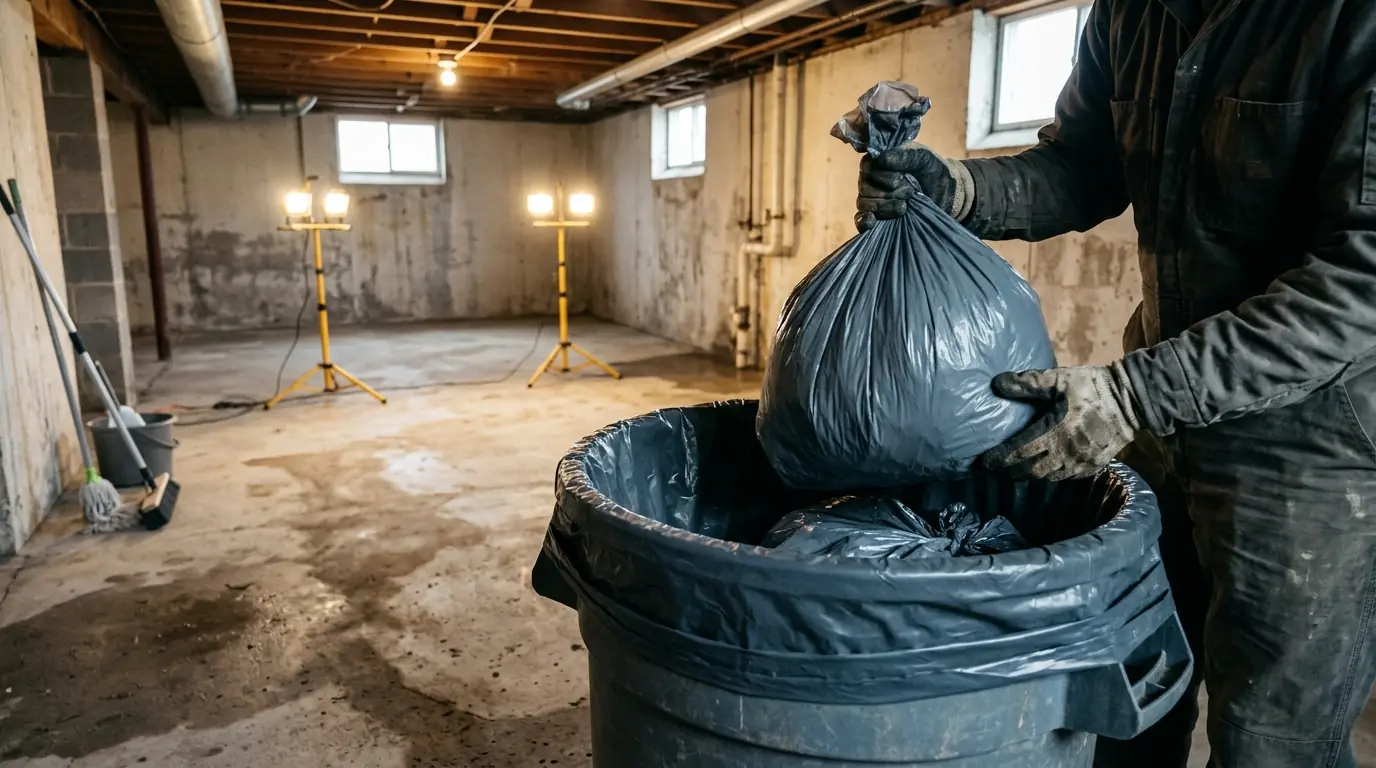
Biohazard cleanup in Bridgeport means removing blood, body fluids, sewage, sharps and anything soaked with them, packaging that material as biomedical waste for a permitted transporter as Connecticut DEEP requires, then cleaning and disinfecting the space with a product OSHA accepts for blood.
We answer 24/7 and start once the scene is released.
What counts as a biohazard, and why it is not ordinary cleaning
A biohazard is anything that can carry infection to the next person who touches or breathes it: blood and other body fluids, tissue, vomit and feces, raw sewage, used needles and the materials that have soaked any of them up. The risk is not always visible. Blood wicks into carpet pad and subfloor, runs into gaps between floorboards and dries on surfaces where it is easy to miss, so a scene that looks clean after a wipe-down often is not.
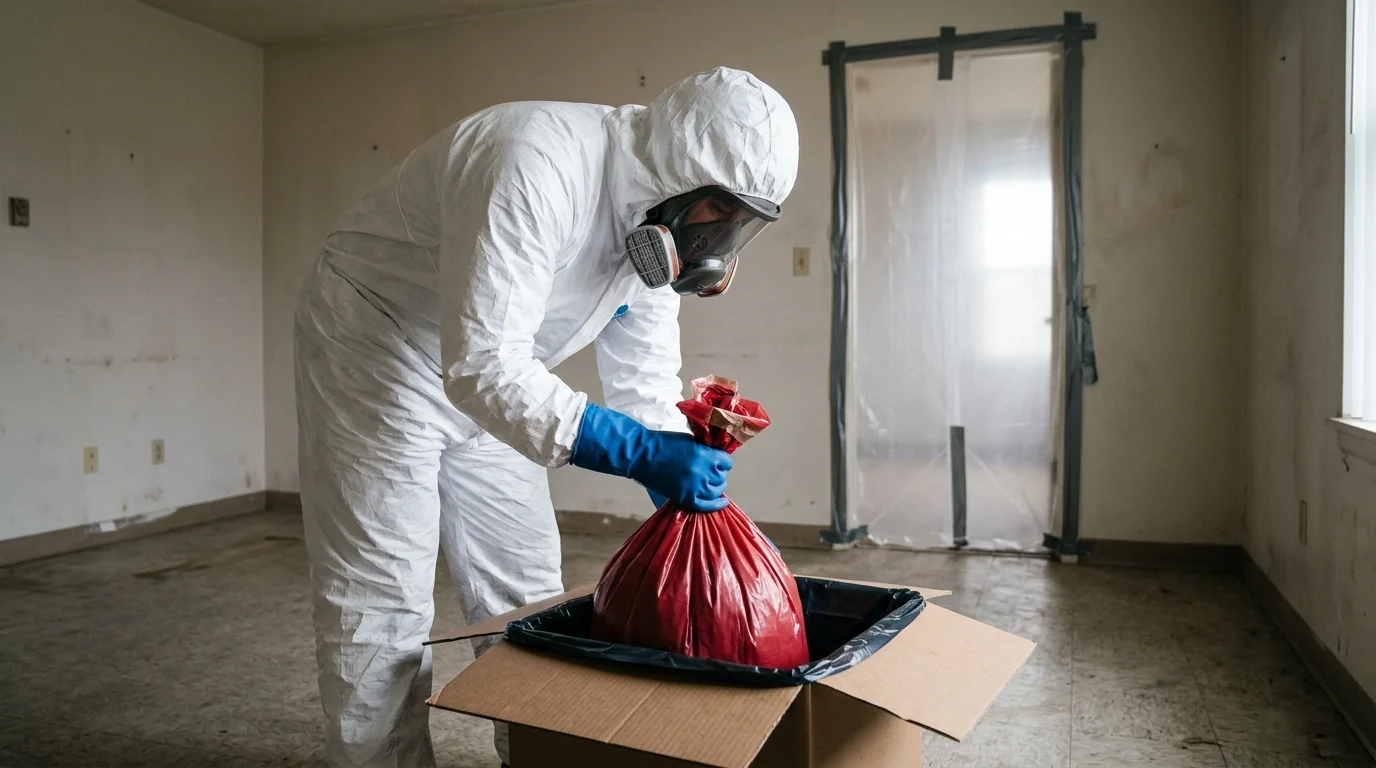
Biohazard cleanup works from the outside in. The area is closed off, the crew wears protective suits, gloves, eye protection and respirators, soaked porous materials are cut out and bagged, and only then are hard surfaces cleaned and disinfected. Every step keeps the contamination contained, so it is not carried through the rest of the building on shoes, tools or air.
Signs you need biohazard cleanup, not a regular clean
Blood or body fluids beyond a small spot
Anything that soaked into fabric, carpet or wood needs removal and proper disinfection.
A strong, sweet or rotten odor
Usually decomposition or sewage, and the source has to come out before the smell will.
Sewage on floors or walls
Connecticut DPH advises discarding the porous materials sewage has soaked.
Needles or syringes in the space
A needlestick risk for whoever cleans next, and the sharps need proper containers.
Police or the medical examiner were involved
Once they release the scene, cleanup falls to the owner.
Step by step
How biohazard cleanup works
- 1
You call, any hour
Tell us what happened and whether police or the medical examiner have released the scene.
- 2
We assess and contain
We walk the space in protective gear, close it off and plan what must come out.
- 3
We remove soaked materials
Carpet, pad, drywall and furniture that absorbed fluids are bagged and boxed as biomedical waste.
- 4
We clean and disinfect
Hard surfaces cleaned, then disinfected with a product OSHA accepts for blood, kept wet for its contact time.
- 5
We deodorize and document
Odor treated at the source, with photos and an itemized scope for your insurer.
Biohazard cleanup in homes and apartments
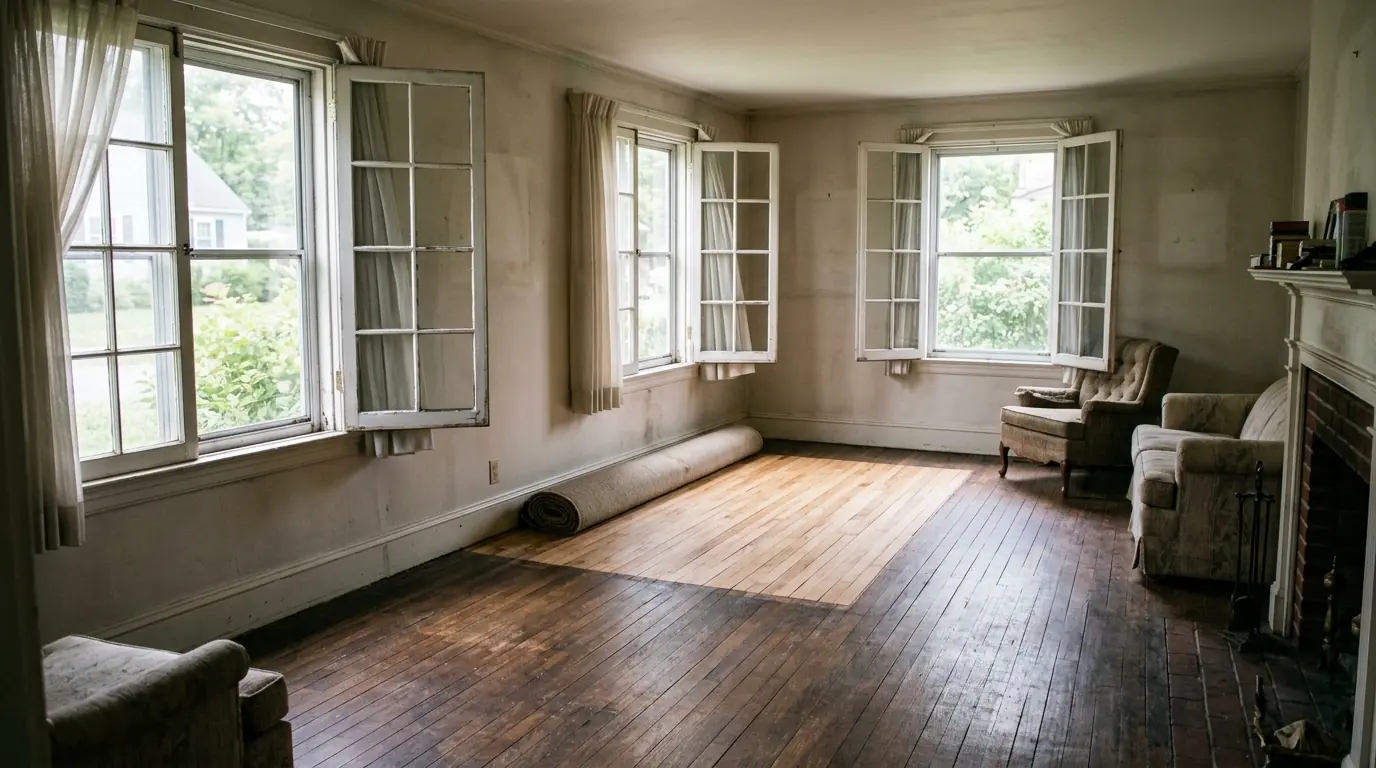
Most of our biohazard calls come from homes: a fall or injury that left blood on floors and furniture, a death that was not discovered right away, a loved one's suicide, a sewage backup in the basement, or a tenant who left needles and waste behind. We work room by room, protect the parts of the house that were not affected, remove what has to go and clean and disinfect the rest. Personal belongings are set aside for the family wherever they can be cleaned, and nothing is thrown away without asking.
Businesses, public buildings and rental property
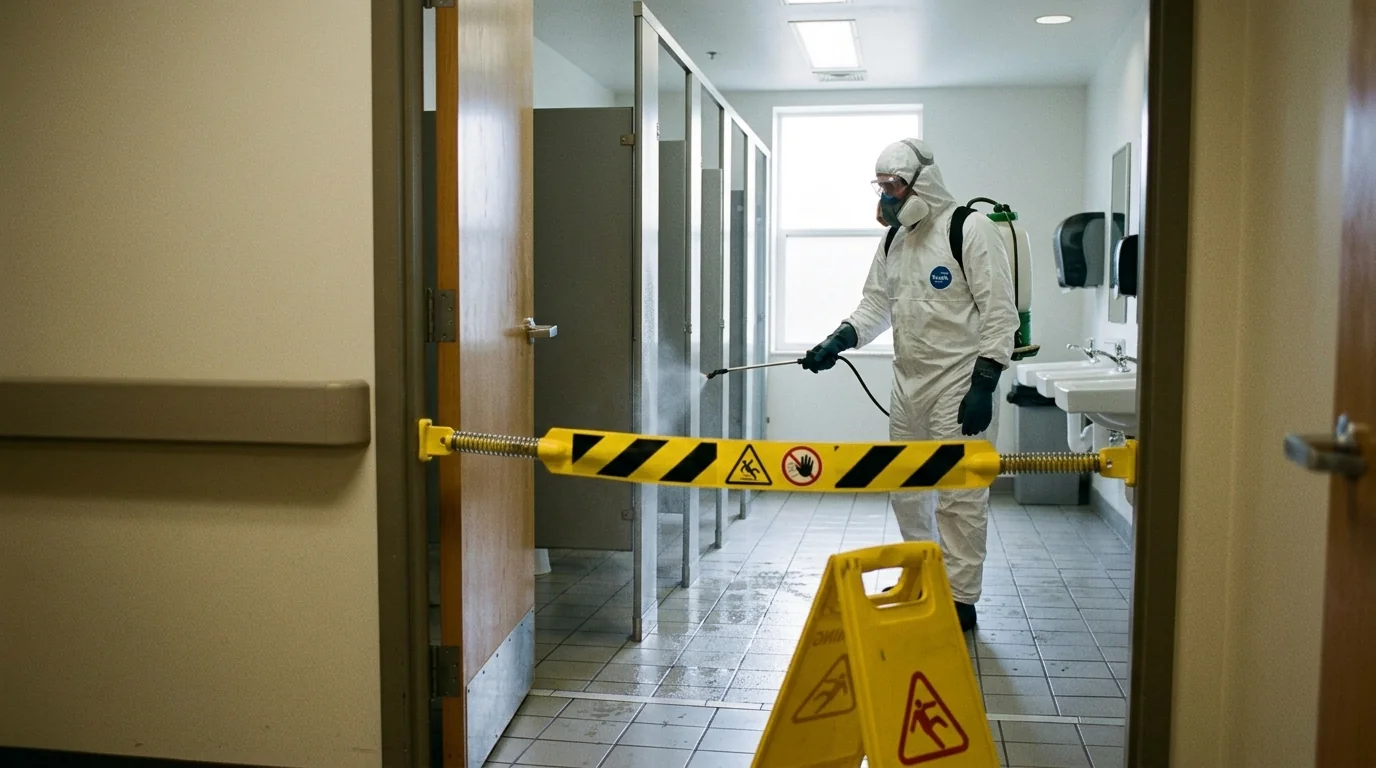
Workplaces, stores, schools, hotels and apartment buildings call when an injury, assault, overdose or sewage problem leaves a biohazard in a space people need to use again soon. We work after hours or behind closed doors, keep staff and tenants away from the area, and can clear a restroom, office, stairwell or unit quickly so the rest of the building keeps running. Property managers get photos and a written scope for their records, and landlords get the unit back ready for repairs or the next tenant.
What happens to the waste
In Connecticut, anything saturated, dripping or caked with blood or body fluids counts as biomedical waste. The state DEEP says trauma scene responders are not themselves covered by the biomedical waste rules, but the waste they generate is, and it has to leave the site with a transporter holding a DEEP biomedical waste permit. So soaked materials are sealed in red bags, packed in rigid lined boxes and handed to a permitted transporter for treatment, never put in household trash or a dumpster. Sharps go into puncture-resistant containers first.
Connecticut rules for biohazard waste and blood
Connecticut's Department of Energy and Environmental Protection treats disposable items saturated, dripping or caked with body fluids as biomedical waste, and that waste has to be moved by a DEEP-permitted biomedical waste transporter. For the surfaces left behind, OSHA's bloodborne pathogens standard accepts EPA-registered disinfectants labeled for HIV and hepatitis B, tuberculocidal products, or bleach diluted 1:10 to 1:100 once the blood is wiped up. Those two rules shape every biohazard job we do around Bridgeport.
What changes the cost of biohazard cleanup
Biohazard cleanup is priced once we know the space and what is involved, and many insurance policies cover it.
- Size of the affected areaOne room or several, and how far fluids spread.
- Materials that must come outCarpet, pad, drywall and subflooring add removal and disposal.
- Biomedical waste volumeMore boxes of waste mean more transport and treatment cost.
- Odor and time since the eventDecomposition and old stains need more work than fresh spills.
- Access and urgencyTight spaces, upper floors and same-day starts add time.
What every biohazard cleanup includes
The scale changes from job to job. The safety steps do not.
- Area closed off before work starts
- Protective suits, gloves, eye protection and respirators
- Soaked porous materials removed and bagged
- Biomedical waste packed for a permitted transporter
- Hard surfaces cleaned, then disinfected for blood
- Sharps placed in puncture-resistant containers
- Odor treated at its source
- Photos and an itemized scope for insurance
Biohazard cleanup questions
The phone is answered 24/7. Once police or the medical examiner have released the scene, we schedule the earliest crew we can and give you the time on the call.
Many homeowners and commercial policies do. We photograph the work and provide an itemized scope your adjuster can review.
Yes, in the parts of the home that were not affected. The work area is closed off, and we tell you when it is safe to go back in.
Items that can be cleaned and disinfected are set aside for you. Anything soaked through is discussed with you before it is discarded.
It is packed in red bags and rigid boxes and handed to a DEEP-permitted biomedical waste transporter for treatment.
Yes. We keep the visit low-key, work behind closed doors where possible and do not discuss the job with anyone you have not named.
More biohazard cleanup in Bridgeport
Need a biohazard cleaned up?
Tell us what happened and whether the scene has been released. We will tell you what happens next and when a crew can be there.