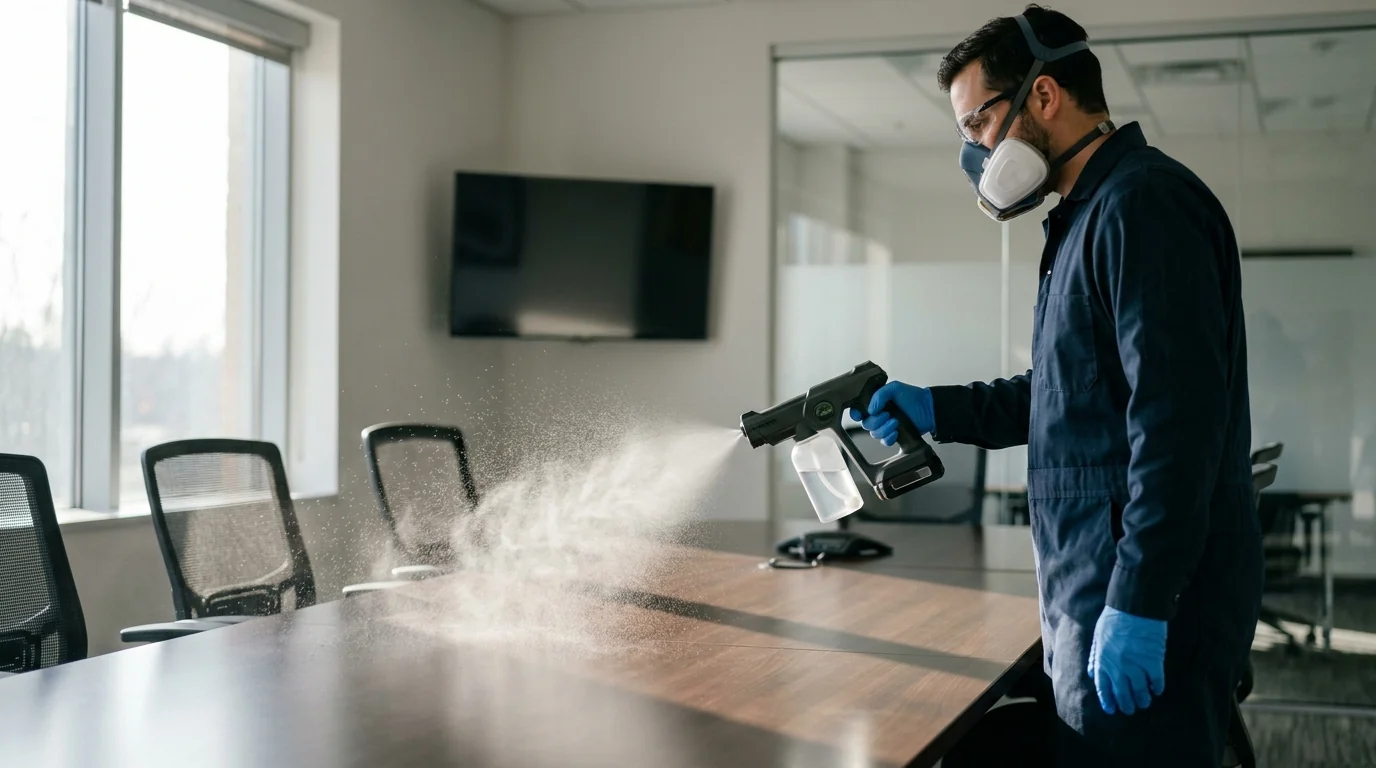
Vehicle disinfection in Bridgeport starts with cleaning the cabin, then applying a product labeled for vehicle interiors to the wheel, shifter, door pulls, seat belts and controls, and keeping it wet for the contact time on the label.
A single car is a short visit. Fleets are scheduled around shift changes so no vehicle sits out of service for long.
What is included on every vehicle
Each vehicle gets the same checklist, so a fleet manager knows exactly what was treated.
- Vacuum of seats, floors and floor mats
- Pre-clean of hard surfaces to lift dust and grime
- Steering wheel, horn pad and column stalks
- Gear selector, parking brake and console controls
- Interior and exterior door handles and window switches
- Seat belt buckles, latch plates and grab handles
- Touchscreen bezel, buttons and climate controls, wiped, never soaked
- A dated log of the vehicles treated and the product used
What a vehicle disinfection visit covers
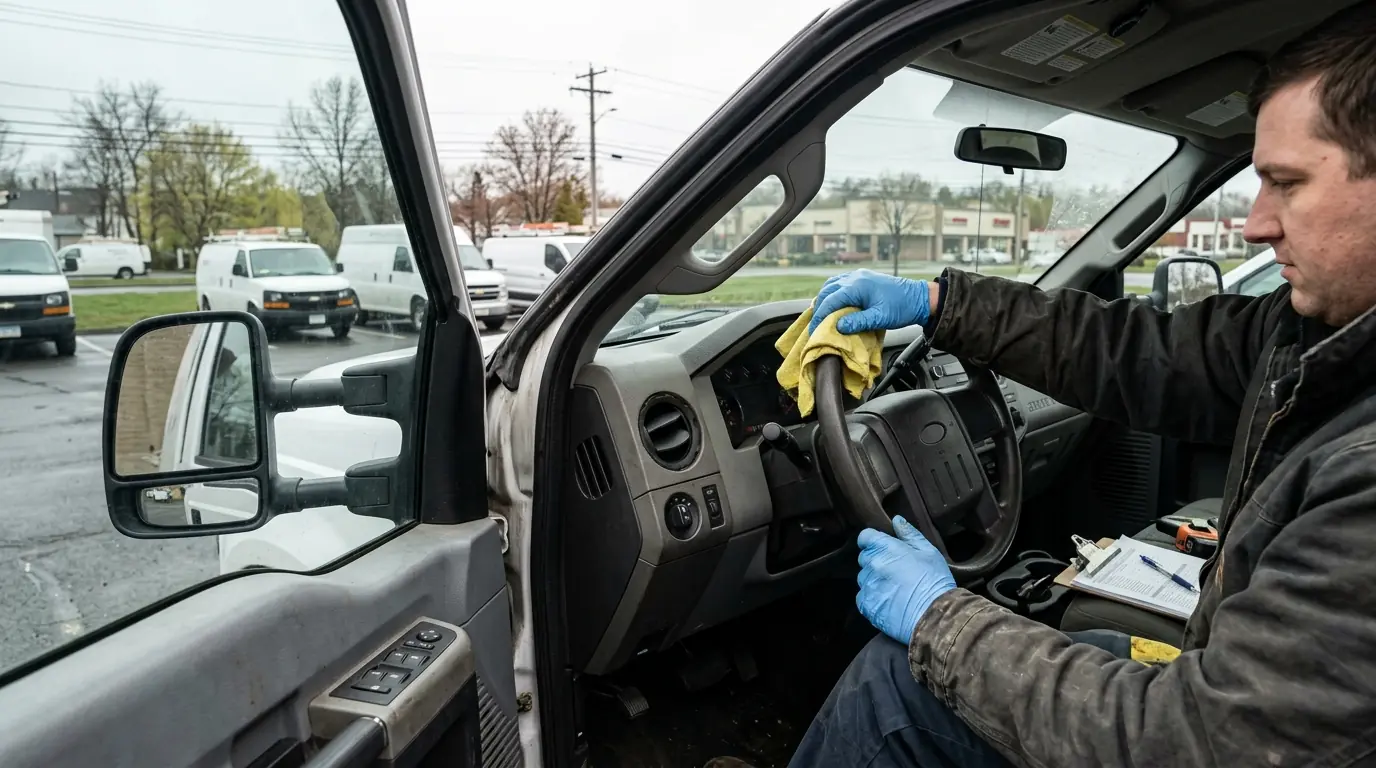
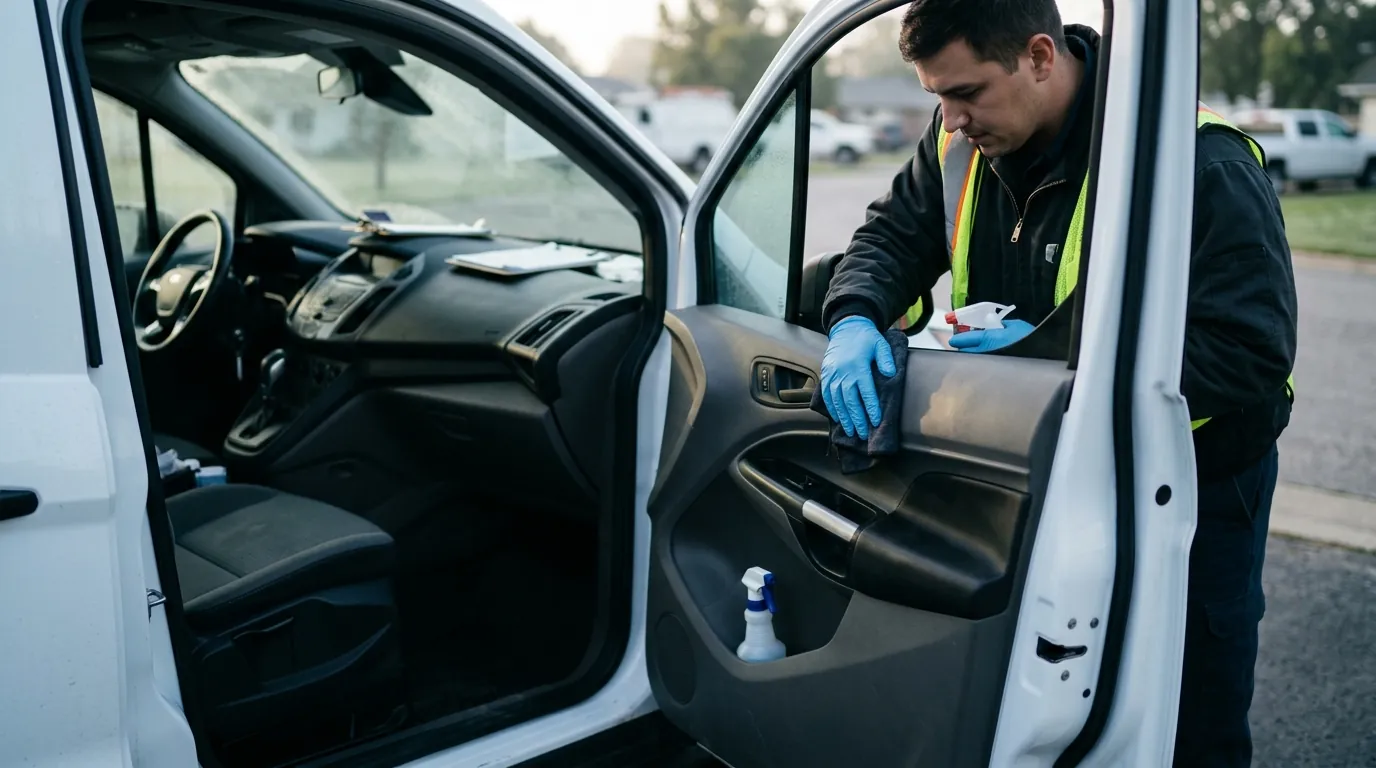
Inside a vehicle, the germs that matter sit where hands land: the steering wheel, gear selector, turn signal stalk, door handles inside and out, window switches, seat belt buckles, grab handles and the touchscreen bezel. We vacuum first, wipe away the film of dust and skin oil that shields germs, then apply a disinfectant whose label lists vehicle interiors and the surfaces in that cabin.
Soft seats are a different job from hard plastic. Only a limited number of EPA-registered products are approved for soft and porous materials, so cloth seats and headliners get a product labeled for fabric, or a thorough cleaning where no disinfecting claim is possible, and we tell you which is which.
Cars and work trucks
Pickup trucks and service vans that pass between drivers every shift collect more grime than most offices. The usual call comes after a crew member goes home sick, or when a company wants shared trucks treated weekly through flu season. We work through the cab in a fixed order, wheel to door pulls, so nothing is missed, and keep electronics dry by applying product to the cloth instead of spraying screens. Family cars get the same routine, usually after a stomach bug or before an elderly passenger rides along.
Vans, shuttles and buses
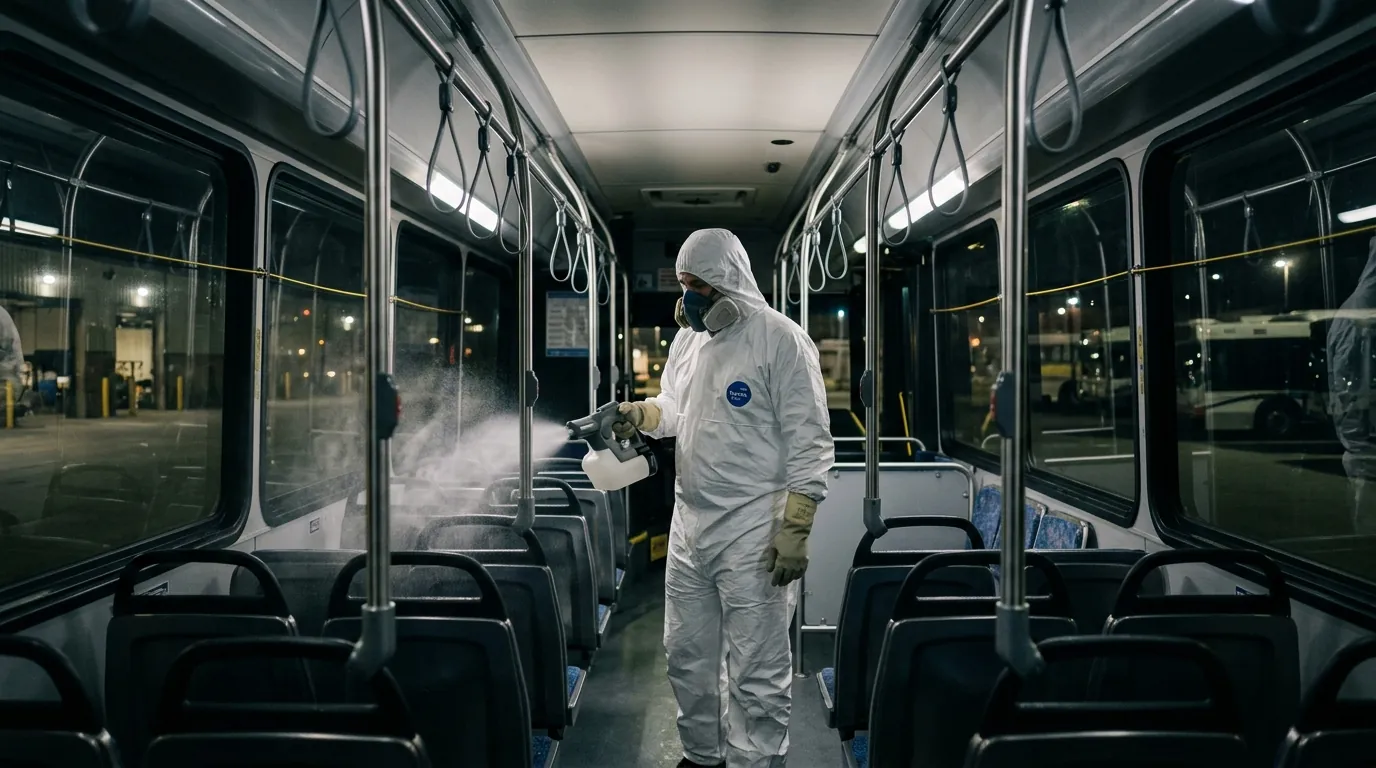
Passenger vehicles add stanchions, grab rails, seat backs, wheelchair lift controls and the driver partition, all touched by dozens of people a day. For these we often use an electrostatic sprayer, because the charged mist wraps around rails and seat frames that a cloth reaches slowly, and then hand-wipe the driver area. Shuttles that carry patients or seniors, church vans and school buses are usually treated at the depot after the last run, so they are ready for the morning. We record each vehicle number and the time it was treated.
Private aircraft cabins
Small aircraft cabins are cleaned and disinfected under tighter rules than a car. Aircraft makers and operators publish lists of approved cleaning products for leather, plastics and cockpit surfaces, so we work from the owner's or operator's approved list rather than our own default. Product is applied to the cloth, never sprayed near avionics, and seats, tables, armrests, door handles and lavatory fixtures are done in sequence. We arrange access through the hangar or the fixed-base operator, and the owner signs off on the products before we start.
Step by step
How we disinfect a vehicle or a fleet
- 1
You tell us the vehicles and the reason
Make, size and count, where they park, and whether someone was sick or this is routine.
- 2
We set up at your lot or depot
Doors open, mats out and electronics protected before any product comes out.
- 3
We clean before we disinfect
Vacuum and wipe every hard surface so the disinfectant reaches the surface, not the grime.
- 4
We treat touch points and keep them wet
Each surface stays wet for the full contact time on the label, then dries or is wiped as directed.
- 5
You get the log
Vehicle numbers, the date and the product name, for your records or your fleet file.
Bridgeport roads, winter salt and the flu calendar
Connecticut's public health department treats October 1 to May 31 as the respiratory virus season, and that is when Bridgeport fleets most often ask for weekly treatments, especially shuttles serving clinics and senior housing. Winter adds a second job. Connecticut towns spread more than twice as much road salt as the state does, and the brine that crusts on floor mats and pedals gets tracked onto seats and controls, so January visits start with a longer clean before any disinfectant goes on.
What changes the price of vehicle disinfection
We price fleet work per vehicle or per visit once we know the mix. These are the things that move the number.
- Vehicle sizeA sedan cab is a fraction of the surfaces in a 30-seat bus.
- Number of vehiclesSeveral vehicles in one lot cost less each than separate trips.
- How soiled it isMud, salt crust or a sick passenger means a longer clean first.
- Seat materialCloth seats need a fabric-labeled product or extra cleaning time.
- TimingOvernight depot work is planned around your last and first runs.
Wipe-down or electrostatic spraying inside a vehicle
Both are useful. Which one leads depends on the vehicle and how many people ride in it.
| Hand wipe-down | Electrostatic spraying | |
|---|---|---|
| Works for | Cars, pickups and the driver area of any vehicle | Shuttles and buses with many seats and rails |
| Electronics | Product goes on the cloth, screens stay dry | Screens and switches are covered, then wiped by hand |
| Soft seats | Cleaned, or treated with a fabric-labeled product | Only with a product labeled for spraying on fabric |
| Time per vehicle | Longer on large vehicles | Faster across many seats, then a short dwell |
Vehicle disinfection questions
A single car is a short visit, mostly cleaning time plus the contact time printed on the product label. We give you a time once we know the vehicle and how soiled it is.
We never spray screens. Product goes on a cloth first, and the label must allow that surface.
Only a limited number of EPA-registered products are approved for soft surfaces. Where one suits your seats we use it; otherwise the seats get a thorough cleaning and we say so plainly.
Yes. We work at your lot, depot or driveway, including overnight so vehicles are back in service by morning.
Many fleets choose weekly treatments from October through May, when Connecticut tracks respiratory virus season, plus a visit after any driver illness.
Yes, on a separate service built around cabins, heads and storage. See our boat, RV and camper disinfection page.
More disinfection in Bridgeport
Have vehicles that need treating tonight?
Tell us how many, where they park and what happened. We will plan the visit around your schedule.