Hardwood floor cleaning in Bridgeport removes the dirt, residue and salt film that dull a finish, using a pH-neutral wood floor cleaner and a damp, never wet, microfiber pad so water does not reach the seams.
Most dull floors come back with a deep clean alone, and we point out any worn or scratched areas before we start.
What a hardwood cleaning visit does, and what it cannot
Most dull hardwood is not worn out. It is coated: years of spray cleaners, oil soaps and mop residue sit on the finish and catch grit, and every pass with a wet mop pushes water into the seams. We dry-remove grit first, test the finish, then clean with a pH-neutral cleaner made for finished wood, worked in small sections with a barely damp pad and dried as we go.
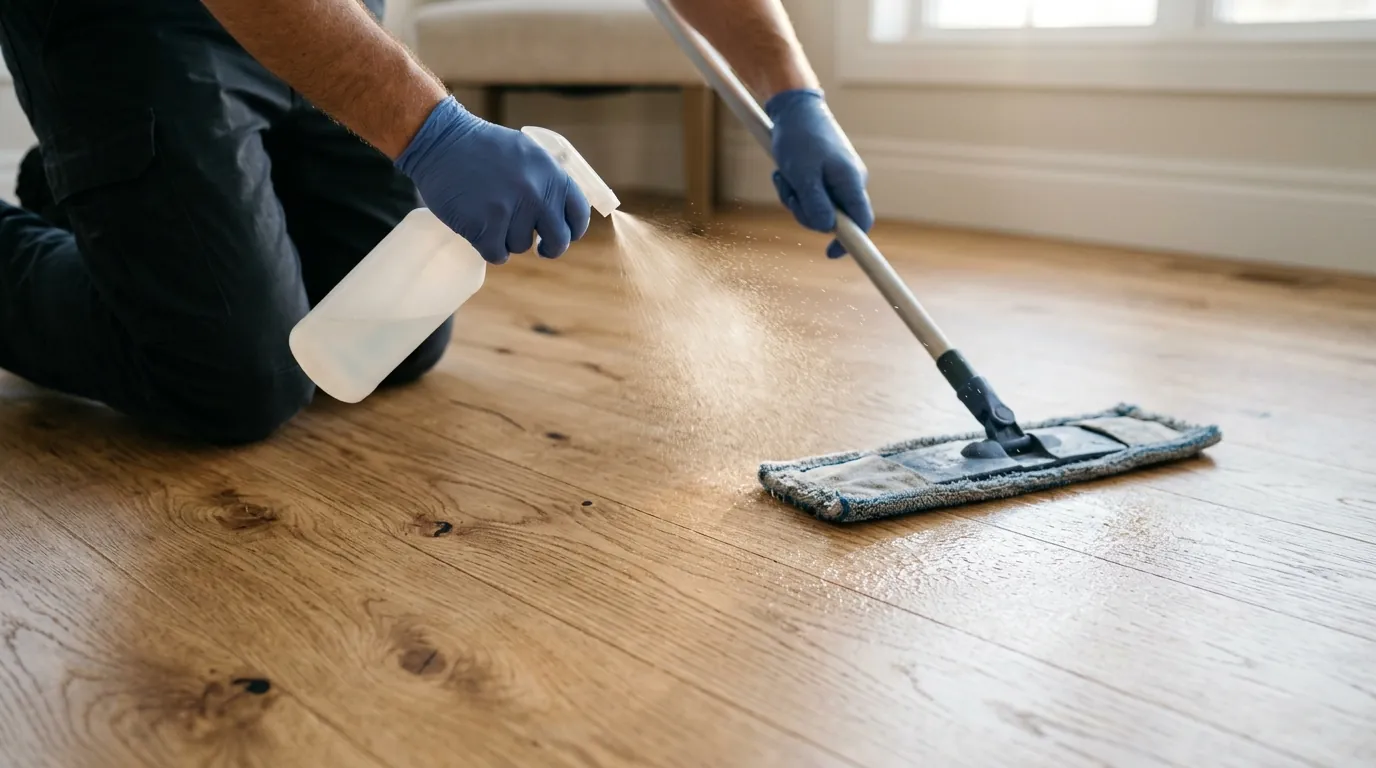
Before we start, we mark anything in the wood itself, such as water stains or deep scratches, so you know what to expect.
What changes the price of hardwood floor cleaning
We price hardwood cleaning by area and condition after a few questions on the phone.
- Square footageOpen floor plans clean faster per foot than small rooms full of furniture.
- Residue buildupLayers of oil soap or polish take extra passes to lift.
- FurnitureRooms cleared ahead of time shorten the visit.
- Salt and gritWinter salt film near entries needs its own treatment.
- Finish typeOiled and waxed floors need different products than polyurethane.
Cleaning, recoating or refinishing: which one your floor needs
Most floors only need the first. Here is how to tell.
| Deep cleaning | Screen and recoat | Sand and refinish | |
|---|---|---|---|
| Fixes | Dullness, residue, grime, salt film | Fine scratches, worn sheen | Deep scratches, stains in the wood, bare spots |
| How often | Every few months to once a year | Every few years | Only when wear is deep |
| Disruption | Walk on it the same day | A day or so off the floor | Several days, furniture out |
Mopping it yourself or a professional clean
Dry dusting at home is exactly right. A few common habits are what dull the floor.
| Doing it yourself | When we do it | |
|---|---|---|
| Steam mops | Heat and moisture push into seams and cloud the finish | Never used on wood |
| Oil soaps and polishes | Leave a film that builds up and holds grit | Residue removed, nothing left behind |
| Wet mopping | Water sits in seams and can cup boards | Barely damp pad, dried section by section |
| Spot stains | Scrubbing can wear through the finish | Tested first, treated to suit the finish |
Residue and haze removal
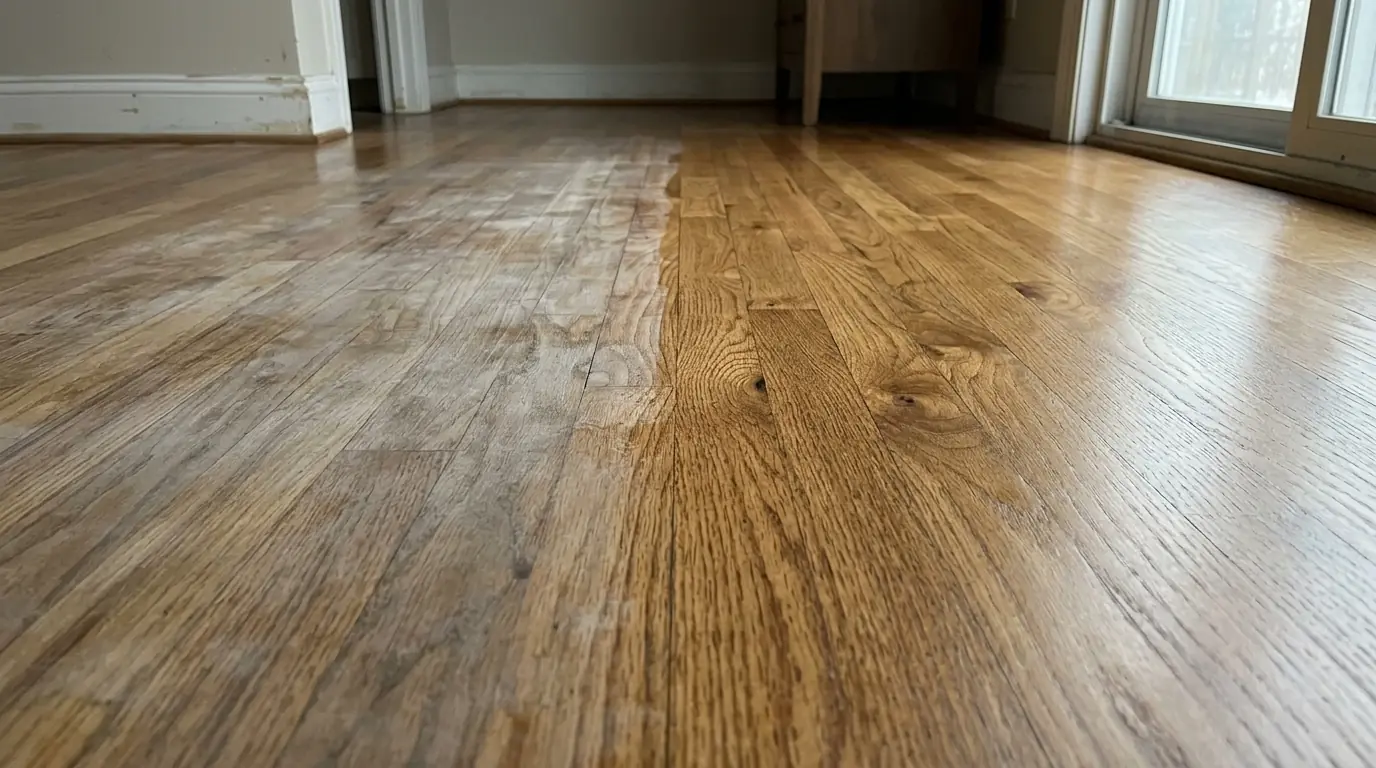
A cloudy or streaky floor that looks worse right after mopping is usually product buildup, not damage. Oil soaps, polishes and all-purpose sprays leave a film that grabs dirt and dulls the sheen. We lift it with a residue remover suited to a polyurethane finish, followed by a neutral cleaner so nothing new is left behind. Floors with a waxed or oiled finish are handled differently, with products that finish can take, because a polyurethane cleaner can strip wax unevenly. You see the difference in raking light from a window.
Winter salt and grit cleanup
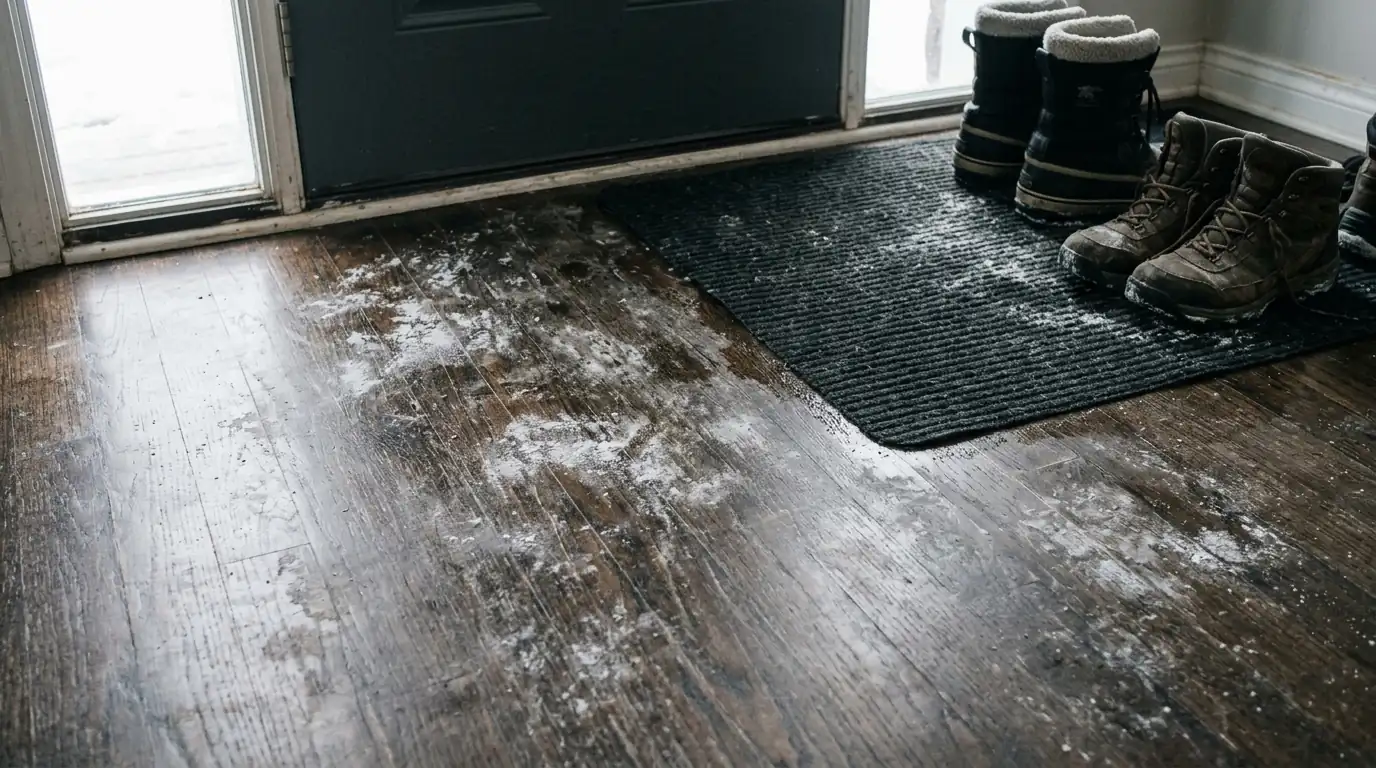
Salt and sand tracked in from sidewalks leave a white or gray film near doors and along the path to the kitchen, and the grit works like sandpaper on the finish. We dry-remove the loose grit first, then dissolve the salt film with a cleaner made for it, follow with a barely damp pad and dry the boards before moving on. Entry mats inside and out make the biggest difference afterward, and we suggest where they would catch the most. Late winter is the usual timing, once the snow season is over.
Engineered and prefinished floors
Engineered and prefinished floors carry a thin factory finish, often with beveled edges where boards meet, and those grooves collect dirt that a flat mop rides over. Many manufacturers spell out which cleaners their finish is meant for, so we follow the floor maker's care instructions where you have them, and use a neutral, water-light method where you do not. Because the wear layer on engineered boards is thin, we never use abrasive pads or strong strippers on them. The aim is the original factory sheen, not a new coat.
Old Bridgeport floors and Connecticut road salt
Bridgeport's median home was built in 1955, and almost a third of units date from 1939 or earlier, so many floors here are original oak or maple with decades of coatings on top. Those floors usually brighten more from a careful residue removal than from anything else. Winter adds salt: Connecticut towns spread more than twice as much road salt as the state does, and the film it leaves by the door is the most common thing we clean off Bridgeport hardwood in March.
Step by step
How a hardwood floor cleaning runs
- 1
We ask about the floor
Wood type, age, finish if you know it, and what bothers you: haze, stickiness, salt or wear.
- 2
We test the finish
A small hidden spot first, so the product suits polyurethane, oil or wax.
- 3
We remove dry grit
Vacuum and dust mop before any liquid touches the floor.
- 4
We clean in sections
Neutral or residue cleaner, a barely damp pad, each section dried before the next.
- 5
We walk it with you
You see the result in good light, along with anything we marked before we started.
Wood floor care products and equipment from brands like these are what we work with
Hardwood floor cleaning questions
Often, yes. Most dullness is residue from cleaners and polish, which a deep clean removes. We point out any worn-through or deeply scratched areas before we start.
No. Steam and standing water push moisture into the seams and can cloud the finish or cup the boards.
We move light furniture and put it back. Heavy pieces, pianos and full bookcases are cleaned around.
Usually right after, once it is dry to the touch, because we dry each section as we go.
Yes, with products made for those finishes. Polyurethane cleaners can strip wax unevenly, so we test first.
Many homes need it once or twice a year, often once after winter to clear salt and grit, with dry dusting in between.
More floors and surfaces in Bridgeport
Floors looking tired?
Tell us the type of floor and what bothers you. We will tell you whether a cleaning will fix it before we book.