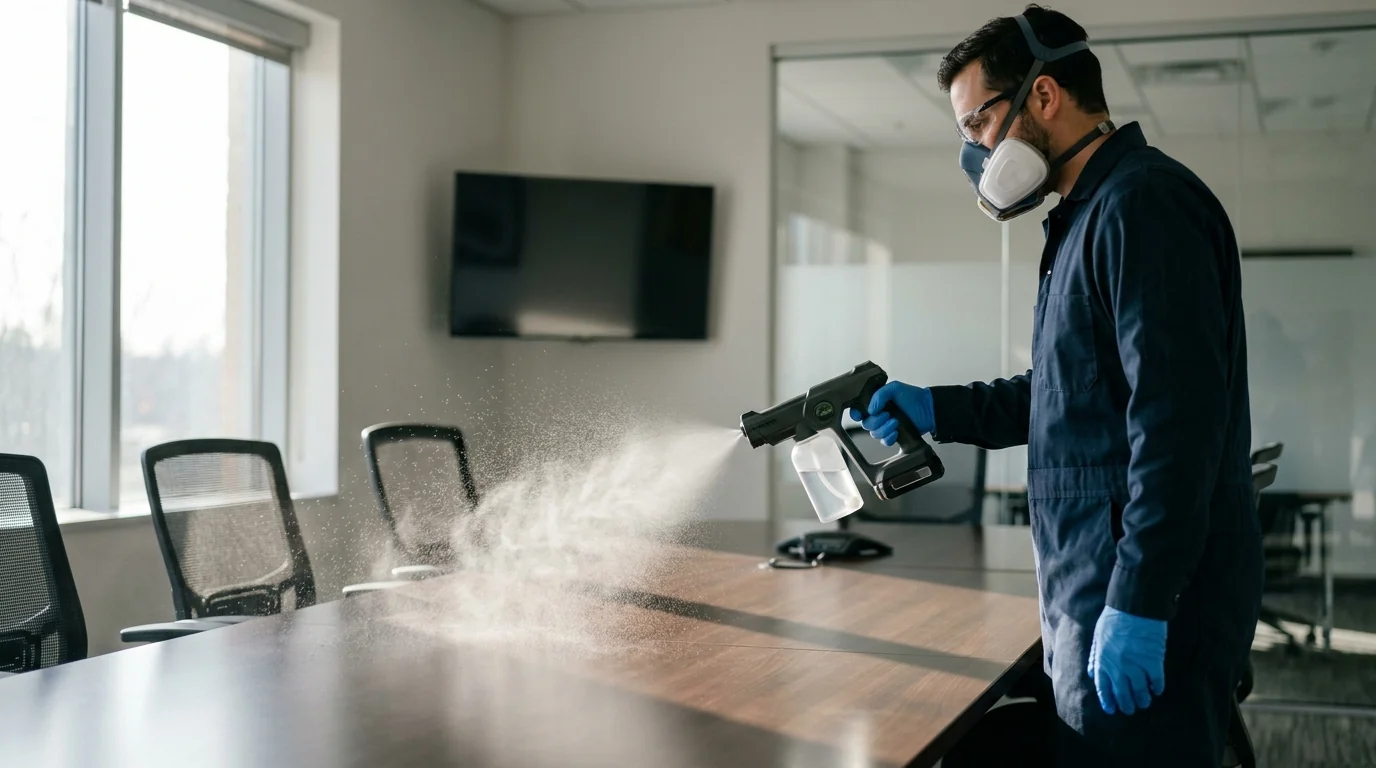
Home disinfection in Bridgeport means cleaning first, then treating door handles, switches, faucets, remotes, counters and bathroom fixtures with an EPA-registered disinfectant suited to each surface, kept wet for the contact time on its label.
After a stomach bug that means bleach-strength or norovirus-registered products.
What a home disinfection visit covers
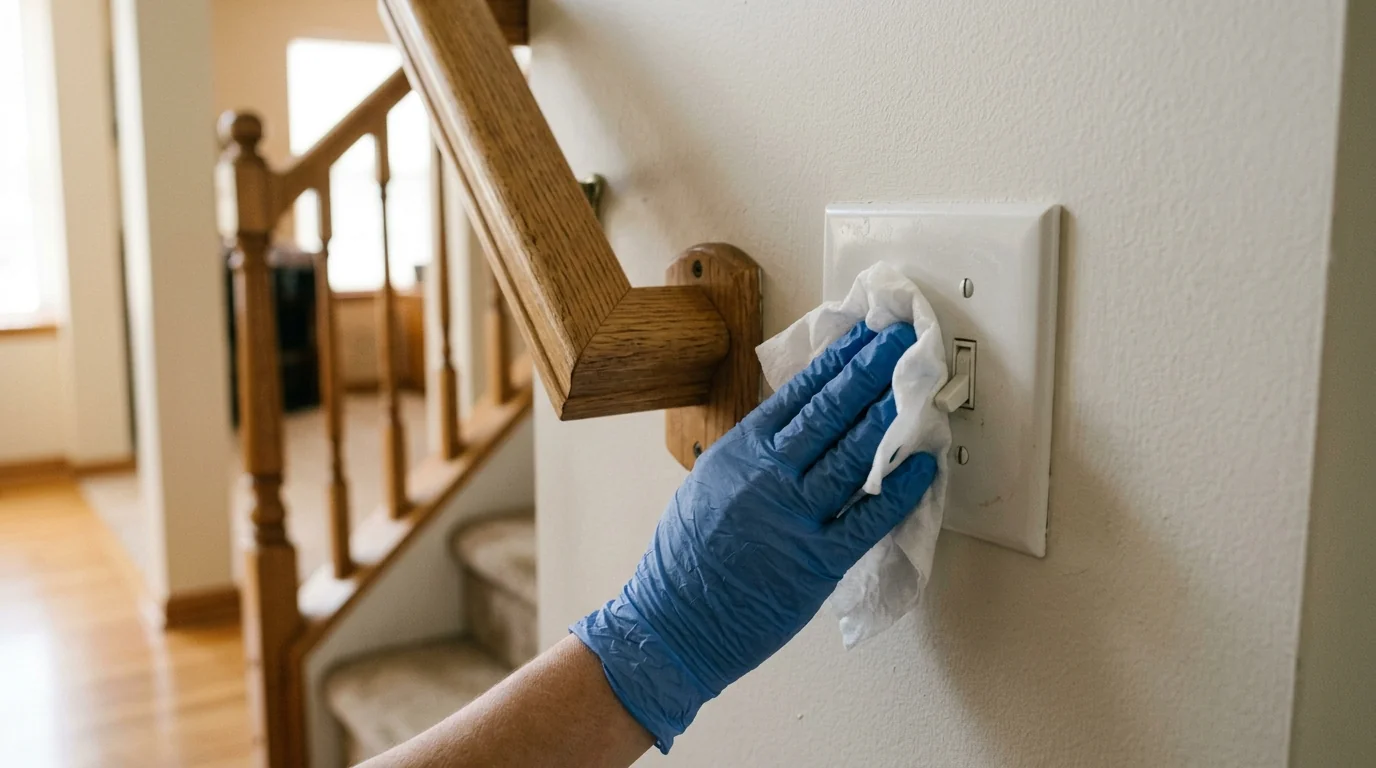
A home disinfection is not a deep clean, though it starts with cleaning. The focus is every surface hands touch: door and cabinet handles, light switches, faucets and flush handles, railings, remotes, phones and tablets, counters, tables and bathroom fixtures. Each is cleaned where it is soiled, then disinfected with a product registered for the germs that matter in your house, left wet for its contact time and rinsed where the label says so, such as kitchen counters.
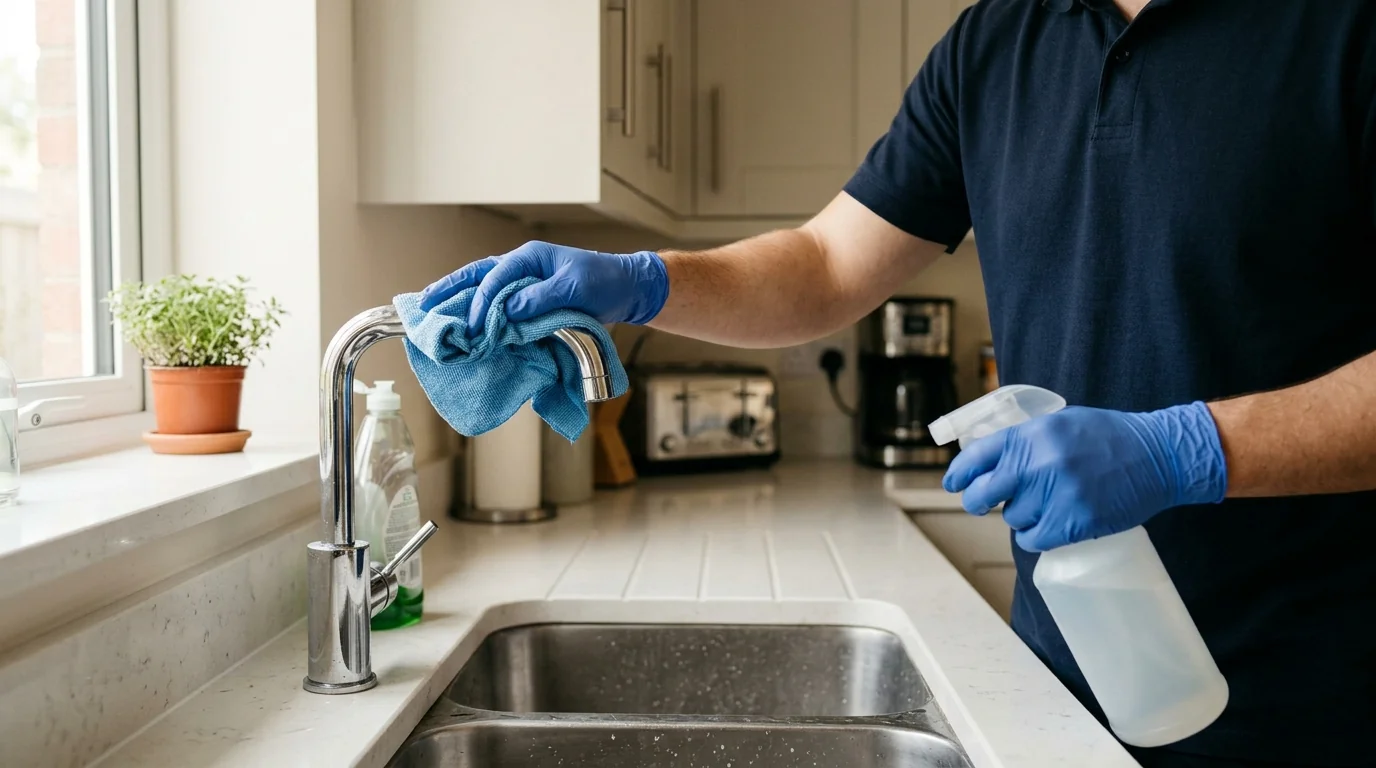
We ask who lives there, including children, pets and anyone with a weak immune system, and choose products with that in mind. Soft items like bedding and plush toys go to the laundry instead.
After a household illness
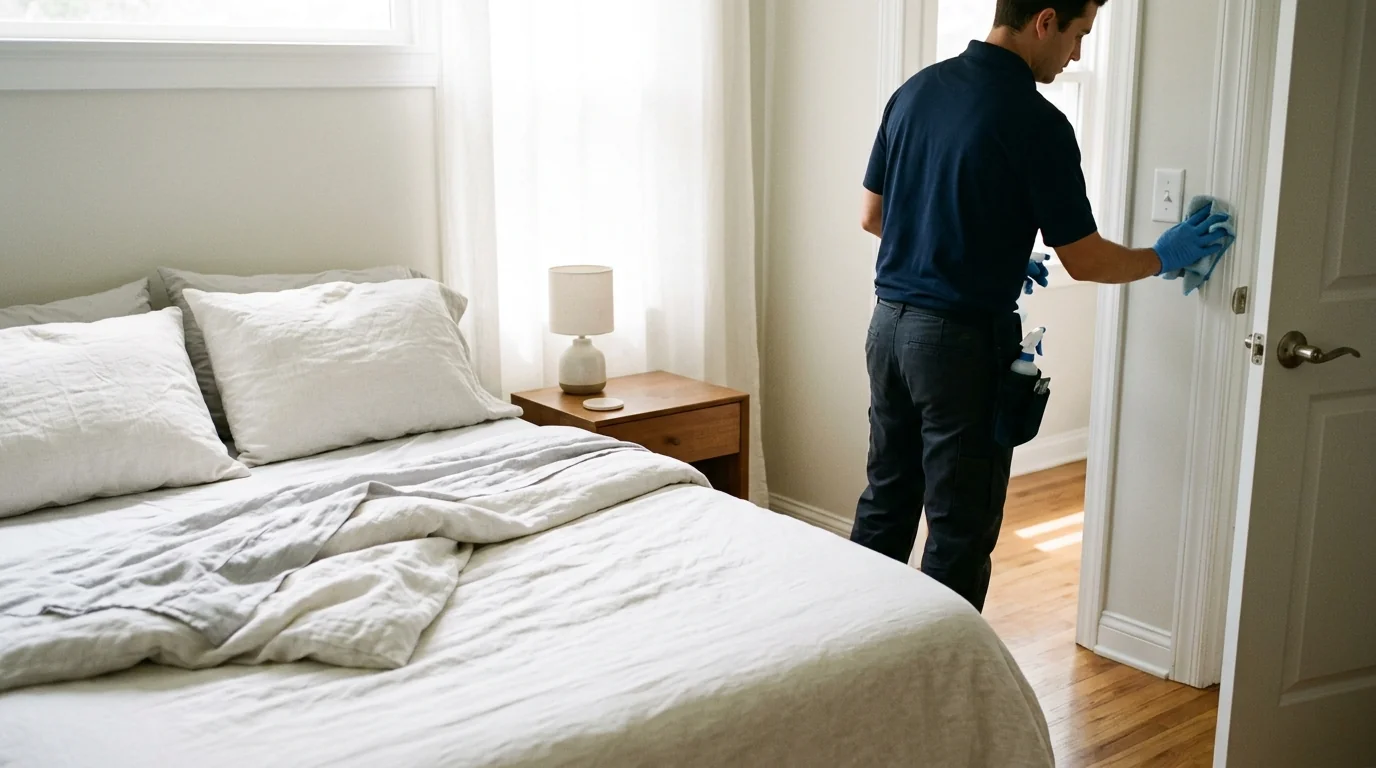
When flu, COVID-19 or a stomach bug has worked through the family, the house is covered in surfaces everyone touched while sick. We start in the sickroom and the bathroom, then work through the kitchen and shared rooms. For respiratory viruses many registered products work; for norovirus we use bleach at the strength CDC recommends, 1,000 to 5,000 ppm, or a product registered against norovirus, because many household sprays do not list it. The visit is usually booked once the last person is on the mend.
Before a newborn or a vulnerable guest
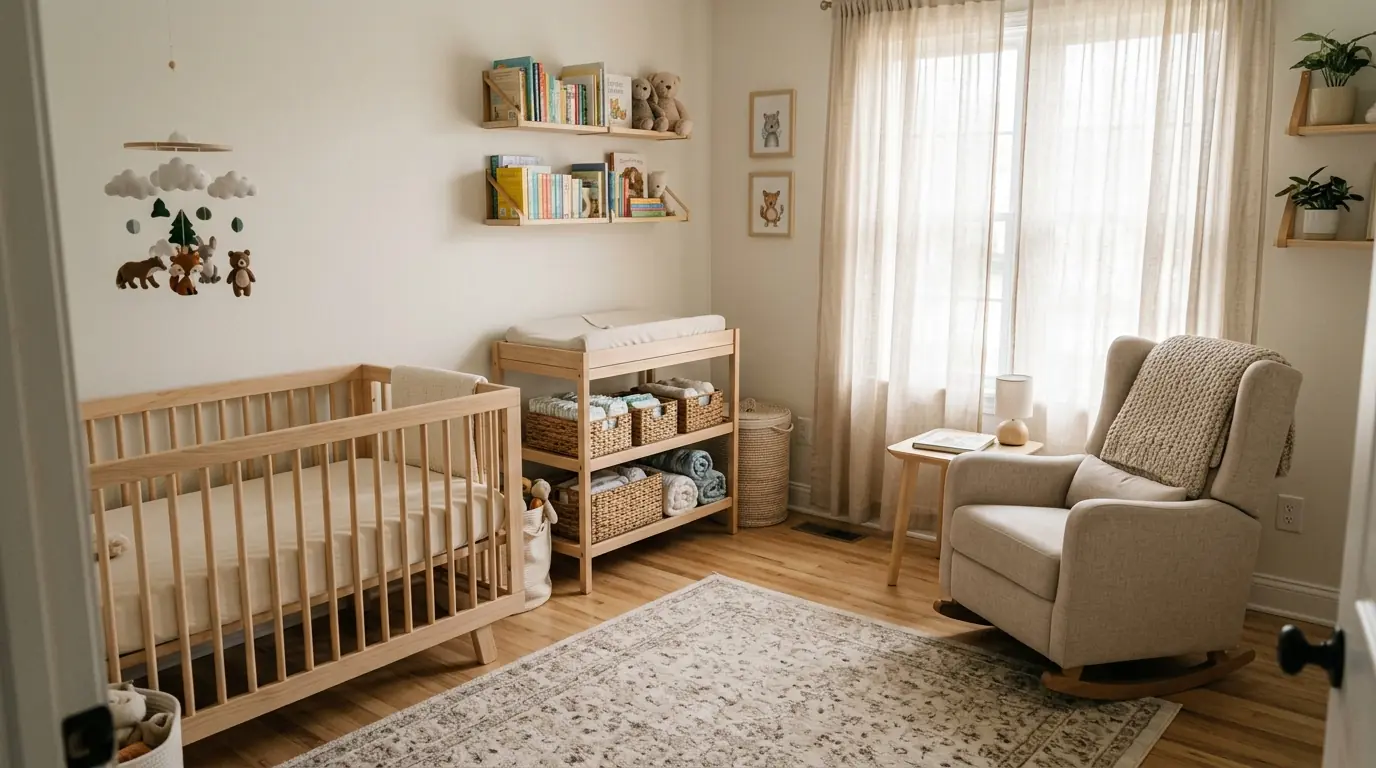
Bringing a newborn home, or welcoming a relative after surgery or chemotherapy, is a reason many families want the house treated first. We clean and disinfect the nursery or guest room, bathroom fixtures, kitchen surfaces and every handle and switch along the way, choosing products suited to homes with infants and rinsing surfaces babies may touch or mouth where the label calls for it. We avoid scented products in nurseries, and you get a list of what was used so you can ask your doctor about anything specific.
High-touch surface treatment
Some households book a regular high-touch treatment through the winter instead of a one-time visit: handles, switches, railings, remotes, faucets and counters, done weekly or every other week from October through spring. It is quicker than a full clean because it focuses only on the surfaces that pass germs between people, and it pairs well with a regular house cleaning on the same visit. Families with children in daycare or school, and households caring for an older relative, book it most often.
Step by step
How a home disinfection visit runs
- 1
You tell us what happened
Who was sick and with what, or who is arriving and when.
- 2
We plan the products
Registered for the germs involved and suited to your surfaces and household.
- 3
We clean where needed
Soiled surfaces cleaned first so the disinfectant can work.
- 4
We treat every touch point
Room by room, kept wet for the contact time, rinsed where required.
- 5
You get a list
Rooms treated and products used, plus what to launder.
Shared entries in Bridgeport's two- and three-family houses
About a third of Bridgeport's housing units sit in two-family and three-to-four-unit buildings, where the front door, hallway, stair rail and laundry room are shared by every household. When one apartment has a stomach bug, those shared touch points are how it reaches the others, so we treat them along with the sick unit when the landlord or neighbors agree. For norovirus that means the bleach strength CDC recommends, 1,000 to 5,000 ppm, on hard surfaces in the shared spaces too.
What changes the price of home disinfection
Home disinfection is priced from the size of the home and what happened.
- Home sizeMore rooms means more surfaces to treat.
- The illness involvedNorovirus needs bleach-strength products and more care.
- Cleaning needed firstSoiled areas take longer before disinfection can start.
- Shared spacesHallways and laundry rooms in shared buildings add time.
- Recurring scheduleRegular high-touch visits cost less each than one-time calls.
Cleaning, sanitizing and disinfecting at home
Each has its place in a house. This is where each one belongs.
| What it does | Where it belongs at home | |
|---|---|---|
| Cleaning | Removes dirt and most germs with detergent | Every surface, every visit |
| Sanitizing | Lowers germs to safe levels | Cutting boards, high chair trays, food surfaces |
| Disinfecting | Kills the germs on the label, given contact time | Bathrooms, handles, switches, sickrooms |
Disinfecting yourself or calling us
Plenty of families do this themselves after a cold. This is where it often falls short.
| Doing it yourself | When we do it | |
|---|---|---|
| Contact time | Spray and wipe straight away | Surface kept wet for the full label time |
| Norovirus | Household sprays often do not list it | Bleach at CDC strength or a registered product |
| Coverage | The obvious spots | Every handle, switch, remote and rail |
| Rinsing | Often skipped on food surfaces | Rinsed where the label requires |
Home disinfection questions
We choose products suited to homes with children and pets, follow the label for re-entry and rinse surfaces they may touch or mouth where required.
Once the last person is recovering, so the house is not contaminated again straight after the visit.
Only with products labeled for soft surfaces. Most fabric items are better laundered or cleaned.
It depends on the size of the home and the contact times of the products. We give you an estimate on the phone.
Yes, with the landlord's agreement, because shared touch points are how illness moves between apartments.
Stay out of the rooms being treated until the label allows re-entry. Many families step out for the visit.
More disinfection in Bridgeport
Want the house treated before someone comes home?
Tell us who is arriving or what illness went through the house. We will plan the visit around it.