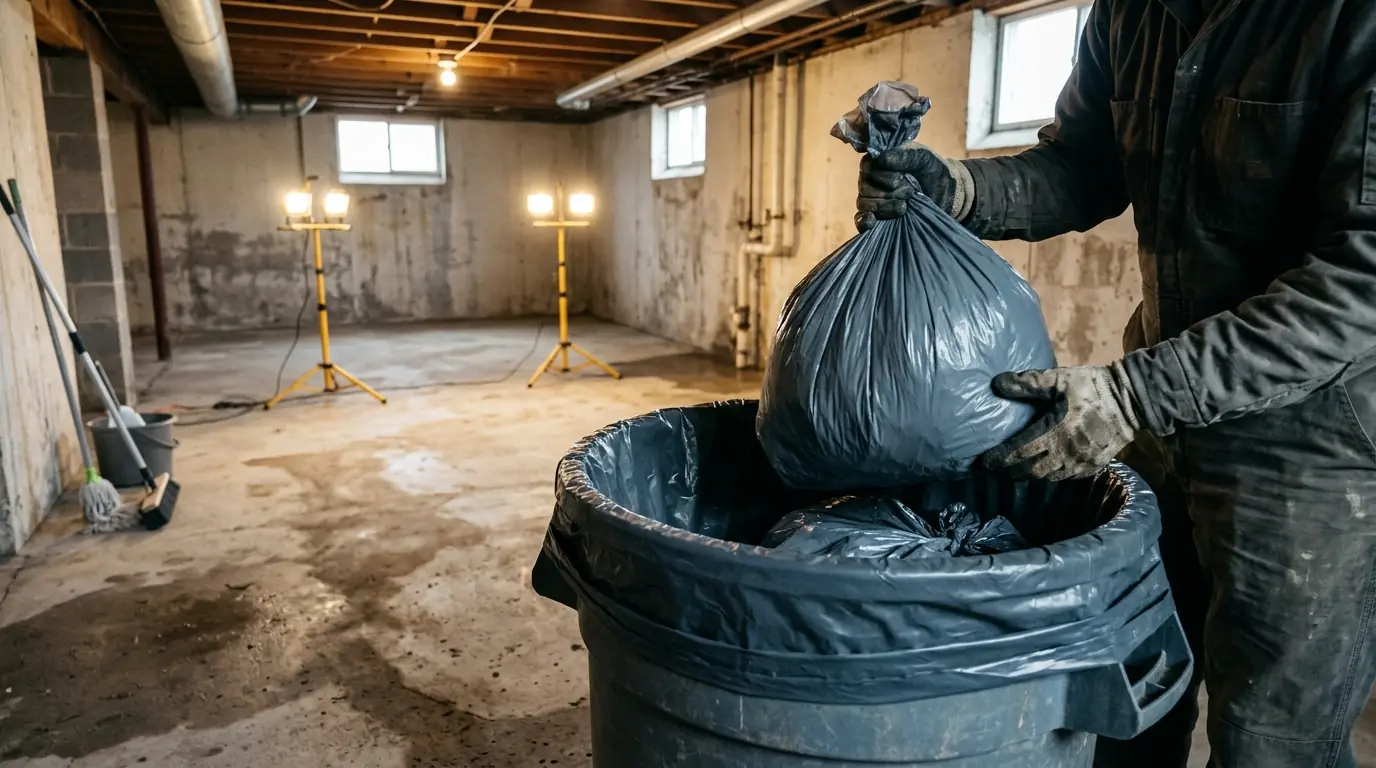
Rodent dropping cleanup in Bridgeport follows CDC guidance: air the space out, soak droppings and nesting material with a 1 to 10 bleach solution or a disinfectant for 5 minutes, wipe them up with disposable towels, bag them, then clean and disinfect every surface nearby.
Droppings are never swept or vacuumed dry.
Why droppings need a different cleanup
Mouse and rat droppings, urine and nesting material can carry diseases, and the risk comes from breathing dust when dried droppings are disturbed. That is why sweeping or vacuuming them dry is the one thing CDC guidance says not to do. The safe method is slower: ventilate, wet everything down with disinfectant, wait, wipe it up with disposable towels, bag it, and then clean and disinfect the surfaces it sat on.
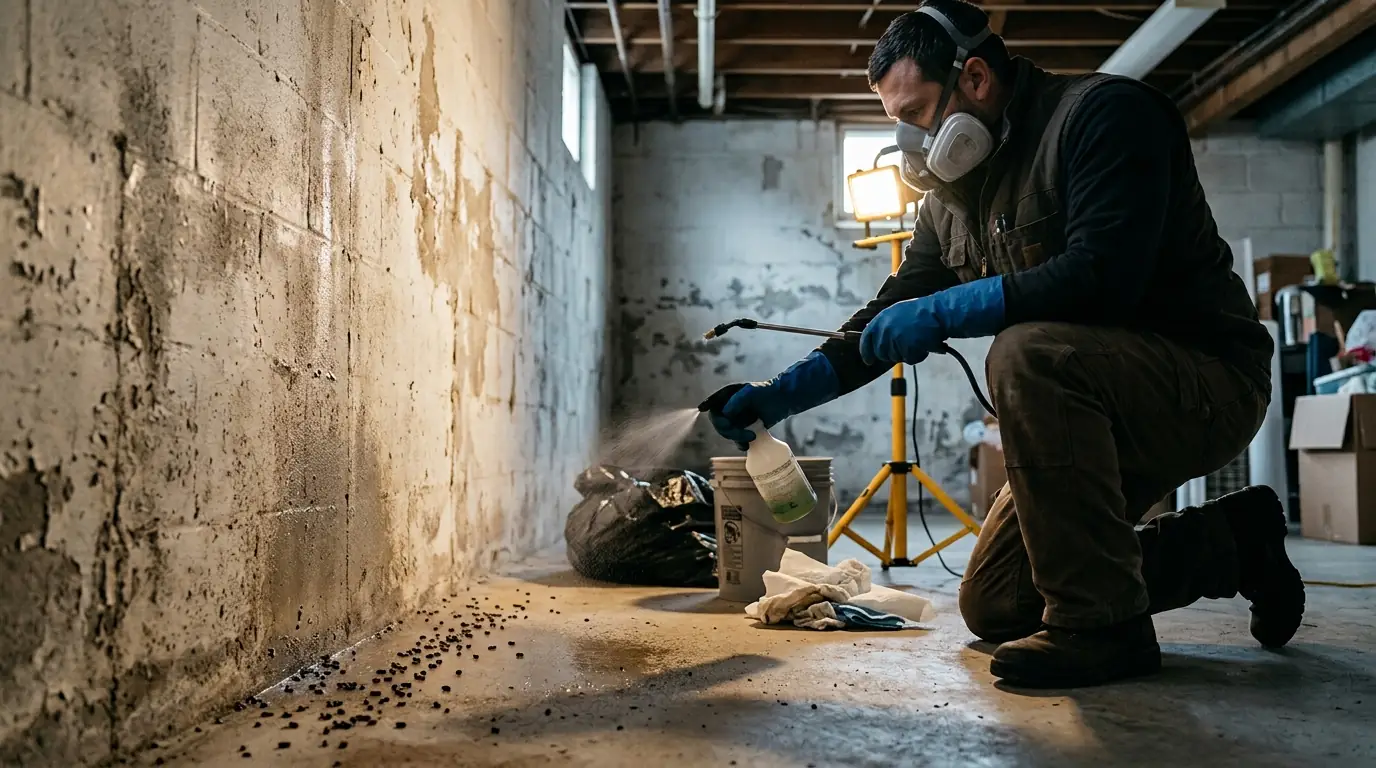
We wear gloves, eye protection and respirators for heavy contamination, and we tell you plainly what has to be thrown away, such as insulation or cardboard soaked with urine. The cleanup is timed for once the mice are gone, so new droppings do not undo it.
Signs rodents have been living inside
Droppings in drawers, cabinets or along walls
Small dark pellets usually mean mice; larger ones usually mean rats.
Shredded paper, fabric or insulation
Nesting material is usually close to where they sleep.
A sharp ammonia smell
Built-up urine in a closed space, often an attic or cabinet.
Gnaw marks on packaging or wiring
Active feeding, and a reason to call pest control too.
Grease marks along baseboards
Rub marks along the routes rodents travel.
Step by step
How a rodent cleanup runs
- 1
You call and tell us what you found
Where the droppings are, how much, and whether rodents are still active.
- 2
We ventilate the space first
Doors and windows open before anything is disturbed.
- 3
We soak, wait and wipe
Droppings and nests wetted with disinfectant, left to soak, then wiped up and bagged.
- 4
We clean and disinfect the area
Floors, shelves, cabinets and every surface the rodents reached.
- 5
We list what must be replaced
Soiled insulation, cardboard and fabrics that cannot be cleaned safely.
Attics and basements
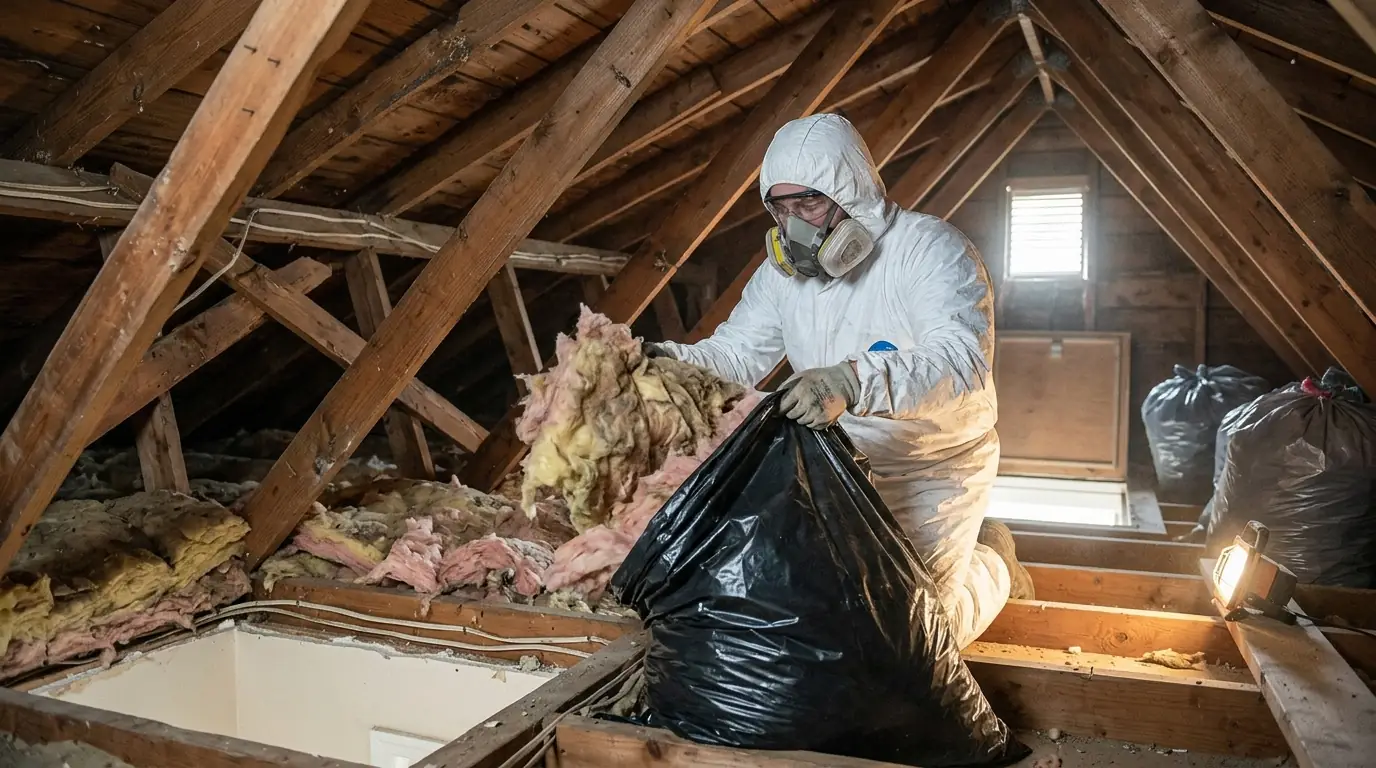
Attics and basements are where mice and rats nest out of sight, in insulation, stored boxes and the gap along the sill plate. We ventilate, soak droppings and nesting material, remove soiled insulation batts and cardboard in sealed bags, then clean and disinfect the floor, joists, shelving and any stored items that can be saved. Blown-in attic insulation that is heavily soiled is vacuumed out with HEPA equipment and bagged rather than cleaned around, so no contaminated material is left behind in the attic.
Garages and sheds
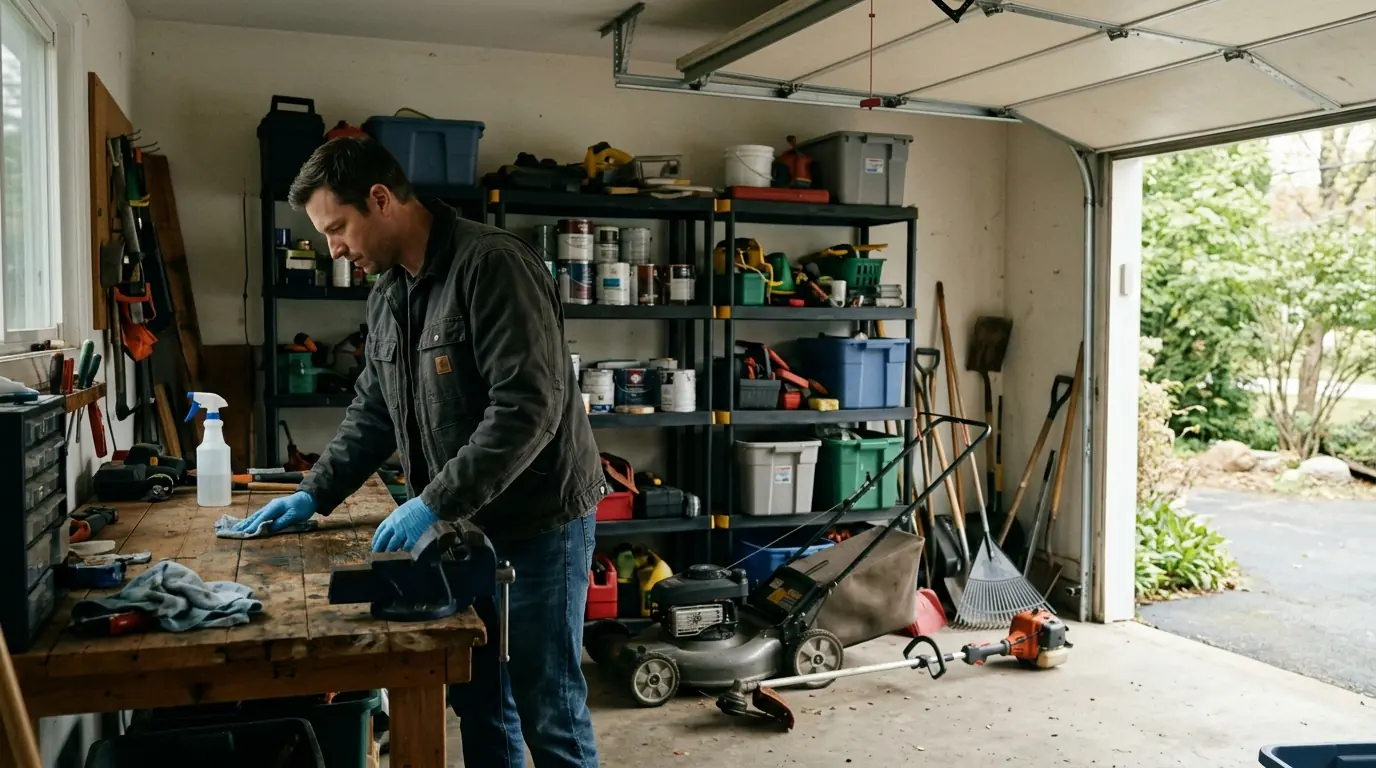
Garages and sheds collect droppings in corners, behind stored items and inside anything left open, from bags of birdseed to lawn equipment. Because these spaces are often closed for months, we open them up and let them air out before anything is moved. Droppings are wetted and removed, contaminated items are either disinfected or bagged for disposal, and floors, shelving and workbenches are cleaned and disinfected. Gardening gloves, cushions and anything fabric that mice nested in usually goes, and we sort that with you.
Seasonal homes and cabins
Cottages and lake homes that sit closed all winter are where we find the most droppings, in kitchen drawers, under sinks, in closets and inside mattresses. Opening the house before you move back in is exactly the situation CDC guidance warns about, because dried droppings in a closed space are easy to stir up. We air the house out first, clean and disinfect kitchens, cabinets, closets and bathrooms, and set aside bedding, upholstery and stored food the mice reached. The house is ready to use when we leave.
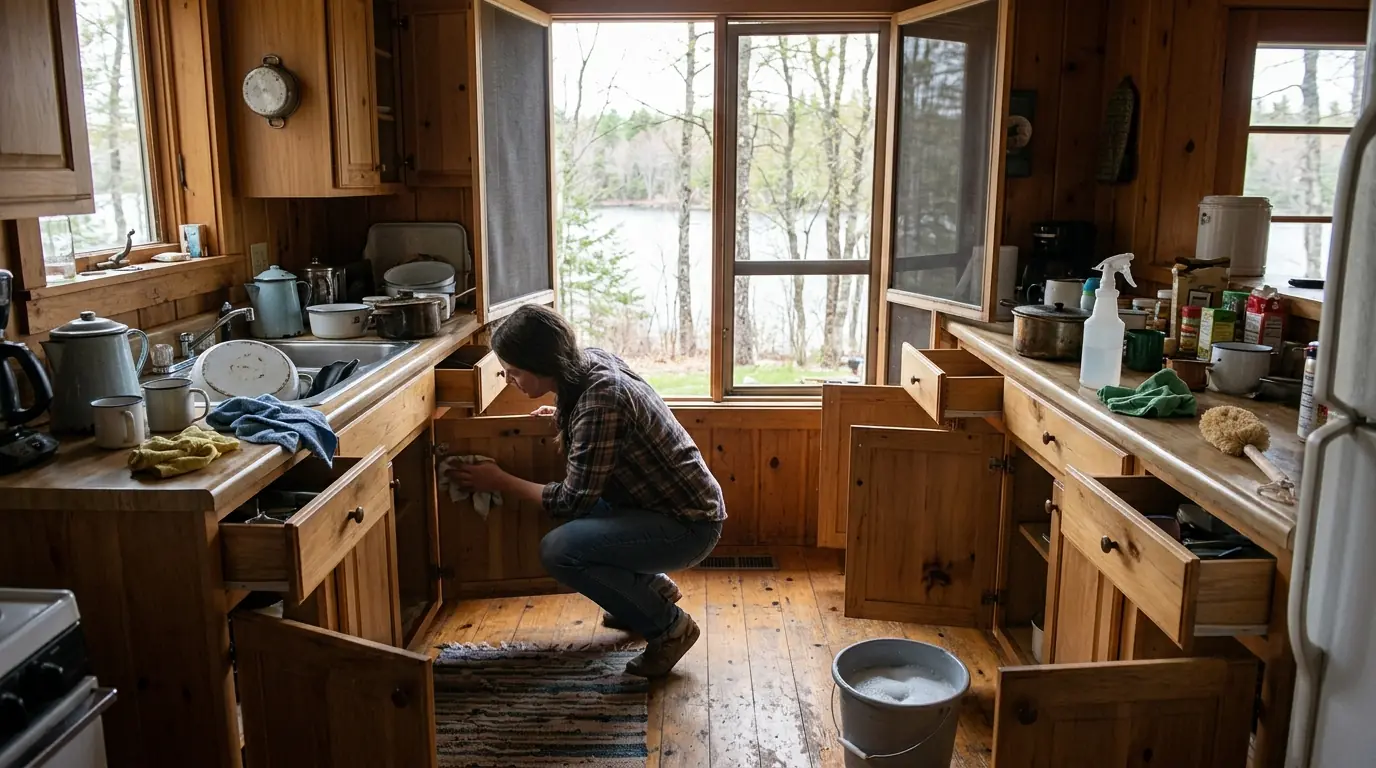
Older Bridgeport basements and closed-up lake cabins
Bridgeport's housing is old, with a median build year of 1955 and almost a third of units built in 1939 or earlier, and older foundations, sill plates and utility openings give mice plenty of ways in once the weather turns cold. The other big source of calls is the lake country around Candlewood Lake, where second homes sit closed for months. Either way the cleanup is the same, following CDC guidance to soak droppings for five minutes before anything is wiped up.
How long before you can use the space
Most rooms are ready the same day, once surfaces have been cleaned, disinfected and allowed to dry. Heavy contamination, especially in attics with soiled insulation, takes longer because material has to come out before cleaning, and we give you an estimate once we know what you found.
What changes the price of rodent dropping cleanup
Cleanup is priced once we know the space and how much contamination there is.
- Area affectedA kitchen cabinet is quick; a full attic is a project.
- Amount of droppingsHeavy, long-term activity takes much longer to clean safely.
- Material removalSoiled insulation and stored items add removal and disposal time.
- AccessTight crawl spaces and attics slow the work.
- VentilationClosed spaces need airing out before work can start.
Rodent dropping cleanup questions
No. Vacuuming or sweeping dry droppings can put contaminated dust in the air. CDC guidance is to soak them with disinfectant first, then wipe them up.
Once the mice are gone, so new droppings do not undo the work. We then clean and disinfect every affected area, attic to basement.
A 1 to 10 bleach and water solution or an EPA-registered disinfectant, left to soak for 5 minutes, as CDC rodent cleanup guidance describes.
We bag and remove loose batts and stored items. Heavily soiled blown-in insulation is vacuumed out with HEPA equipment and bagged as well.
Yes. The method is the same, with more attention to larger droppings and urine stains.
Yes. Keep the space closed, do not sweep or vacuum, and keep children and pets away from it.
More biohazard cleanup in Bridgeport
Found droppings today?
Tell us where they are and how much you found. We will tell you what to avoid until we get there.