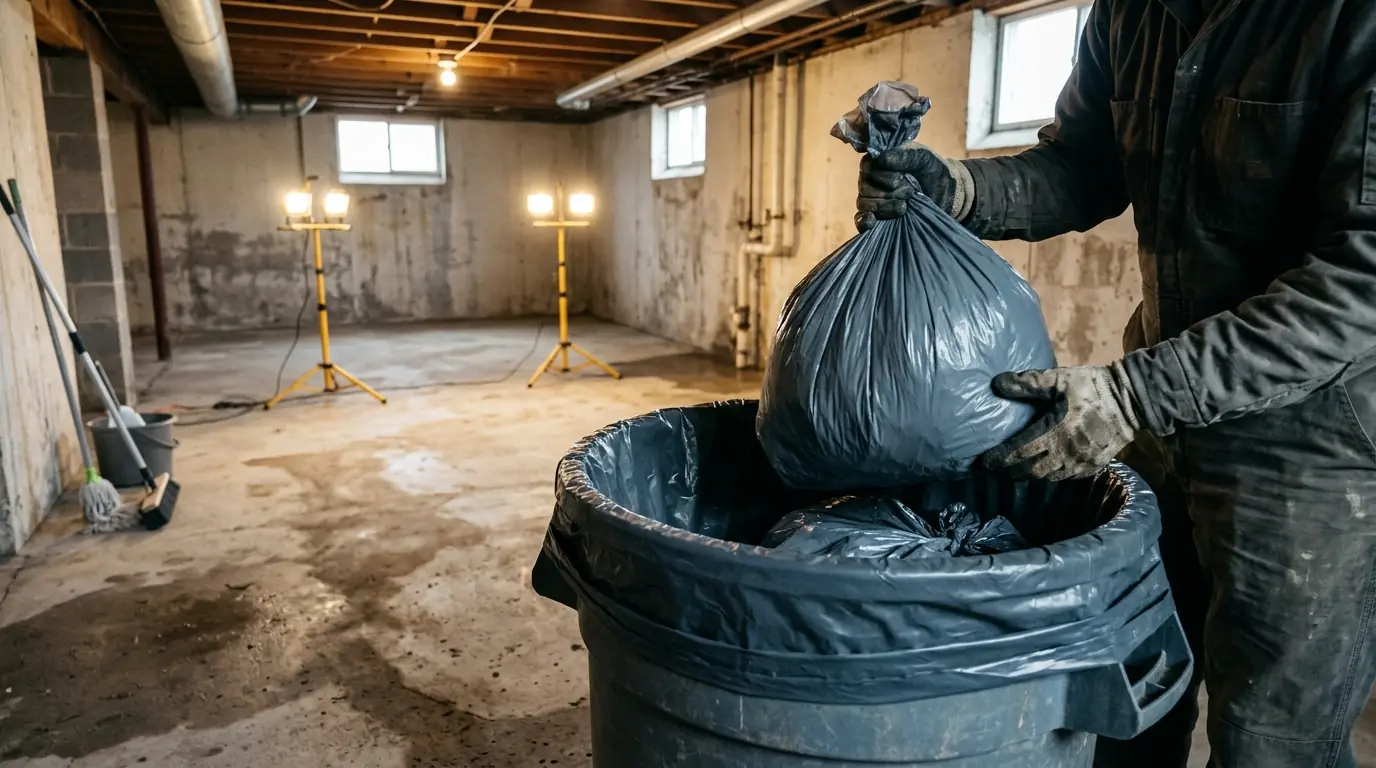
Post-flood cleaning in Bridgeport starts after the water has been removed and drying has begun: we shovel and wash out silt, clean hard surfaces with detergent, then disinfect what floodwater touched with an EPA-registered product kept wet for its contact time.
Soaked drywall, carpet pad and insulation come out first; cleaning cannot save them.
Where flood cleanup fits, and where it does not
Floodwater is not clean water. River, storm and sewer backup water carries mud, bacteria and whatever was stored on the floor, and it leaves that behind when it drains. Removing standing water and drying the structure with fans and dehumidifiers is water damage restoration, and that comes first. Our part starts when the space is drained and drying: clearing silt, cleaning every hard surface, disinfecting what the water touched and dealing with the smell.
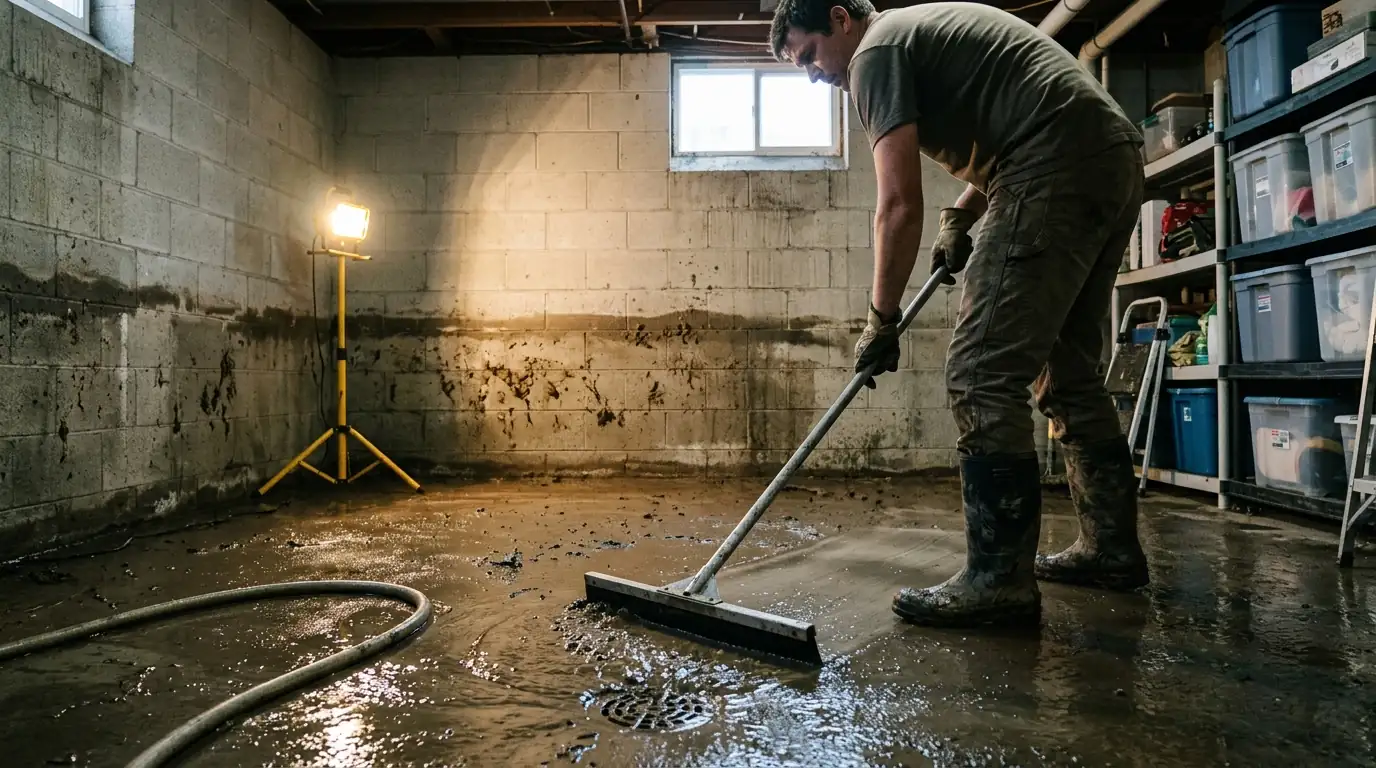
Some materials cannot be cleaned back to safe. Drywall that wicked water, insulation, carpet pad and particleboard furniture usually have to go, and we point those out so they are removed before we clean.
Signs the cleanup needs more than a mop
A waterline on the walls
Anything below that line was soaked and needs cleaning or removal.
Mud or silt on the floors
Silt carries bacteria from the floodwater and dries into dust.
Sewage smell or backup
Water from a floor drain or toilet means a sewage cleanup, not just a wash.
Soft or stained drywall
Wicked water feeds mold until the wet material is cut out.
A musty smell after a week
Moisture is still trapped somewhere and drying is not finished.
Step by step
How a post-flood cleanup runs
- 1
You call and describe the flood
Where the water came from, how deep it got and whether it is out yet.
- 2
We check that drying is under way
Standing water has to be removed and the space dried first.
- 3
Damaged materials come out
Soaked drywall, pad and insulation are removed before cleaning.
- 4
We clean, then disinfect
Silt out, hard surfaces washed with detergent, then disinfected for the contact time.
- 5
We treat the smell and walk it with you
Odor control once things are clean, and a list of anything still wet.
Basement silt and mud cleanup
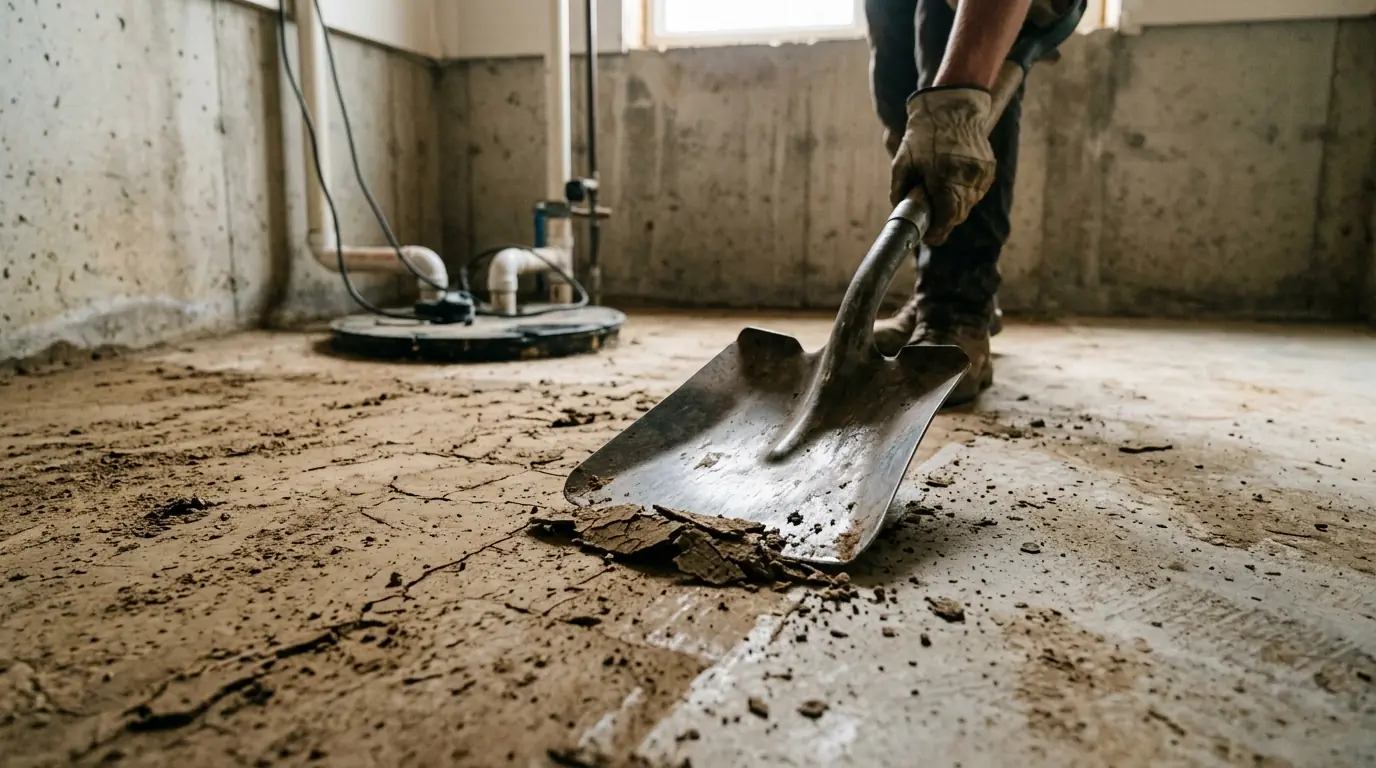
Silt is the fine mud floodwater leaves behind, and once it dries it turns into dust that spreads through the house. We shovel and scrape the heavy layer, wash floors and walls down to a floor drain or sump where one exists, and scrub concrete, block and tile with detergent before anything else goes on. Shelving, water heaters, furnace cabinets and stair treads are washed where the water reached them. Belongings are sorted with you into keep and discard piles, and nothing is thrown out without your say.
Disinfecting after floodwater
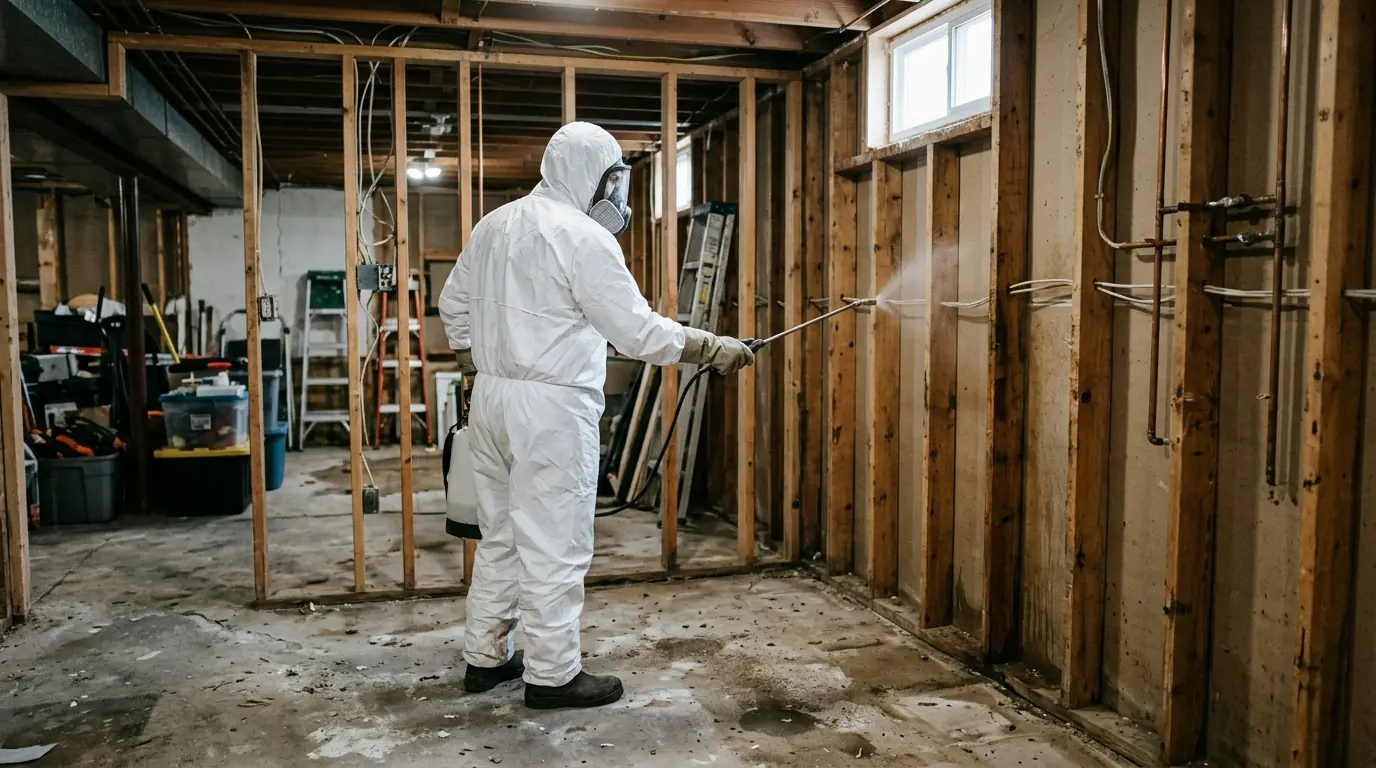
Once surfaces are clean, everything the water touched is disinfected with an EPA-registered product suited to concrete, tile, wood framing or metal, and kept wet for its full contact time. Disinfecting dirty surfaces wastes the product, so the cleaning step is never skipped. Where the water came from a sewer backup, the work follows sewage cleanup practice: protective gear, removal of porous materials it touched, and extra attention to floors and lower walls. Framing that stays is cleaned and disinfected before it is left to dry fully.
Odor control after a flood
The smell after a flood comes from wet organic material: soaked cardboard, carpet, wood and the mud itself. Deodorizers only mask it, so we remove the source first, clean and disinfect, then treat what remains with an odor counteractant suited to the space. A smell that comes back once the space is closed up usually means something is still wet behind a wall or under a floor, so we find it with a moisture meter and dry it out before we treat the odor again. A dehumidifier afterward keeps it from returning.
Bridgeport Harbor, Black Rock and shared basements
During Hurricane Sandy, Long Island Sound came up through Bridgeport Harbor and flooded parts of the city, including a waterfront condominium lot on Beachview Avenue in Black Rock. Storms like that leave basements coated in silt from the harbor. In Bridgeport about a third of units sit in two-family and three-to-four-unit buildings, which usually share one basement holding the boiler, the laundry and every tenant's storage, so one flood means one large cleanup for the whole building.
How long a flood cleanup takes
A cleanup cannot finish before the space is dry, so the drying schedule sets the pace. The cleaning and disinfecting itself is usually a visit or two, depending on how much silt there is and how many belongings need sorting, and we give you an estimate on the phone once we know how deep the water got.
What changes the price of post-flood cleaning
Flood cleanup is priced once we know the space and what the water left behind.
- Area affectedA corner of a basement is very different from a whole floor.
- Silt depthHeavy mud takes far longer to clear than a thin film.
- Water sourceSewer backup adds protective steps and more removal.
- BelongingsSorting a full storage area adds hours.
- Odor treatmentStubborn smells may need a second visit.
What a post-flood cleanup includes
Every flood is different. This is the base we work from.
- Silt and mud removed from floors and walls
- Hard surfaces washed with detergent
- Disinfection of everything floodwater touched
- Framing, stairs and fixtures cleaned where wet
- Belongings sorted with you to keep or discard
- Porous materials flagged for removal
- Odor control after cleaning
- Moisture readings, with drying wherever anything is still wet
Post-flood cleaning questions
Yes. Standing water is extracted, soaked materials come out and drying equipment is set before the space is cleaned and disinfected.
Not reliably. Drywall that wicked water usually has to be cut out above the waterline before cleaning.
It can carry bacteria and sewage, so we wear gloves, boots and eye protection and clean before we disinfect.
Hard items like metal, glass and sealed plastic usually clean up well. Upholstery, mattresses and cardboard soaked in floodwater usually cannot.
Once wet materials are out, surfaces are cleaned and the space is dry, yes. A returning smell means something is still wet.
Yes. We photograph the work and list everything cleaned and removed, so your adjuster has what they need for the claim.
More biohazard cleanup in Bridgeport
Basement flooded?
Tell us where the water came from and whether it is out yet. We will tell you what has to happen first and when we can clean.