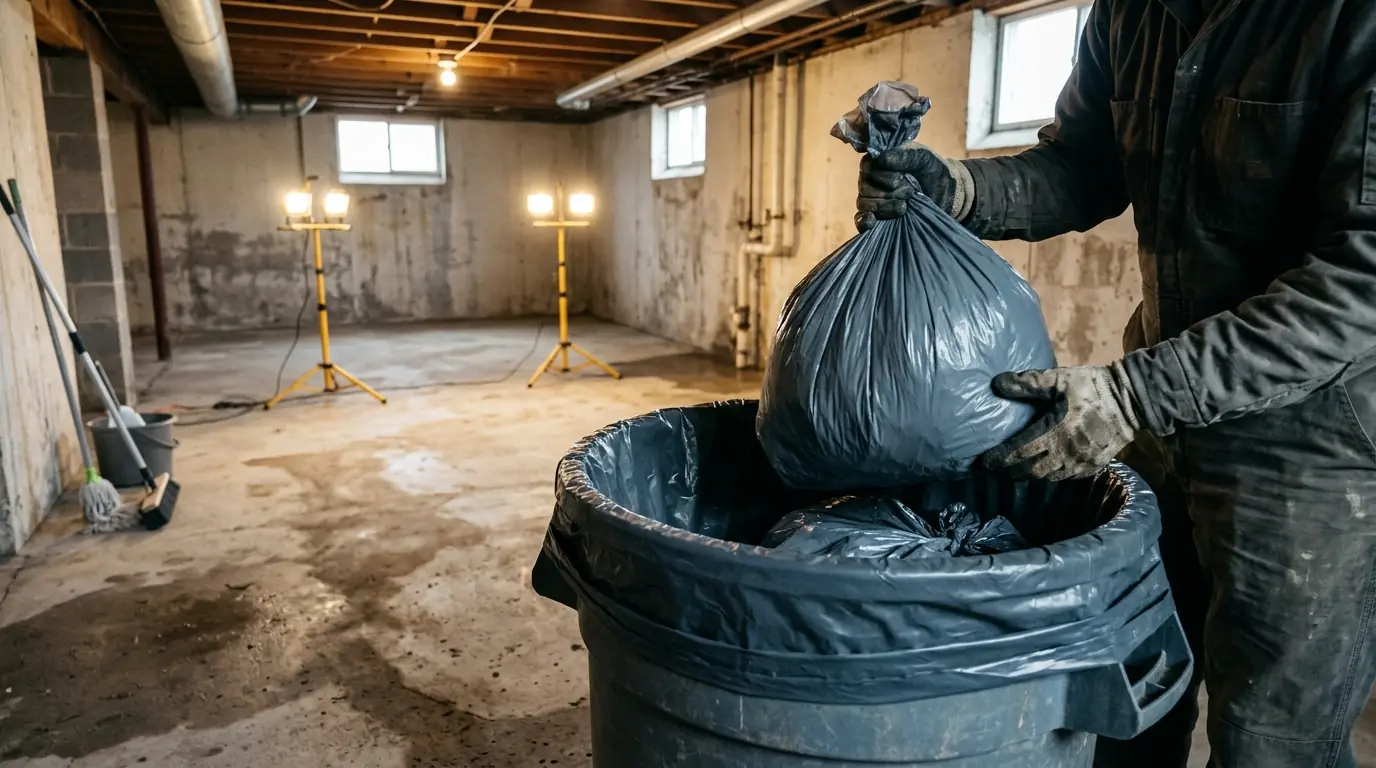
Sewage backup cleanup in Bridgeport means removing the sewage and every porous material it soaked, including carpet, cardboard, wallboard and upholstery, as Connecticut DPH advises, then cleaning and disinfecting hard surfaces, drying the space and treating the odor.
We photograph and list what is discarded for your insurer.
Why sewage is a biohazard, not a water leak
Sewage carries bacteria, viruses and parasites from human waste, and Connecticut's Department of Public Health notes that the risk of illness grows the longer sewage stays in contact with a building. That is why a sewage backup is treated differently from a clean-water leak. Anything porous it soaked, from carpet and padding to drywall and cardboard boxes, holds contamination that cleaning cannot reliably reach.
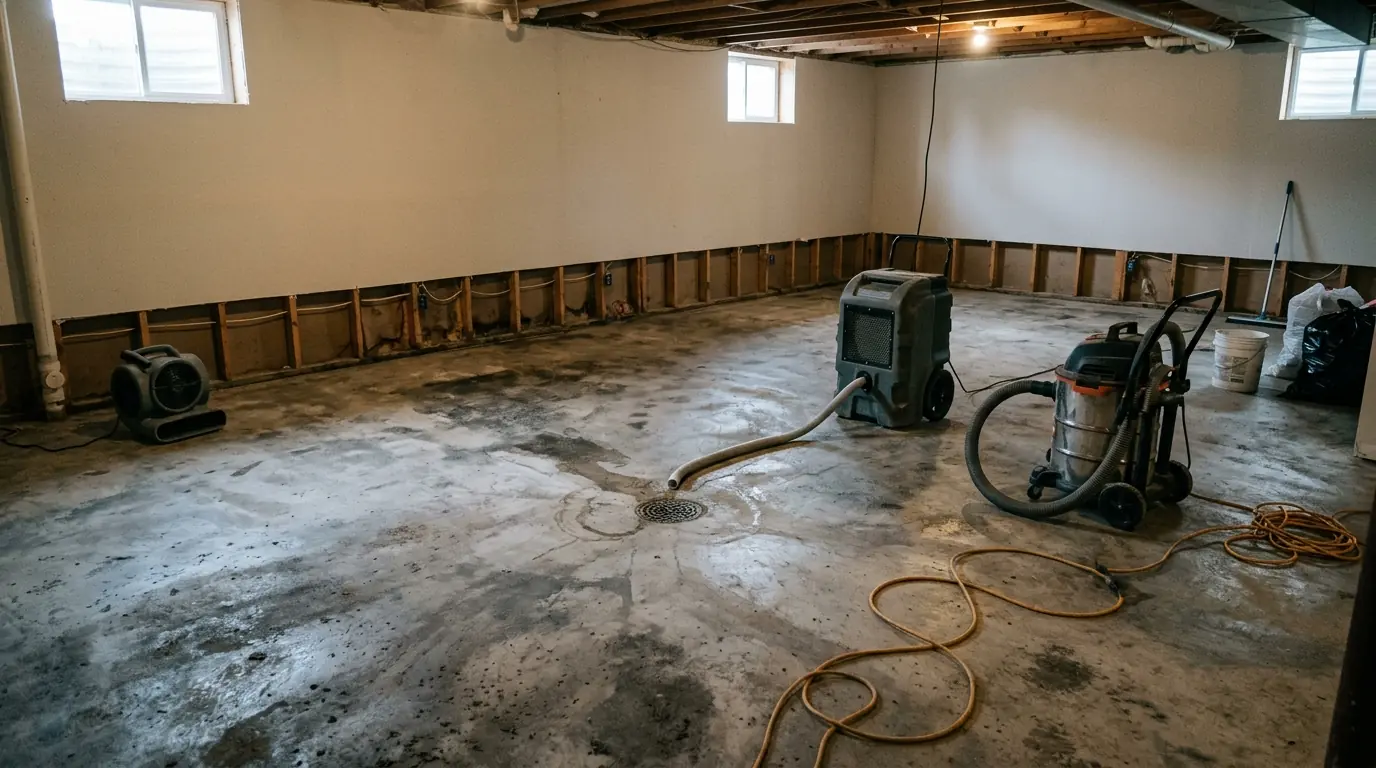
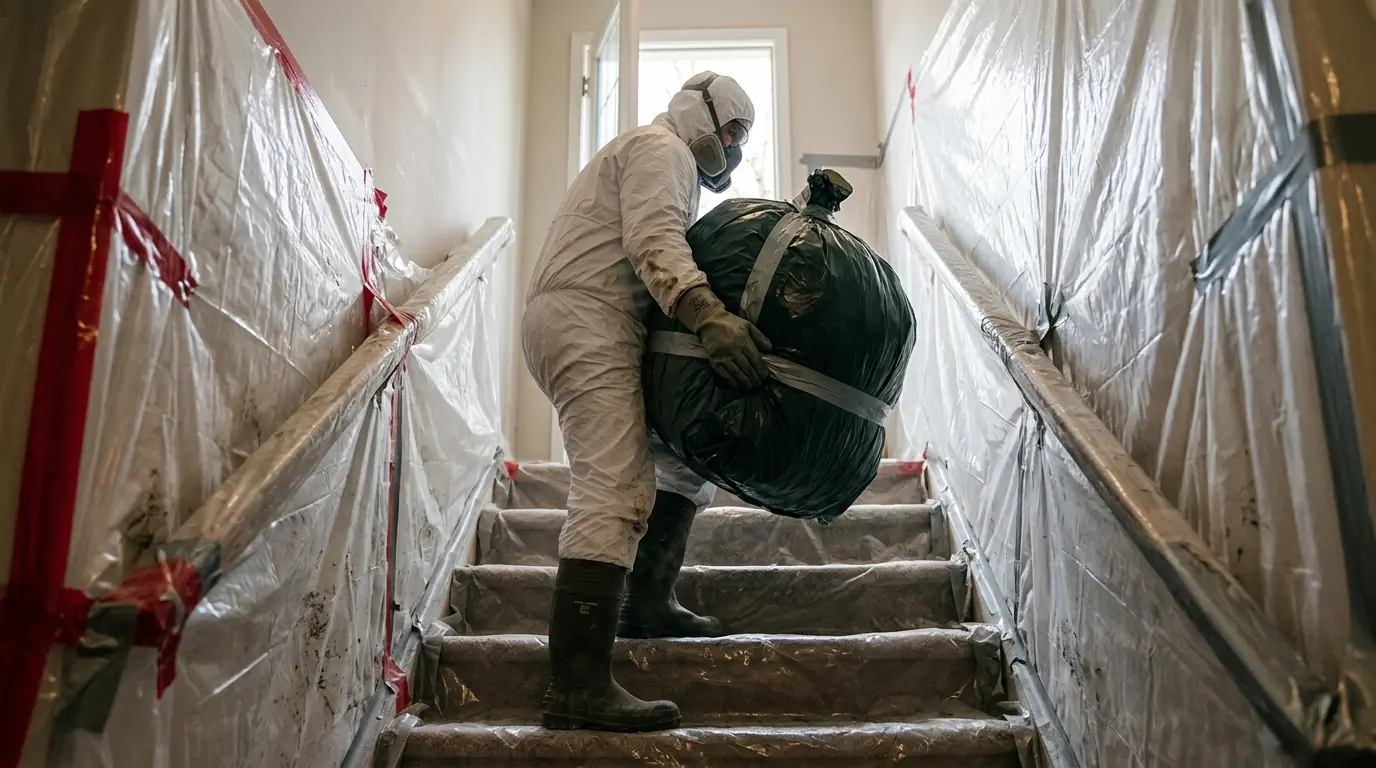
The work starts with protective gear and stopping the spread: keeping sewage from being tracked upstairs, closing off the area and removing standing waste. Porous materials come out and are bagged, hard surfaces are cleaned with detergent and then disinfected, and the space is dried so mold does not follow. A plumber or the town sewer department should deal with the cause so it does not happen again.
Signs it is a sewage backup, not just water
Dark water rising from a floor drain
Usually a blocked or surcharged sewer line pushing waste back.
A strong sewage smell
Waste is present even if the water looks clear.
Several fixtures backing up at once
The problem is in the main line, not one drain.
Toilet water coming through a ceiling
Wallboard and insulation in the ceiling need checking and removal.
Water in the basement drain after heavy rain
Storm surcharge can push sewage back into older systems.
Step by step
How sewage backup cleanup works
- 1
You call, any hour
Tell us where the sewage came from and how far it spread.
- 2
We stop the spread
Protective gear on, area closed off, standing waste removed.
- 3
We remove contaminated materials
Carpet, padding, wallboard and porous items bagged.
- 4
We clean, disinfect and dry
Hard surfaces cleaned and disinfected, drying equipment set.
- 5
We document for insurance
Photos and a list of everything removed.
Basement floor drain backups
The most common call is a basement floor drain that pushed sewage across the floor, into a finished room or under the washer and boiler. We remove standing waste, bag carpet, rugs, cardboard boxes and anything else porous that it reached, and cut out wallboard above the water line where it wicked up. Concrete, tile and metal are cleaned with detergent and disinfected, and we set drying equipment so the space is dry before anything goes back in. Your stored belongings are sorted with you, item by item.
Toilet and bathroom overflows
A toilet overflow from a blocked line can spread across a bathroom floor, soak the subfloor and come through the ceiling below. We clean and disinfect the bathroom fixtures, floor and the base of the walls, lift vinyl or carpet where waste got underneath, and check the ceiling and walls of the room below. Wet ceiling drywall and insulation are cut out and bagged, framing is cleaned and disinfected, and everything is dried before repairs, so no odor or mold is sealed in behind new drywall.
Shared and commercial buildings
In two-family and apartment buildings, a backup in a shared line often reaches the basement every tenant uses for laundry and storage. Restaurants, stores and offices have their own exposure when a backup hits a restroom or a kitchen floor drain. We close off the affected areas, keep staff and tenants away, clean and disinfect shared spaces quickly so the building can keep running, and give landlords and managers photos and a written list of what was removed for insurance.
What Connecticut's health department advises
The Connecticut Department of Public Health's sewage backup guidance is plain: dry the space promptly, discard porous materials sewage has soaked, including cardboard, carpets and rugs, unfinished wood, wallboard and upholstered items, and photograph what you throw away for insurance. It also says carpet must be discarded after a sewage backup. We follow that guidance on every job around Bridgeport, then clean and disinfect what remains so the space is safe to use again.
What changes the cost of sewage cleanup
Cost depends on how far the sewage spread and how much has to be removed.
- Area affectedA corner of a basement or a whole floor.
- Materials to removeCarpet, padding, wallboard and stored items.
- Depth and spreadA shallow spill or water that reached the walls.
- Drying timeEquipment stays until the space is dry.
- Building typeShared and commercial buildings need extra containment.
What sewage backup cleanup includes
Every backup is different. These steps are part of every job.
- Protective gear and the area closed off
- Standing sewage removed
- Carpet, padding and wet porous materials bagged
- Wallboard cut out above the water line
- Hard surfaces cleaned, then disinfected
- Drying equipment set and monitored
- Odor treated at its source
- Photos and a list of discarded items for insurance
Sewage backup cleanup questions
Connecticut's health department says carpet must be discarded after a sewage backup, so we remove it along with the padding.
Keep everyone, especially children, older relatives and pets, out of the affected area until it has been cleaned, disinfected and dried.
It depends on your policy and whether you have sewer backup coverage. We photograph the damage and list what was removed for your claim.
Stay out of the affected area, stop using sinks, toilets and appliances that drain into the line, and call your town's sewer department or a plumber about the cause.
Yes, once contaminated materials are out and the space is cleaned, disinfected and dry.
Yes. Shared laundry and storage areas are cleaned and disinfected, and tenants' stored items are sorted with them.
More biohazard cleanup in Bridgeport
Sewage in the basement?
Tell us where it came from and how far it spread. We will tell you what to do until we get there.