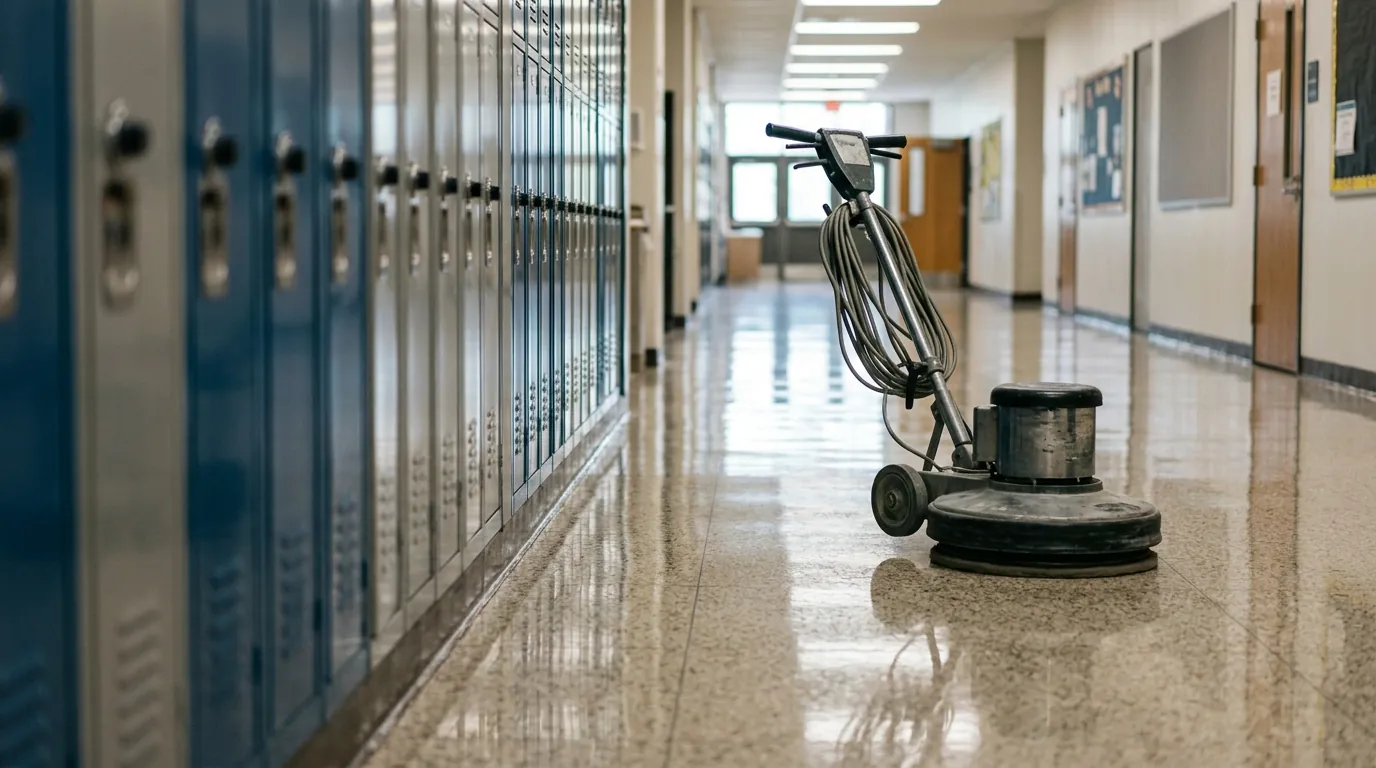
Floor stripping and waxing in Bridgeport removes the old, yellowed finish from vinyl composition tile with a chemical stripper and a floor machine, then lays down new coats of floor finish that cure into a hard, glossy surface.
Industry pricing runs about $0.30 to $0.60 per square foot for a strip and refinish (ISSA).
What stripping and refinishing actually does
Vinyl composition tile, the hard tile in most schools, stores, clinics and offices, is protected by layers of floor finish, often called wax. Over time those layers wear, trap dirt, yellow along the edges where machines never reach, and pick up black heel marks. Stripping removes every layer down to the bare tile. The floor is rinsed and neutralized, then several thin coats of new finish go down, each allowed to dry before the next.
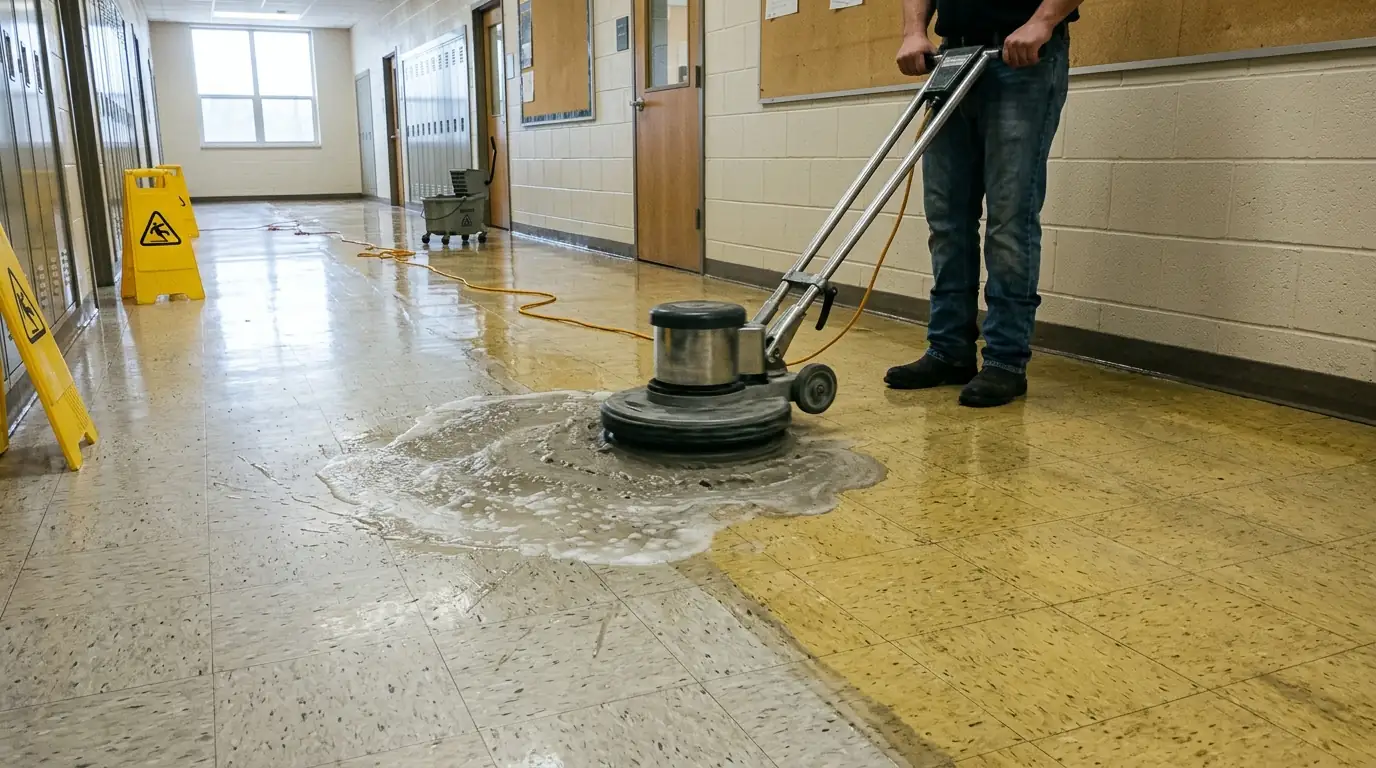
A full strip is not always needed. If the finish is dull but intact, a scrub and recoat takes off the top layer and adds fresh coats for much less time and money, and regular burnishing keeps the shine up in between.
What changes the price of floor stripping and waxing
Floor work is priced by the square foot and the condition of the existing finish. Industry pricing gives planning ranges.
- Square footageLarge open floors cost less per foot than small rooms.
- Finish buildupMany old layers take more stripper and more passes.
- FurnitureRooms that must be emptied and reset add labor.
- Coats of finishMore coats mean more durability and more drying time.
- Edges and cornersDetail work by hand where machines cannot reach.
Industry-wide pricing runs about $0.30 to $0.60 per square foot to strip and refinish, and about $0.20 to $0.40 per square foot to scrub and recoat (ISSA).
Planning range only, not a quote. Source: issa.com (industry-wide data).
Strip and refinish, scrub and recoat, or burnish
Three levels of floor care, from the heaviest to the lightest.
| Strip and refinish | Scrub and recoat | Burnish | |
|---|---|---|---|
| When | Yellowed, built-up or damaged finish | Dull but intact finish | Good finish that has lost its shine |
| What happens | All finish removed, new coats laid | Top layer scrubbed off, fresh coats added | High-speed polish of the existing finish |
| Floor out of use | Longest, finish has to cure | Shorter | Usable almost right away |
| How often | Once a year or less | A few times a year | Weekly or monthly |
Strip and refinish
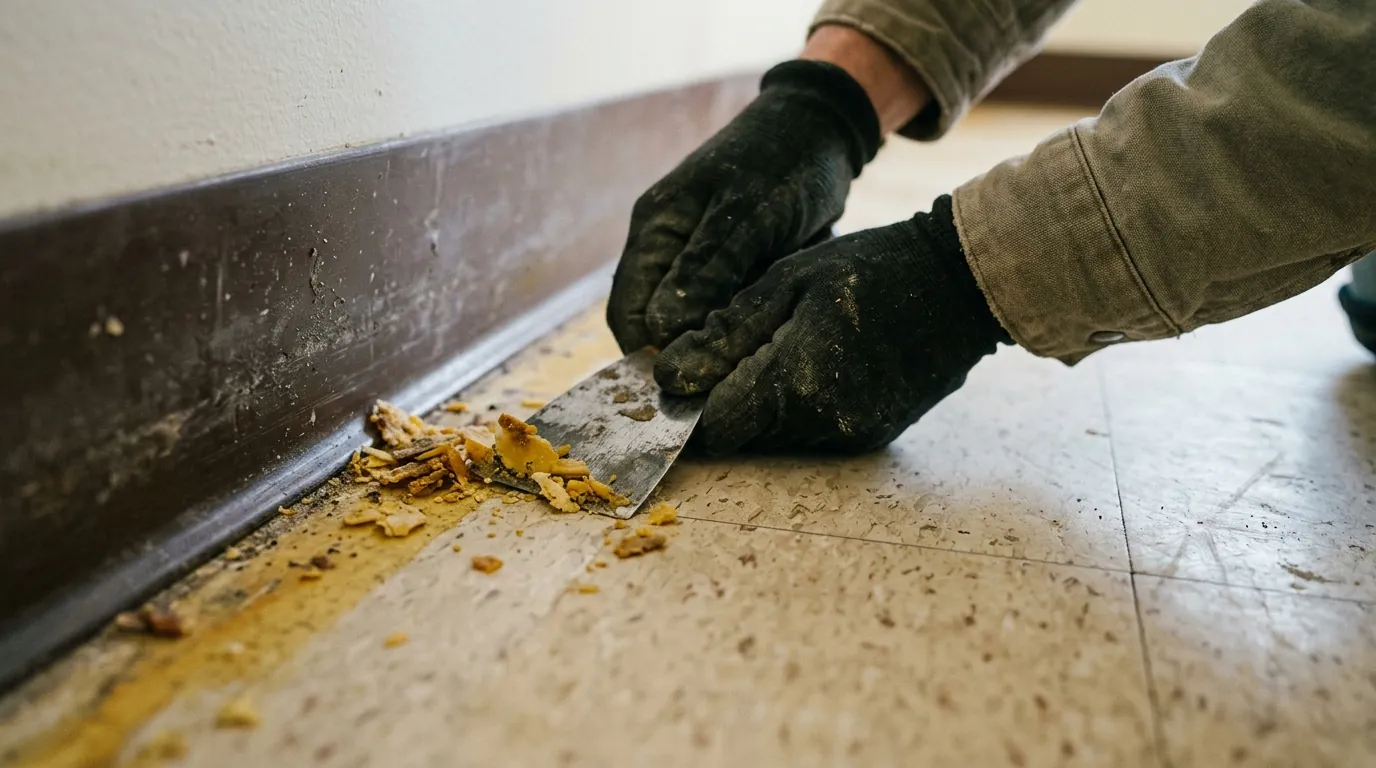
A full strip starts with the furniture out and the edges protected. A stripping solution is spread and left to dwell, then a floor machine with a stripping pad lifts the softened finish, and the slurry is picked up with a wet vacuum. Corners and edges are scraped by hand, which is where the yellowed buildup hides. The floor is rinsed until it is neutral, because leftover stripper keeps new finish from bonding. Then several thin coats of finish go down with drying time between each, and the floor is left to cure.
Scrub and recoat
When the finish is worn and dull but still firmly attached to the tile, a scrub and recoat restores it in a fraction of the time. The floor is cleaned and scrubbed with an abrasive pad that removes the dirty top layer and roughens the finish just enough for new coats to grip. After a rinse, two or more fresh coats are applied. It suits floors refinished within the last year or so, and it postpones the next full strip, which is easier on the floor and on the budget.
Burnishing
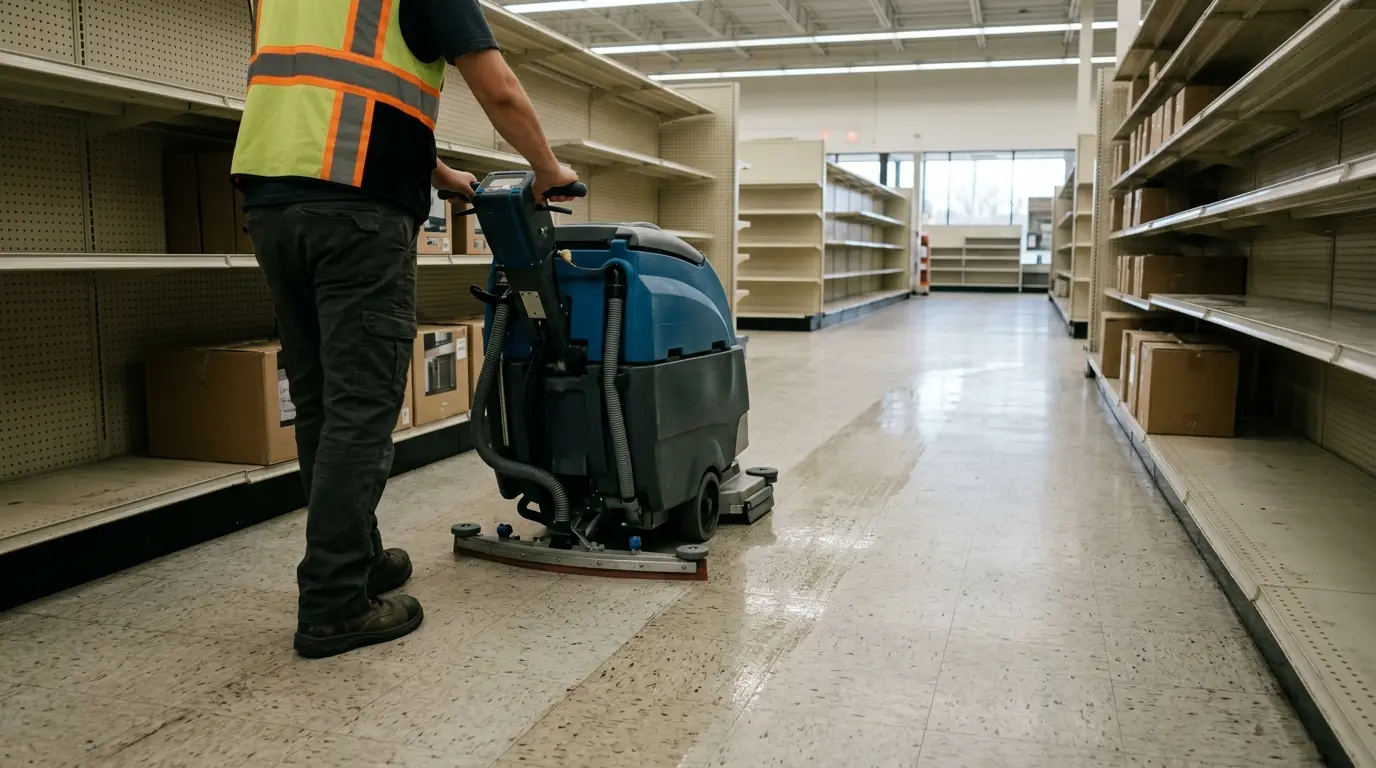
Burnishing is a high-speed polish that brings back the gloss on a sound finish. After a dust mop and a damp mop, a burnisher spinning at high speed heats and smooths the top layer of finish, taking out light scuffs and restoring the shine. It is quick, the floor can be walked on almost straight away, and it keeps a refinished floor looking new between deeper work. Busy lobbies and corridors are often burnished weekly, and quieter spaces monthly, depending on traffic.
Fairfield County offices and industrial floors
Hard tile floors are everywhere in the buildings we serve. Fairfield County carries about 38 million square feet of office space, and the Bridgeport industrial submarket adds about 14.3 million square feet of industrial buildings, with more in Trumbull, many of them with offices and break areas on vinyl tile. Most of these floors are refinished once a year at most, so the yearly strip is usually scheduled for a long weekend or a holiday break, when the building can stay closed while the finish cures.
Step by step
How a floor refinishing job runs
- 1
You tell us about the floor
Square footage, the type of tile and when it was last refinished.
- 2
We check the finish
Whether it needs a full strip, a recoat or just a burnish.
- 3
We prepare the room
Furniture moved, edges protected, wet floor signs placed.
- 4
We strip or scrub, then coat
Old finish removed or scuffed, then thin coats with drying time between them.
- 5
We let it cure and reset the room
Furniture goes back once the finish is hard enough to take it.
How long the floor is out of use
A full strip and refinish usually needs the room closed for the rest of the day or overnight, because each coat needs drying time and the finish keeps curing after that. A scrub and recoat is shorter, and burnishing barely interrupts traffic, which is why we schedule the heavier work for nights, weekends or breaks.
Floor finishes, strippers and floor machines from brands like these are what we work with
Floor stripping and waxing questions
Most commercial floors need a full strip once a year or less, with recoats and burnishing in between.
Burnishing, yes. Stripping and recoating need the area closed until the finish dries, so we schedule them after hours.
Usually several thin coats, more in high-traffic areas. Thin coats dry harder and last longer than a few thick ones.
Yes. Wood floors have their own service, hardwood floor cleaning, and stone is cleaned with pH-neutral products under tile and grout cleaning.
Not when the floor is rinsed and neutralized properly. Tile that is already cracked or loose may show more once the finish is off.
Light scuffs come off with burnishing. Marks worn into the finish are removed by a recoat or a strip.
More floors and surfaces in Bridgeport
Floors looking yellow and tired?
Tell us the size of the floor and when it was last done. We will tell you whether it needs a strip, a recoat or a burnish.