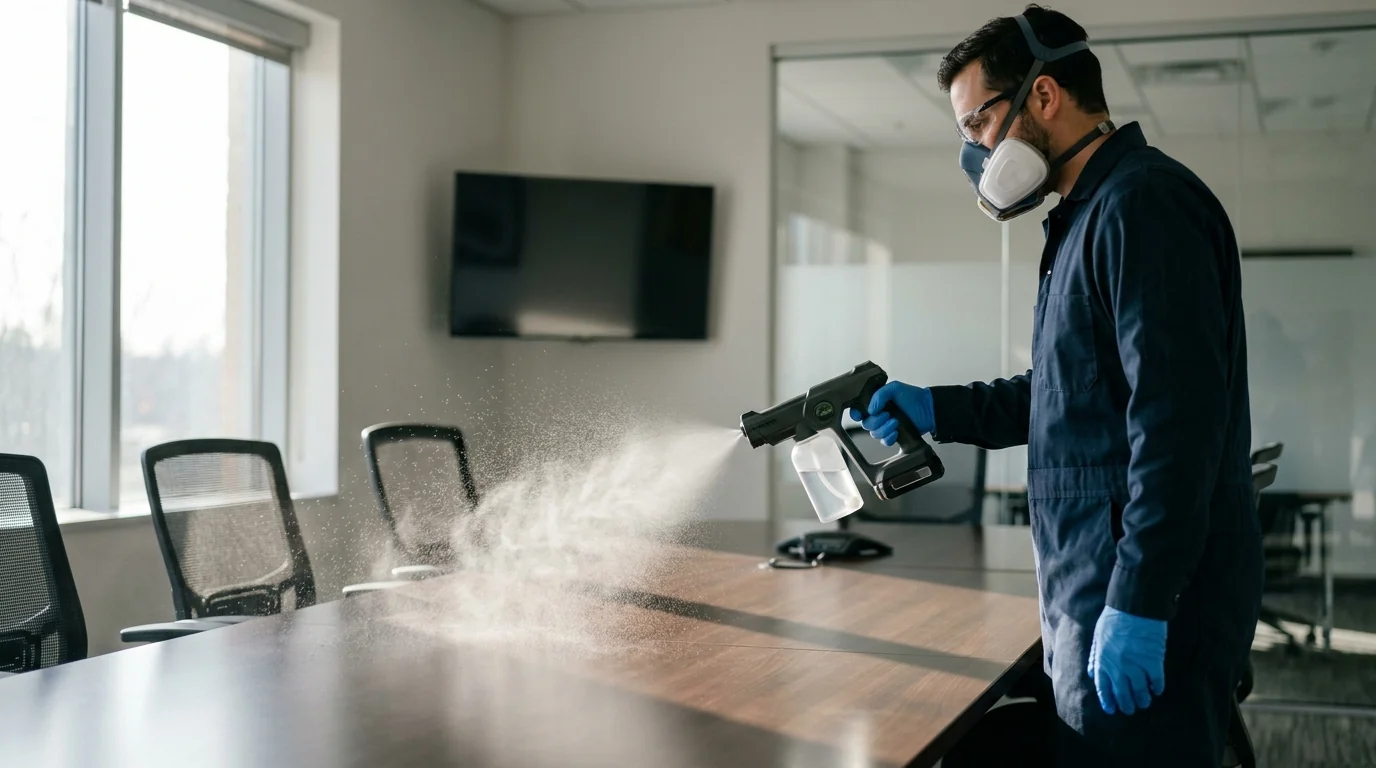
Boat, RV and camper disinfection in Bridgeport means airing out the cabin, removing any mouse droppings safely by wetting them first, then cleaning and disinfecting the head, galley, bunks and every handle with products suited to marine vinyl, fiberglass and RV laminates.
Most owners book it at spring launch or after a stretch in storage.
What a boat or RV disinfection visit includes
The list stays the same whether it is a small cuddy cabin or a long fifth wheel.
- Cabin aired out before any cleaning starts
- Mouse droppings wetted and removed safely
- Head, sink and shower cleaned and disinfected
- Galley counters, sink and fridge cleaned
- Bunks, cushions and vinyl wiped with suitable products
- Handles, latches, helm or dash controls disinfected
- Floors and storage lockers vacuumed and wiped
- A list of anything chewed, damp or damaged
Why boats and RVs need their own approach
A boat cabin or RV packs a kitchen, a bathroom and bedrooms into a space with little airflow, and it often sits closed for months. Humidity, mildew and mice do their work while nobody is looking. Surfaces are different too: marine vinyl, gelcoat, teak and RV laminates can be damaged by the wrong product, so we choose cleaners and disinfectants labeled for those materials and test anything we are unsure of.
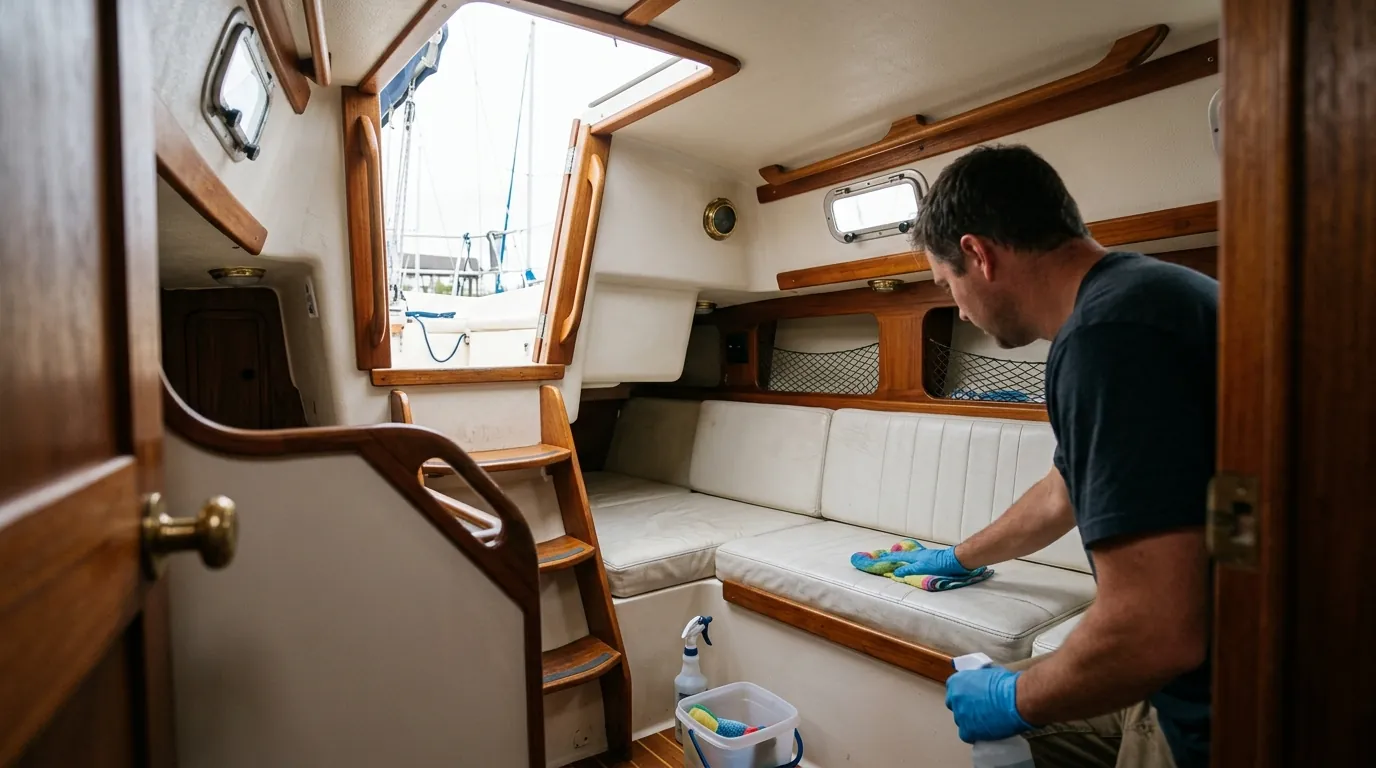
We start with ventilation, especially if there are signs of mice, because stirring up dry droppings in a closed space is the one thing to avoid. Then the head and galley are cleaned and disinfected, followed by bunks, cushions and every handle and latch.
Boat cabins and heads
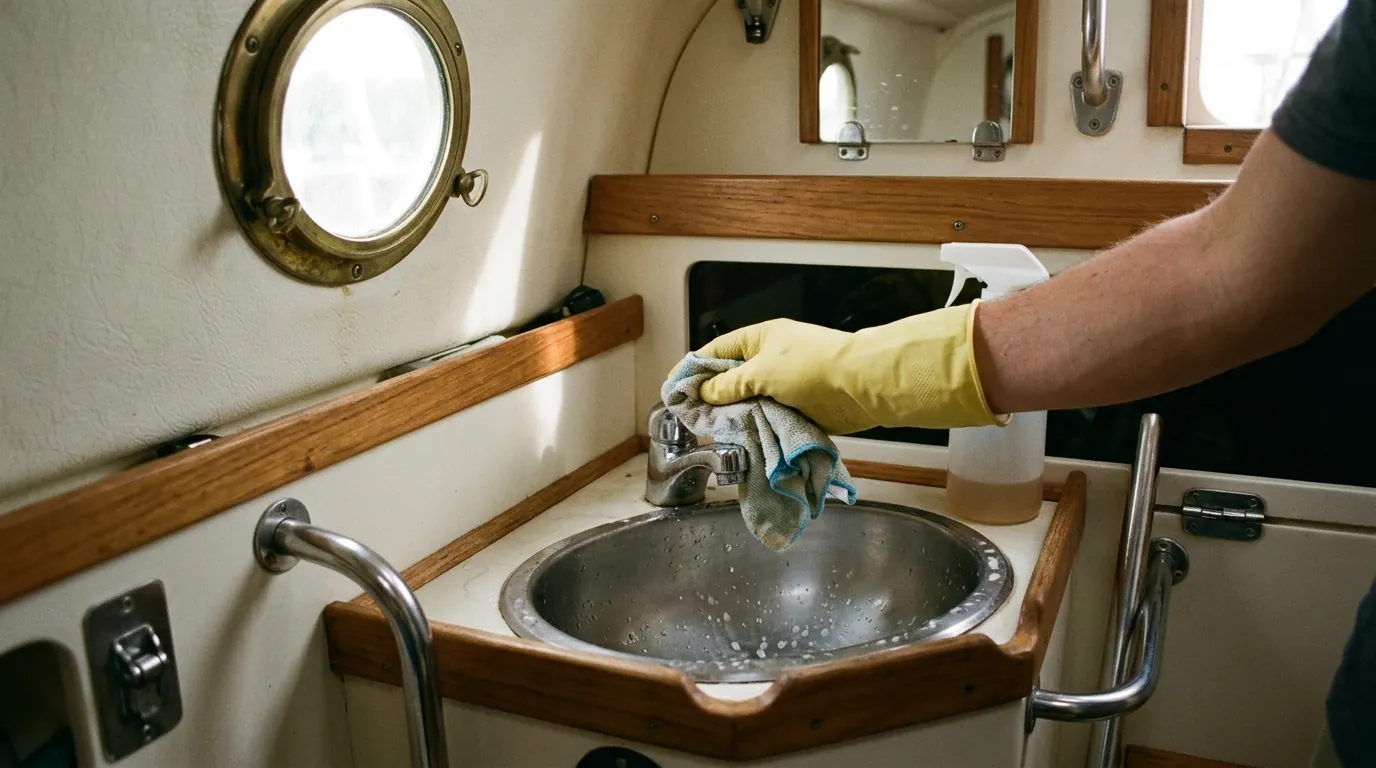
Cuddy cabins, cruisers and sailboats share the same trouble spots: a marine head, a small galley, cushions that soak up damp, and lockers that never quite dry out. We clean and disinfect the head and the surfaces around it with marine-safe products, wipe the galley and fridge, clean vinyl cushions with a product made for marine vinyl, and treat mildew where it has started on liners and headliners. Handrails, hatch latches, the helm and the companionway are disinfected last, since everyone grabs them coming aboard.
RVs and campers out of storage
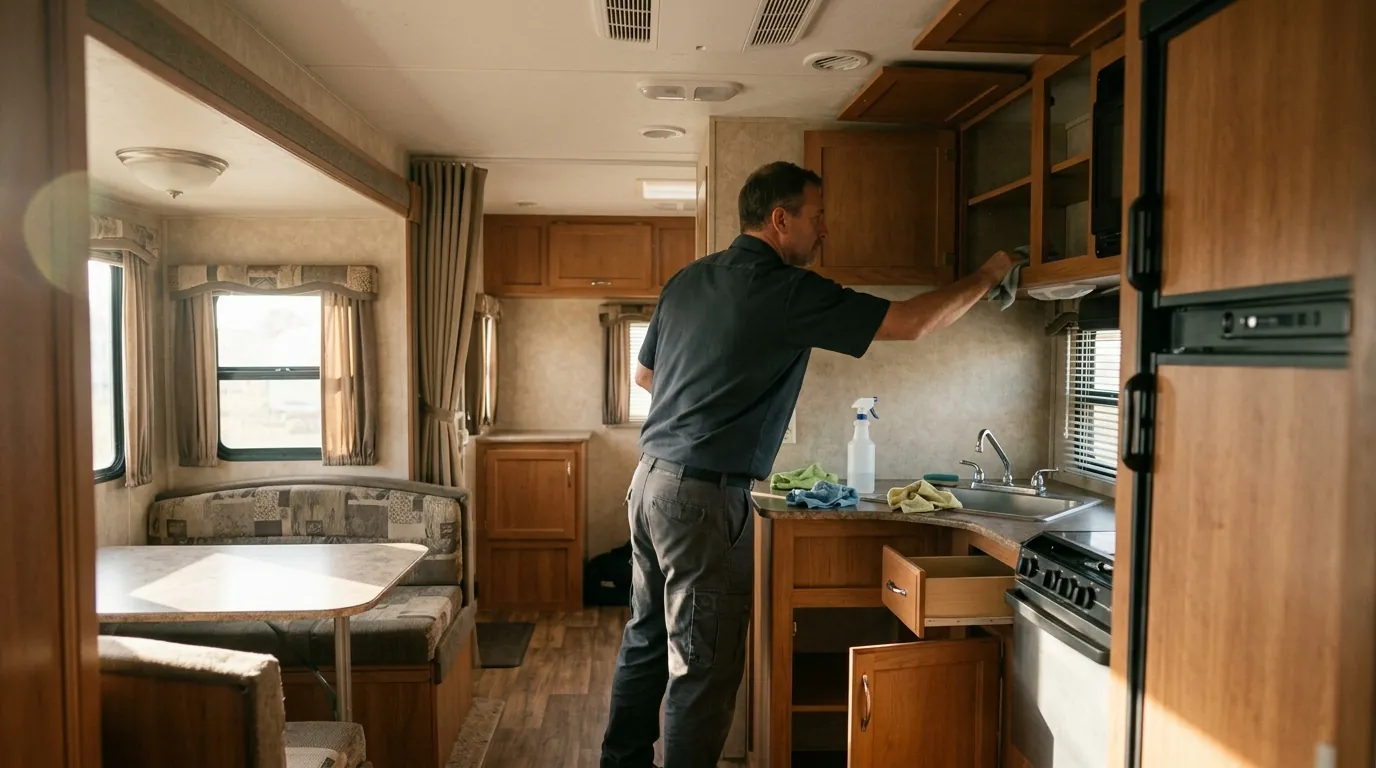
An RV or camper that spent the winter in a storage lot usually comes out with dust on every surface, a stale smell, and often evidence of mice in drawers, cabinets and under the dinette. We open everything up and ventilate first, wet and remove any droppings and nesting material, then clean and disinfect the kitchen, bathroom, bed area and every cabinet the mice reached. Fabric seating and mattresses are vacuumed and cleaned where the material allows. Water systems and appliances are left to your RV service shop.
Spring launch and fall layup
Spring launch is when owners want the boat ready for the first warm weekend, and that is when we do the full clean and disinfection described above. Fall layup is the other half: a thorough clean before the boat or RV is closed up, so crumbs, damp towels and dirty surfaces are not sealed in for the winter to feed mold and mice. Cleaning before storage makes the spring visit shorter, and many owners book both visits together so the dates fit the marina or storage lot schedule.
Step by step
How a boat or RV disinfection runs
- 1
You tell us what and where
Boat or RV type and length, where it is stored and what you found inside.
- 2
We ventilate first
Hatches, doors and windows open before anything is disturbed.
- 3
Droppings come out wet
Soaked with disinfectant, wiped up and bagged, never swept or vacuumed dry.
- 4
We clean, then disinfect
Head, galley, bunks, cushions and every handle and latch.
- 5
You get a short report
Anything chewed, damp or damaged, so you can plan repairs.
Candlewood Lake and Bridgeport Harbor
Boats near us live in two very different settings. Candlewood Lake, the largest lake in Connecticut, sits a short drive from our New Milford head office, and its boats spend their lives in fresh water. Bridgeport Harbor opens onto Long Island Sound, where salt air and damp work harder on cabins, cushions and hardware. The disinfection steps are the same for both, but saltwater boats usually need more mildew treatment inside and more attention to latches and hinges that corrode.
What changes the price of boat and RV disinfection
Boats and RVs are priced per vessel or vehicle once we know the size and condition.
- Length and layoutA cuddy cabin is quicker than a cruiser or a fifth wheel.
- Rodent signsDroppings and nesting add careful removal time.
- MildewTreating mildew on cushions and liners adds time.
- AccessOn the water, on stands or on a trailer each set up differently.
- TimingSpring launch weeks fill up, so earlier dates are easier.
Signs your boat or RV needs more than a wipe-down
Droppings in drawers or cabinets
Mice were living aboard, and droppings need wet removal, not sweeping.
Chewed packaging or fabric
Nesting material is usually somewhere nearby.
A musty smell when you open it
Damp has been trapped long enough for mildew to start.
Black spots on cushions or liners
Mildew is growing and needs treating, not just wiping.
Someone was sick aboard
The head, galley and handles need disinfection before the next trip.
Boat and RV disinfection questions
Yes, wherever the boat or RV is, as long as we can get aboard safely and the lot allows it.
Yes. We ventilate, wet the droppings with disinfectant, wipe them up and disinfect the area, following CDC rodent cleanup guidance.
We use products labeled for those materials and test first wherever we are unsure.
Yes. A black water or toilet spill inside the living space is cleaned and disinfected as a biohazard, and soaked cushions or carpet are removed and bagged.
Before launch week, when marinas and storage lots are busiest. Booking a fall layup clean at the same time keeps the spring visit short.
Yes. The head, galley, bunks and handles are cleaned and disinfected with a product suited to the germ involved.
More disinfection in Bridgeport
Opening the boat or camper soon?
Tell us what it is, where it is stored and what you found inside. We will plan the clean around your launch date.