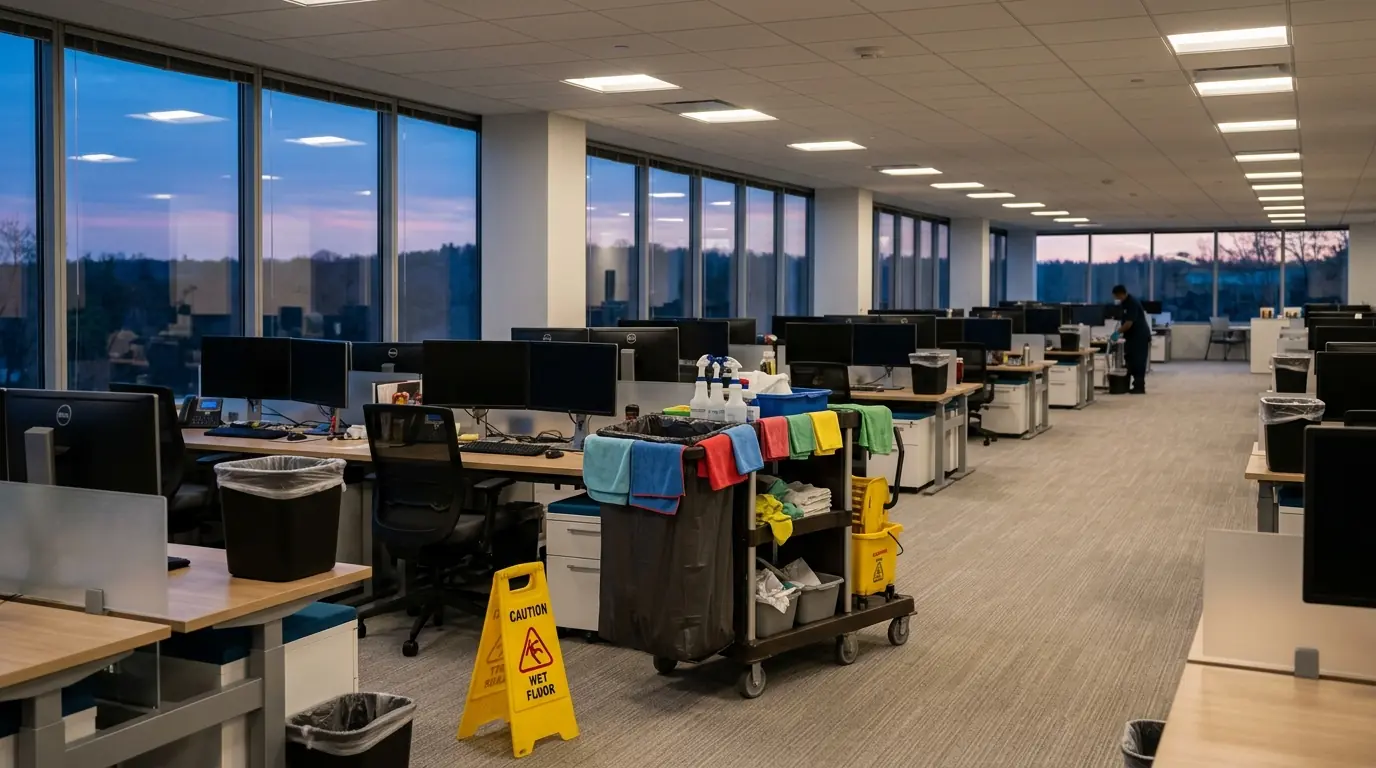
Warehouse cleaning in Bridgeport covers three zones: the floor, scrubbed by machine to lift tire marks and dust; high surfaces like racking and beams; and the offices, break rooms and restrooms on site, which get the same routine as any workplace.
Work is scheduled around shifts and dock activity.
How warehouse cleaning is planned
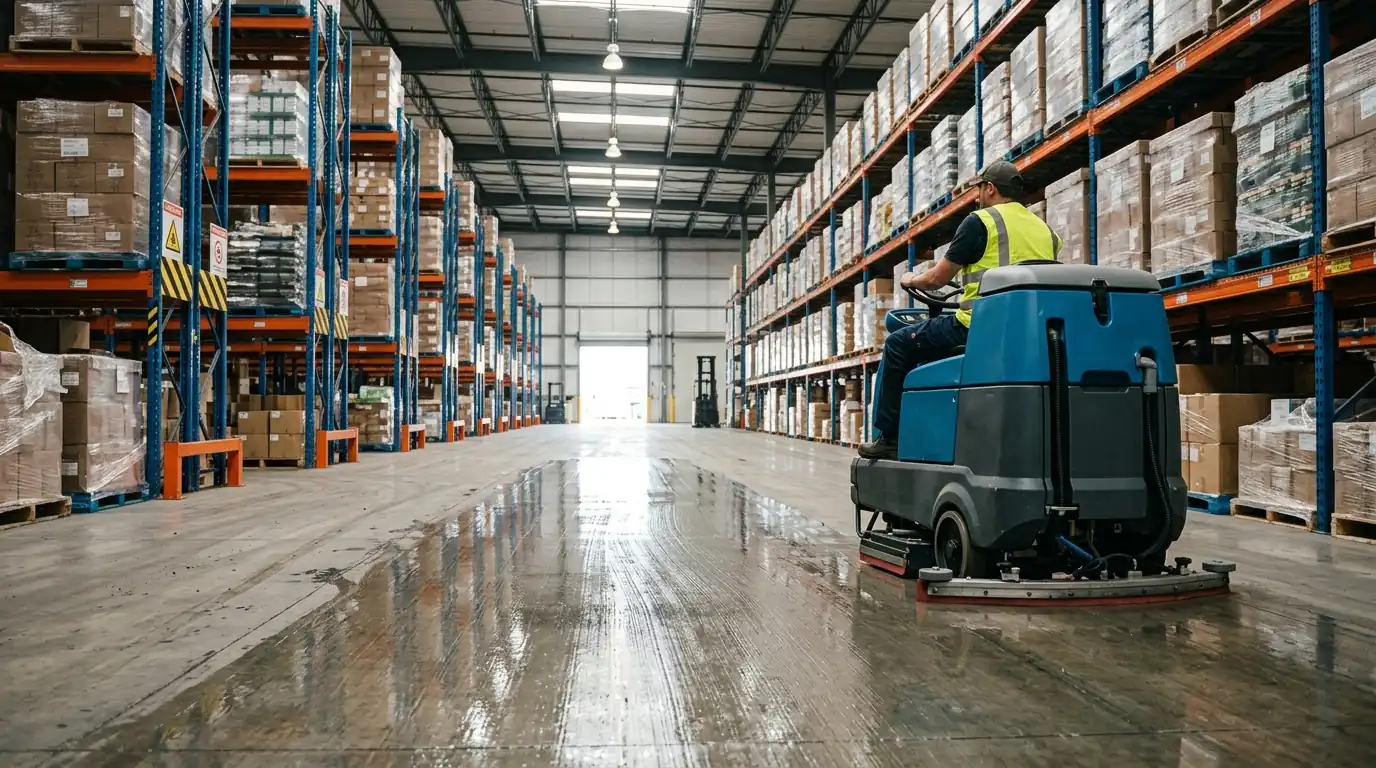
A warehouse is mostly floor, and the floor sets the job. Sealed concrete is swept to pull up dust and debris, then auto-scrubbed with a cleaner suited to the coating to lift tire marks and spills. Aisles are done in sections so forklifts keep moving, and we work around staged pallets rather than asking you to clear them. Dust that settles on racking, beams and light fixtures ends up on product and floors, so high dusting runs on a slower schedule.
The people spaces matter just as much: break rooms, locker areas, restrooms and site offices are cleaned like any workplace, with touch points disinfected in flu season.
What changes the price of warehouse cleaning
Warehouse cleaning is priced from the floor area, the zones included and how often we come.
- Floor areaMachine scrubbing large open floors is efficient per square foot.
- Racking densityTight aisles and many racks slow floor work.
- High dustingLifts and height add time and are scheduled separately.
- People spacesBreak rooms, restrooms and offices on a janitorial routine.
- ScheduleWeekend and between-shift work is planned around operations.
Warehouse floors
Concrete warehouse floors collect dust, shrink-wrap scraps, tire marks and the occasional spill from damaged goods. We sweep first with a power sweeper to pick up loose debris, then auto-scrub with a cleaner matched to the floor coating, because a strong degreaser can dull or soften some sealers. Tire marks at turns and dock doors get spot treatment. Oil and hydraulic spills are cleaned with absorbent first and disposed of properly. Floor striping and safety markings are cleaned without scrubbing them off, and wet areas are signed until dry.
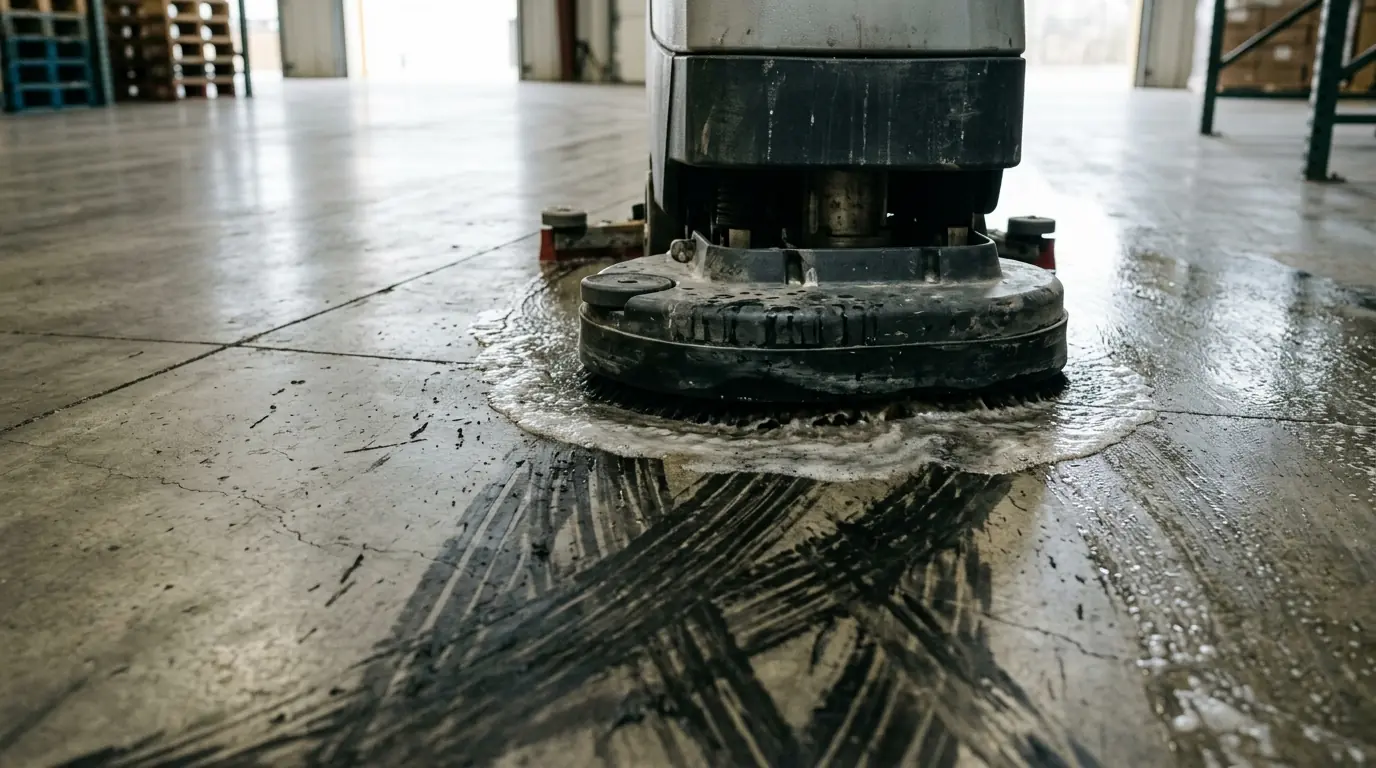
On-site offices and break rooms
Shipping offices, dispatch desks, break rooms and restrooms in a warehouse take more wear than most offices: boots tracking in grit, microwaves and refrigerators used by every shift, and restrooms shared by dozens of people. These rooms get a regular janitorial routine of trash, surfaces, appliances, restrooms and floors, with door handles, time clocks, vending machine buttons and shared tablets disinfected through flu season. Break room cleaning can be set to the gap between shifts, so the room is clean when the next crew walks in.
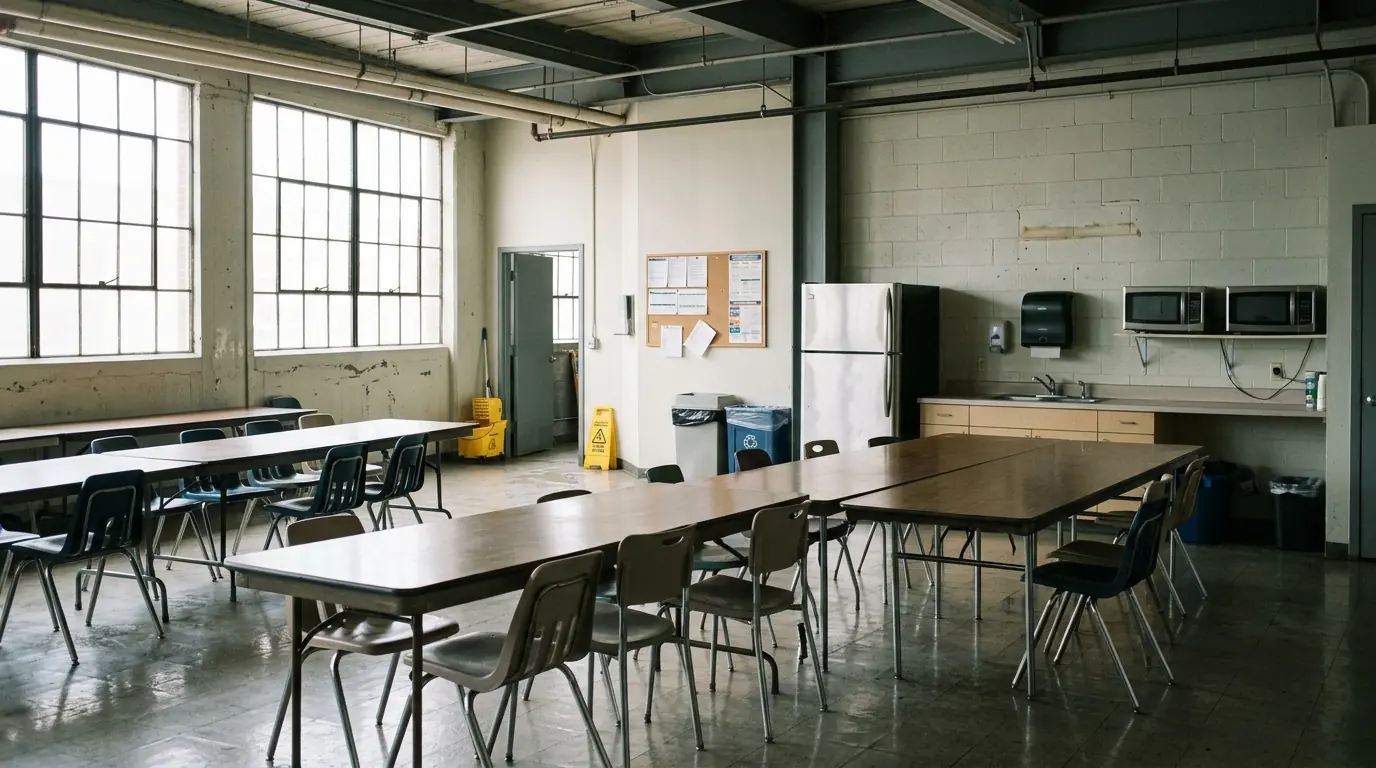
High dusting and racking
Dust on racking, beams, ductwork and light fixtures is easy to ignore until it lands on product or shows up in a client audit. High dusting uses extension tools and HEPA vacuums from a lift or ladder, working top to bottom so dust is captured rather than knocked onto the floor below. Racking is dusted rack by rack, and we coordinate with your team so aisles are clear of forklifts while a lift is in use. Most sites schedule it quarterly or before an audit, often on a weekend.
Bridgeport's industrial floor space
Industrial real estate reports put the Bridgeport submarket at about 14.3 million square feet of industrial space, with under 8% of it vacant in mid-2025, including warehouses along corridors like Seaview Avenue. Trumbull and Brookfield add about 2.1 million square feet each. In buildings with open steel ceilings, dust settles on beams, ductwork and fixtures far above the floor, so high dusting is often the part of the job that makes the most visible difference.
Step by step
How warehouse cleaning gets set up
- 1
You tell us about the site
Square footage, floor coating, racking, offices and your shift times.
- 2
We walk the floor with your supervisor
Traffic routes, dock activity and where machines can and cannot go.
- 3
We agree zones and a schedule
Floors, high work and people spaces, each on its own frequency.
- 4
Crews work around operations
Aisles in sections, wet floors signed, lifts only in cleared aisles.
- 5
We check in after each visit
Anything damaged or leaking is reported to your supervisor.
How long the floor is out of use
Aisles are scrubbed in sections, and an auto-scrubber picks up its own water, so a scrubbed aisle is usually walkable again shortly after the machine passes and most sites keep running. High dusting needs the aisle clear of traffic while the lift is up, which is why it is usually booked for a weekend or a slow shift.
Floor scrubbers, sweepers and cleaning chemicals from brands like these are what we work with
Warehouse cleaning questions
Usually yes. Floors are done in sections around traffic, and high dusting is booked when aisles can be cleared.
Yes, sweepers and scrubbers sized for the floor. If your site has its own machines, we can use those.
Most come up with the right cleaner and scrubbing. Marks burned into an old coating may need recoating, and we will tell you.
Yes, as high dusting from a lift or ladder, usually quarterly or before an audit.
Yes. People spaces on site get a regular janitorial routine, with touch-point disinfection in flu season.
Yes. Our biohazard crew closes off the area, removes blood and body fluids, and disinfects with products OSHA accepts for blood, so your staff are not exposed.
More commercial cleaning in Bridgeport
Want a cleaner floor without stopping work?
Tell us the size of the site, the floor type and your shifts. We will plan the zones and schedule around them.