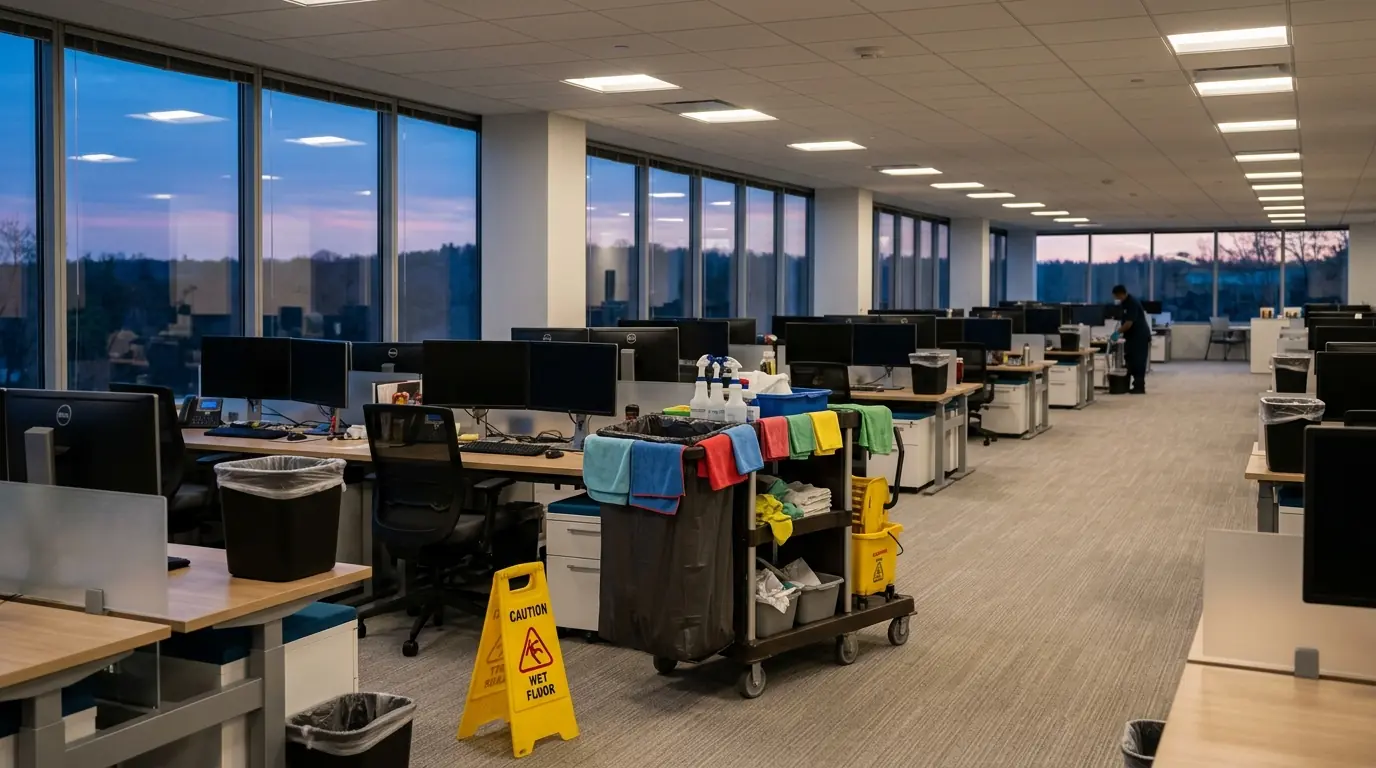
Restaurant cleaning in Bridgeport is an after-close routine: dining room tables, chairs and booths cleaned, kitchen floors degreased and walls wiped, equipment exteriors cleaned and guest restrooms cleaned and disinfected, while food-contact surfaces stay with your staff under your food safety plan.
Floor drain and restroom backups are cleaned up by our biohazard crew, at any hour.
What an after-close visit covers
We build the list with your manager and follow it every night.
- Tables, chairs and booths cleaned
- Dining room floors swept and mopped
- Kitchen floors degreased and drain covers cleaned
- Kitchen walls and splash zones wiped
- Equipment exteriors and handles cleaned
- Guest restrooms cleaned and disinfected
- Trash out and liners replaced
- Entry glass and host stand wiped
Where our work ends and your kitchen team's begins
Restaurant cleaning splits along the food safety line. Your staff handle food-contact surfaces during service and at close: prep tables, cutting boards, slicers and the line, cleaned and sanitized under your food safety plan. We take the rest: the dining room, floors, walls, equipment exteriors and restrooms, plus the deep work that never gets done at the end of a long shift, like behind the fryers, under the dish station and the walk-in floor.
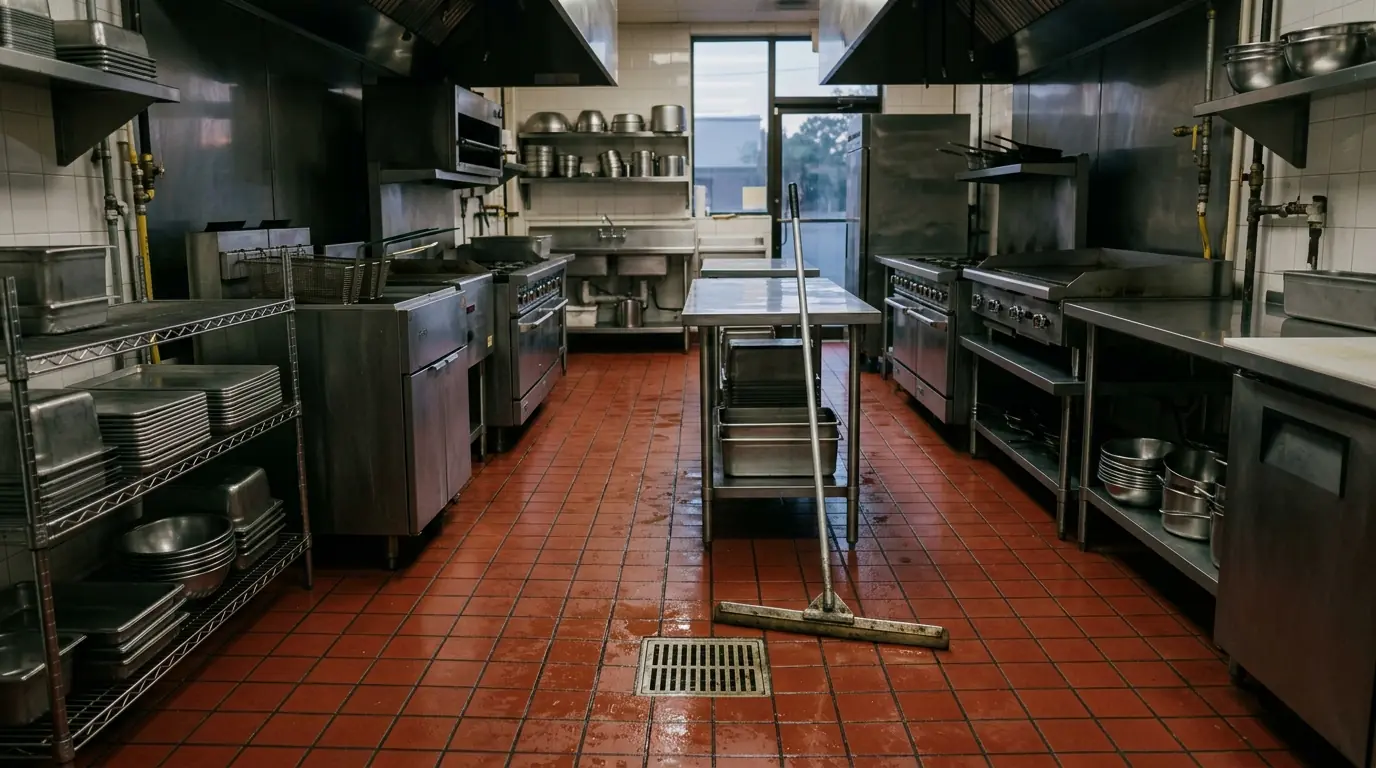
When something happens outside the routine, such as a floor drain backing up, a restroom incident or blood after a kitchen injury, our biohazard crew handles it and disinfects the area, so your staff never have to and you can reopen on time.
Dining room and front of house
Guests judge a restaurant by the table, the chair, the floor under it and the menu in their hands. After close we clean tables, chairs, booths and high chairs, wipe menus and condiment caddies if you want them done, clean the bar top and bar rail, and sweep and mop the floors, including under booths where crumbs collect. Entry doors, glass and the host stand are wiped, and upholstered booths are vacuumed with spot cleaning where needed. Everything is set back the way your staff leave it each night.
Kitchen floors, walls and equipment exteriors
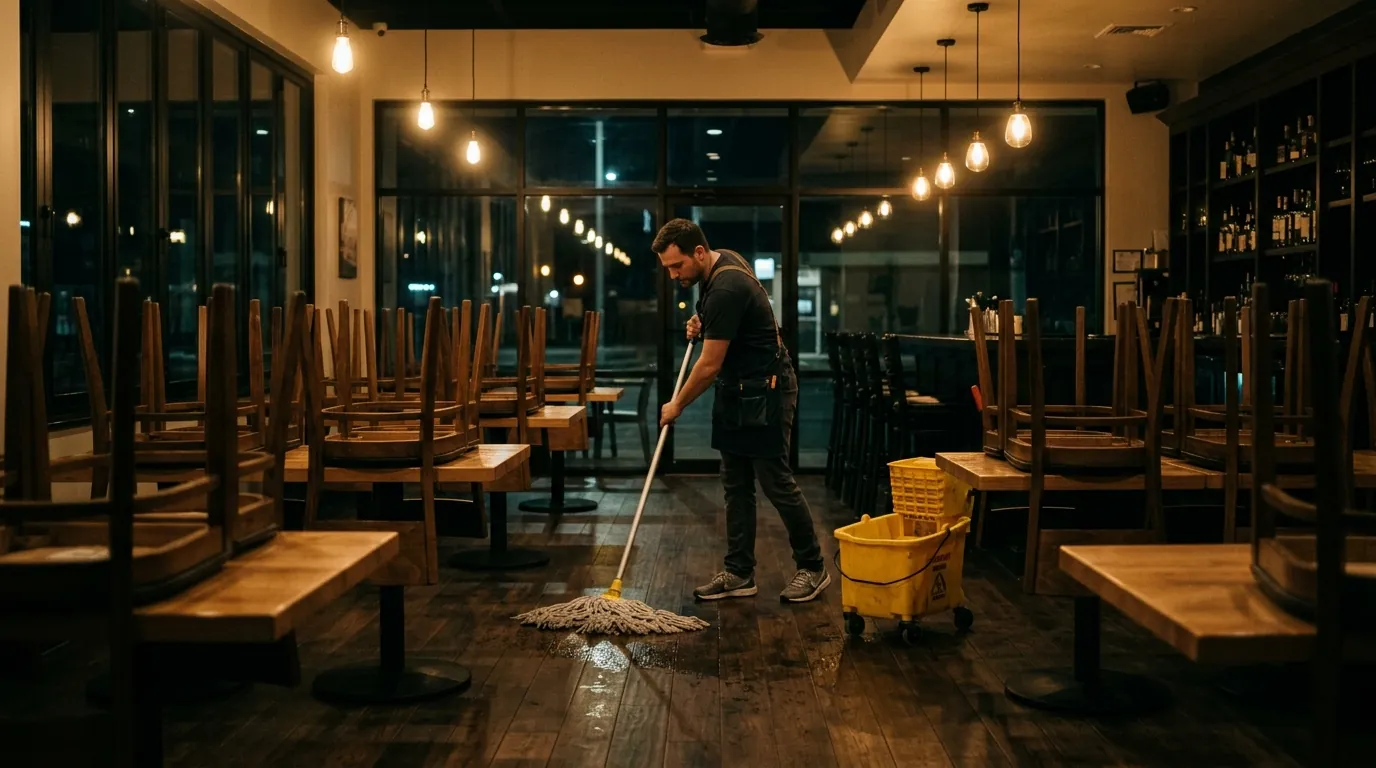
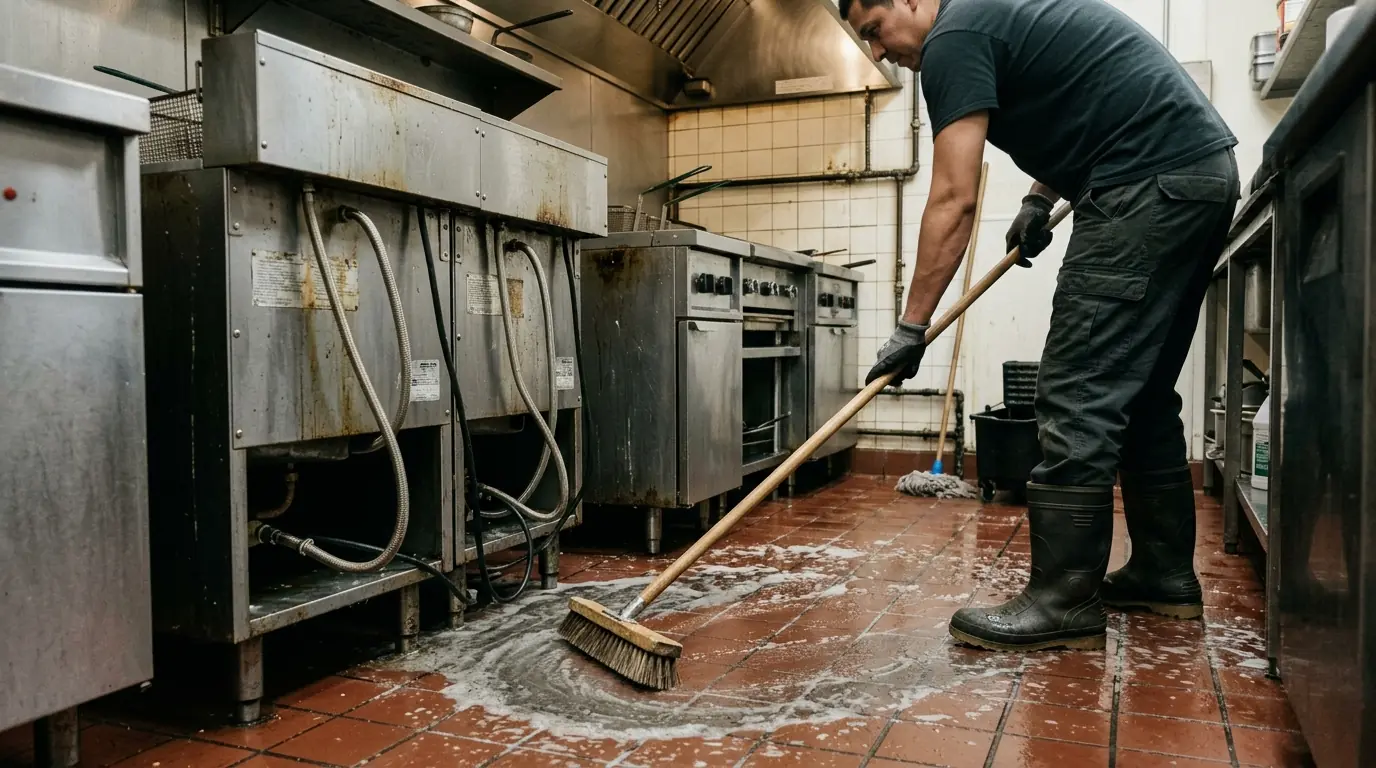
Kitchen floors build up grease that mopping alone spreads around, which is how slips happen. We degrease and scrub quarry tile and sealed concrete with a deck brush or floor machine, pull the grease out of grout lines, and squeegee to the drains, cleaning the drain covers on the way. Walls and splash zones behind the line are wiped, and equipment exteriors, handles and kick plates are degreased. Behind and under movable equipment gets a scheduled deep clean, rotated so every area is reached through the month.
Guest restrooms
A guest restroom tells diners how the kitchen they cannot see is probably kept. We clean and disinfect toilets, urinals, sinks, fixtures, partitions and door hardware, polish mirrors, refill dispensers from your supply and mop floors with a mop that never goes near the kitchen. Baby changing stations and grab bars get the same treatment. For busy weekend service a midday restroom check can be added, and the nightly clean keeps grout and drains from building the smell that no air freshener fixes.
Step by step
How restaurant cleaning gets set up
- 1
You tell us about the restaurant
Seats, kitchen size, restrooms, hours and when the last staff leave.
- 2
We walk it with your manager
Floors, finishes, drains and anything off limits.
- 3
We agree the split
What your team handles under the food safety plan and what we take.
- 4
Crews clean every night after close
Dining room, kitchen floors and walls, equipment exteriors, restrooms.
- 5
We rotate the deep work
Behind equipment, walk-ins and drains on a monthly cycle.
Connecticut's Food Code and inspection schedule
Connecticut's move to the FDA Food Code became fully enforceable in February 2023, and under it the busiest classes of food establishment, Class 3 and Class 4, are inspected at least every 120 and 90 days. Inspections cover floors, walls, restrooms and equipment as well as food handling, so the after-close work we do sits right alongside the cleaning and sanitizing your Bridgeport kitchen team already does under its own food safety plan.
What changes the price of restaurant cleaning
Restaurant cleaning is priced per visit from the space and the routine.
- Dining room sizeSeats, booths and the bar area.
- Kitchen sizeFloor area, equipment count and drains.
- Grease levelFryer-heavy kitchens take more degreasing.
- FrequencyNightly service costs less per visit than weekly.
- Deep workBehind-equipment and walk-in cleaning rotated through the month.
Signs your restaurant needs more than the nightly wipe-down
Floors still slippery after mopping
Grease has built up and needs degreasing, not more mopping.
Dark grout lines in the kitchen
Grease and soil are packed into the joints.
A smell from the floor drains
Food debris and grease are building up in the drains.
Sticky residue on booths and walls
Cleaning products or grease are being left behind.
Restroom complaints in reviews
Guests notice restrooms before they notice the food.
Restaurant cleaning questions
Yes. Floor drain and restroom backups are cleaned up as a biohazard: waste removed, surfaces disinfected and the area dried so you can reopen.
Those stay with your staff under your food safety plan. We clean floors, walls, equipment exteriors, dining areas and restrooms.
Yes. Most restaurant cleaning happens after close and before the morning prep crew arrives.
Yes. Heavy buildup gets a deep degreasing first, then the nightly routine keeps it down.
Walk-in floors, walls and door gaskets can be cleaned on a rotating schedule, with your staff handling the stock.
Yes, following the closing procedure and alarm codes you give us.
More commercial cleaning in Bridgeport
Want the kitchen clean before the morning crew?
Tell us your seats, kitchen size and closing time. We will walk it with your manager and set the routine.