- Connecticut towns spread more than twice as much salt as the state each winter, and much of it comes indoors on boots.
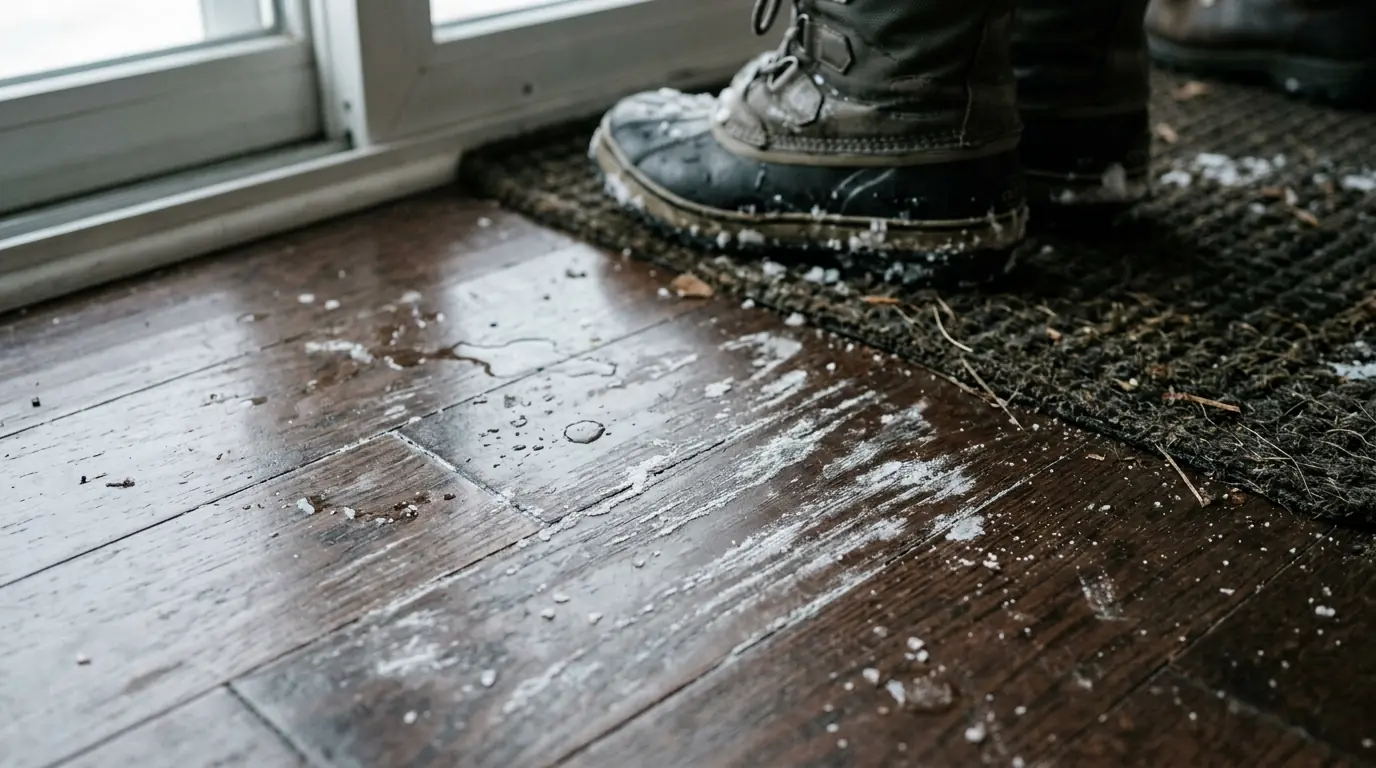
- Salt residue is not ordinary dirt: plain water spreads it, and repeated mopping leaves a dull film.
- Use a neutral floor cleaner or a product made for ice melt residue, and dry the floor after cleaning.
- Stop it at the door with two mats, a boot tray and a regular entry clean.
Why Connecticut floors take so much salt
The Connecticut Department of Transportation pretreats state roads with salt brine and uses chloride de-icers, including magnesium chloride, through each storm. Towns and cities apply even more: a legislative research report found that municipalities spread more than twice as much salt as the state does each winter. Sidewalks, parking lots and driveways add their own ice melt on top.
All of it ends up on boots, stroller wheels and pet paws, and from there on entry floors, hallways and the first few yards of carpet inside every door.
What salt does to different floors
- Hardwood: white film and streaks, and over a long winter a worn, dull finish.
- Vinyl tile and sealed floors: a hazy film that makes the floor look dirty right after mopping.
- Stone and tile: white residue in grout lines and on textured tile.
- Carpet and rugs: crusty white rings that hold moisture and attract dirt.
- Entry mats: saturated mats that spread salt further instead of stopping it.
The film is mostly dried salt and ice melt chemicals, which is why it comes back after an ordinary mop. Water dissolves it, then leaves it behind again when the floor dries.
Getting salt off hard floors
- Dry-sweep or vacuum first to pick up grit, which scratches the finish when it is pushed around.
- Mop with a pH-neutral floor cleaner, or a cleaner made for ice melt residue, mixed as the label says.
- Rinse with clean water if the cleaner calls for it, changing the water often.
- Dry the floor with a clean microfiber pad so the residue does not settle back as the water evaporates.
- On hardwood, use as little water as possible and never let it stand.
Avoid harsh or acidic cleaners on stone, marble and travertine, and check your floor manufacturer's guidance for hardwood. Heavily filmed commercial floors may need a scrub and recoat in spring to restore the finish.
Getting salt out of carpet and rugs
Let wet salt stains dry, then vacuum to lift the loose crystals. Blot the remaining ring with warm water and a little mild detergent, or a carpet spotter made for salt, then blot again with clean water so no residue is left to attract dirt. Avoid scrubbing, which spreads the stain and frays the pile.
Rings that keep coming back usually mean salt has worked into the backing. Hot water extraction rinses it out properly, and it is worth doing at the end of winter for entry rugs and the first stretch of hallway carpet.
Stopping it at the door
- Use two mats: a coarse scraper mat outside and an absorbent mat inside.
- Give boots a tray with a raised edge so meltwater stays contained.
- Shake out or vacuum entry mats daily in storm weeks, and swap saturated ones.
- Clean the entry floor more often than the rest of the house or building in winter.
- Ask whoever clears your walks which ice melt they use near the entrances.
For offices, stores and apartment lobbies
Commercial entries see hundreds of salty boots a day, and the salt spreads fast through lobbies and along corridors. A winter routine that cleans entry floors on every visit with a salt-neutralizing product, rotates or swaps saturated mats, and scrubs and recoats vinyl tile in spring keeps floors from wearing out early. Carpeted offices benefit from extra extraction in the first few yards inside each door, where most of the salt ends up.
When to call us. When salt has dulled the hardwood or left rings in the carpet, our floor and carpet cleaning removes the residue properly, and commercial floors can be scrubbed and recoated in spring.
Sources
About the author. Viola Nash is the Cleaning and Disinfection Guides Editor at IMD Disinfecting Services. Every guide is checked against current CDC, EPA and Connecticut public health guidance and against the way our crews do the work, and updated when that guidance changes.