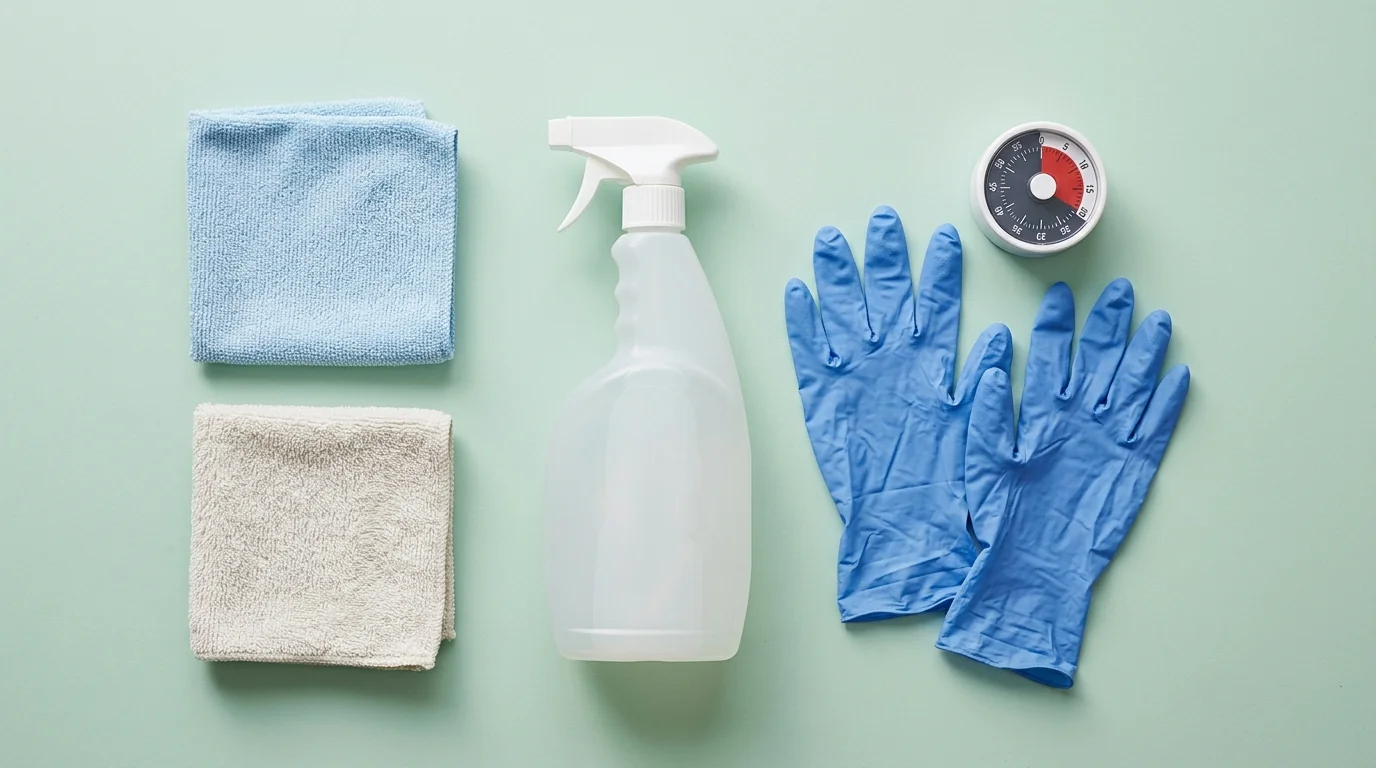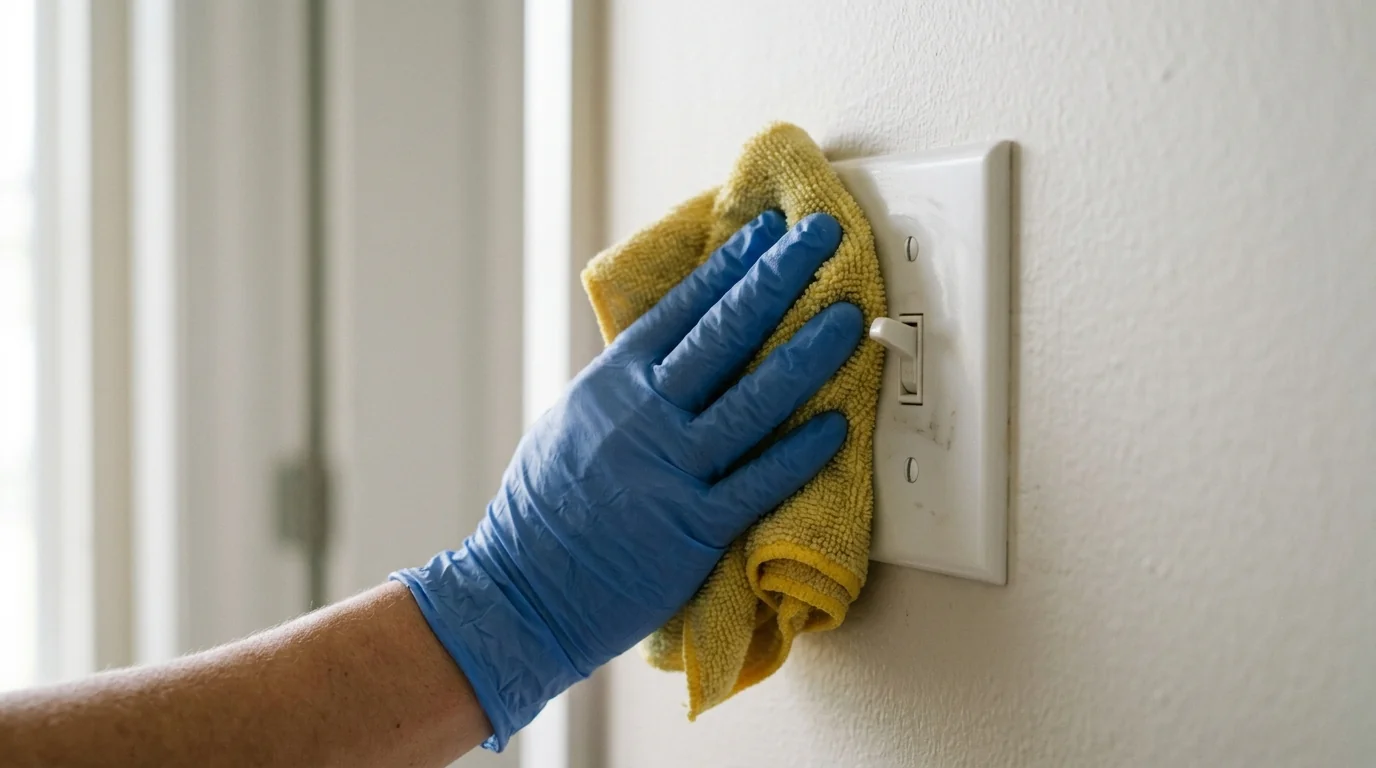
- Wear gloves, and eye protection if anything could splash.
- Wipe up the blood first; disinfectant goes on the cleaned surface, not the spill.
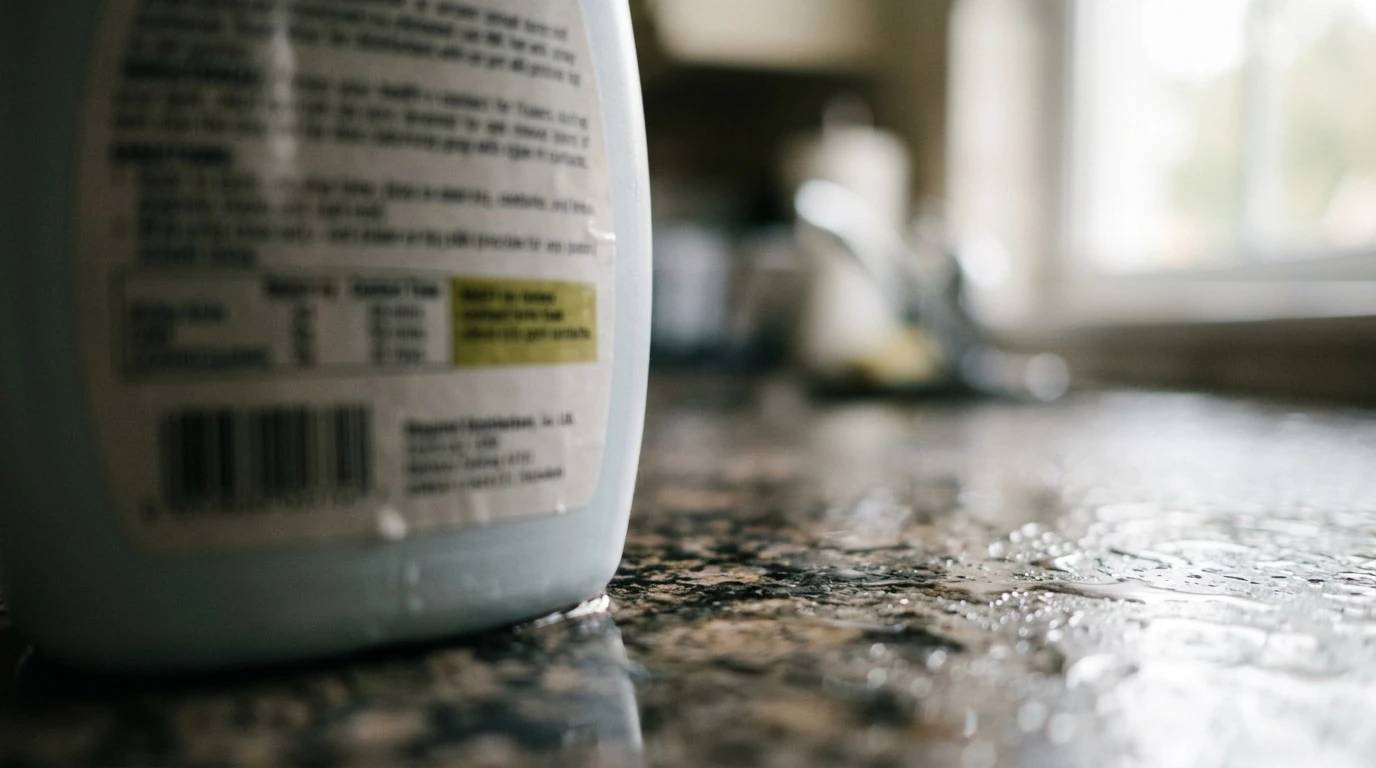
- OSHA accepts EPA-registered products labeled for HIV and hepatitis B, tuberculocidal disinfectants, or bleach diluted 1:10 to 1:100.
- Blood soaked into carpet, fabric or wood usually means removal, not cleaning.
Why blood needs a different cleanup
Blood can carry bloodborne pathogens such as hepatitis B, hepatitis C and HIV. OSHA's bloodborne pathogens standard, 29 CFR 1910.1030, exists because people who clean up blood at work can be exposed through cuts, cracked skin or splashes to the eyes and mouth. The same risks apply at home.
The standard requires employers whose staff may contact blood to have an exposure control plan, provide protective equipment and decontaminate surfaces with an appropriate disinfectant. Even if you are cleaning a spot in your own kitchen, following the same steps is the safest way to do it.
The disinfectants OSHA accepts
OSHA's published interpretations of the standard name three options as appropriate for surfaces contaminated with blood, once the blood itself has been wiped up:
- EPA-registered tuberculocidal disinfectants.
- EPA-registered disinfectants whose label says they are effective against both HIV and hepatitis B.
- Household bleach diluted between 1:10 and 1:100 with water.
Whichever product you use, read the label and keep the surface wet for the full contact time it gives. Wiping a disinfectant off straight away cleans the surface without disinfecting it. Mix a bleach solution fresh, never combine bleach with ammonia or other cleaners, and ventilate the room.
Step by step, for a small spill on a hard surface
- Put on disposable gloves, plus eye protection if anything could splash.
- Cover the blood with paper towels or absorbent pads and let them soak it up.
- Pick up any broken glass or sharp pieces with tongs or a dustpan, never your hands.
- Wipe the area clean with detergent and water so no visible blood remains.
- Apply a disinfectant OSHA accepts and leave it wet for its label contact time.
- Bag the towels and gloves, take the gloves off inside out and wash your hands.
Blood cleanup at work
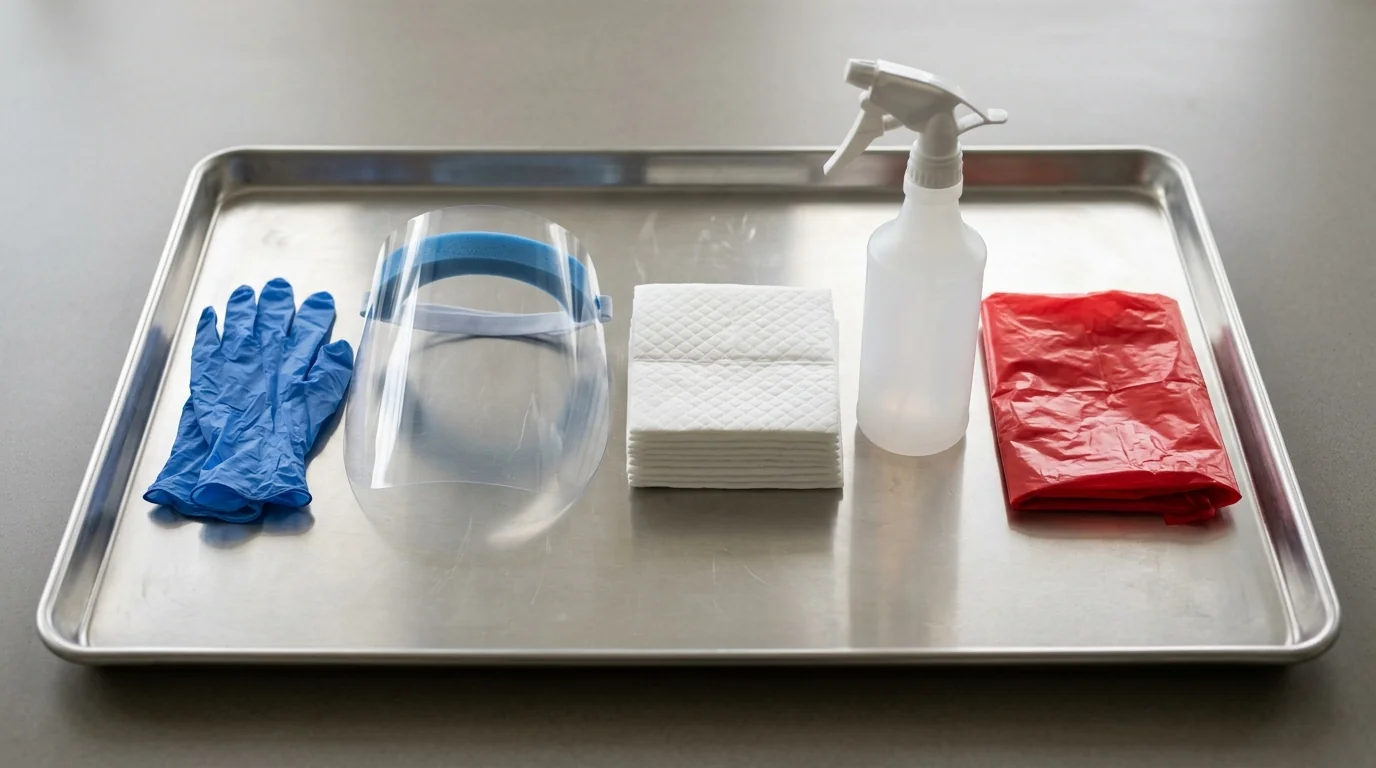
In a workplace, cleaning up blood is also a compliance question. Staff who may be asked to do it should be trained, have gloves and other protective equipment within reach and know where the spill kit is kept. Contaminated cleaning materials go into a closable, leak-proof bag, and anything soaked or dripping with blood is handled as regulated waste rather than ordinary trash.
Many businesses train staff to handle small spills and call a cleanup company for anything larger, so employees are never exposed to more than a minor incident and the area is back in use quickly.
When a blood spill needs a professional
The steps above work for a small spot on a hard, sealed surface. They are not enough when blood has soaked into something porous or spread widely. Carpet and its pad, upholstery, mattresses, unsealed wood and drywall hold blood below the surface, where it can smell, stain back through and stay infectious. Those materials usually have to be cut out and handled as biomedical waste.
A professional cleanup also makes sense in a workplace or public space, where staff should not be exposed, and whenever there is a large amount of blood, such as after a serious injury or a death.
- Blood on carpet, fabric, a mattress or unsealed wood.
- More than a small spot, or blood in several rooms.
- Blood in a workplace, a store or a public restroom.
- Any scene connected to a serious injury, a crime or a death.
When to call us. For anything beyond a small spot on a hard surface, call us at any hour. We remove what blood soaked, disinfect with products OSHA accepts and package the waste properly, at home or at work.
Sources
- OSHA standard interpretation: disinfectants for bloodborne pathogen decontamination (1997)
- OSHA standard interpretation: bleach dilution for decontamination (1992)
- Connecticut DEEP: Biomedical waste FAQs
About the author. Viola Nash is the Cleaning and Disinfection Guides Editor at IMD Disinfecting Services. Every guide is checked against current CDC, EPA and Connecticut public health guidance and against the way our crews do the work, and updated when that guidance changes.