- Clean up vomit or diarrhea right away, wearing disposable gloves, and blot it up with paper towels before disinfecting.
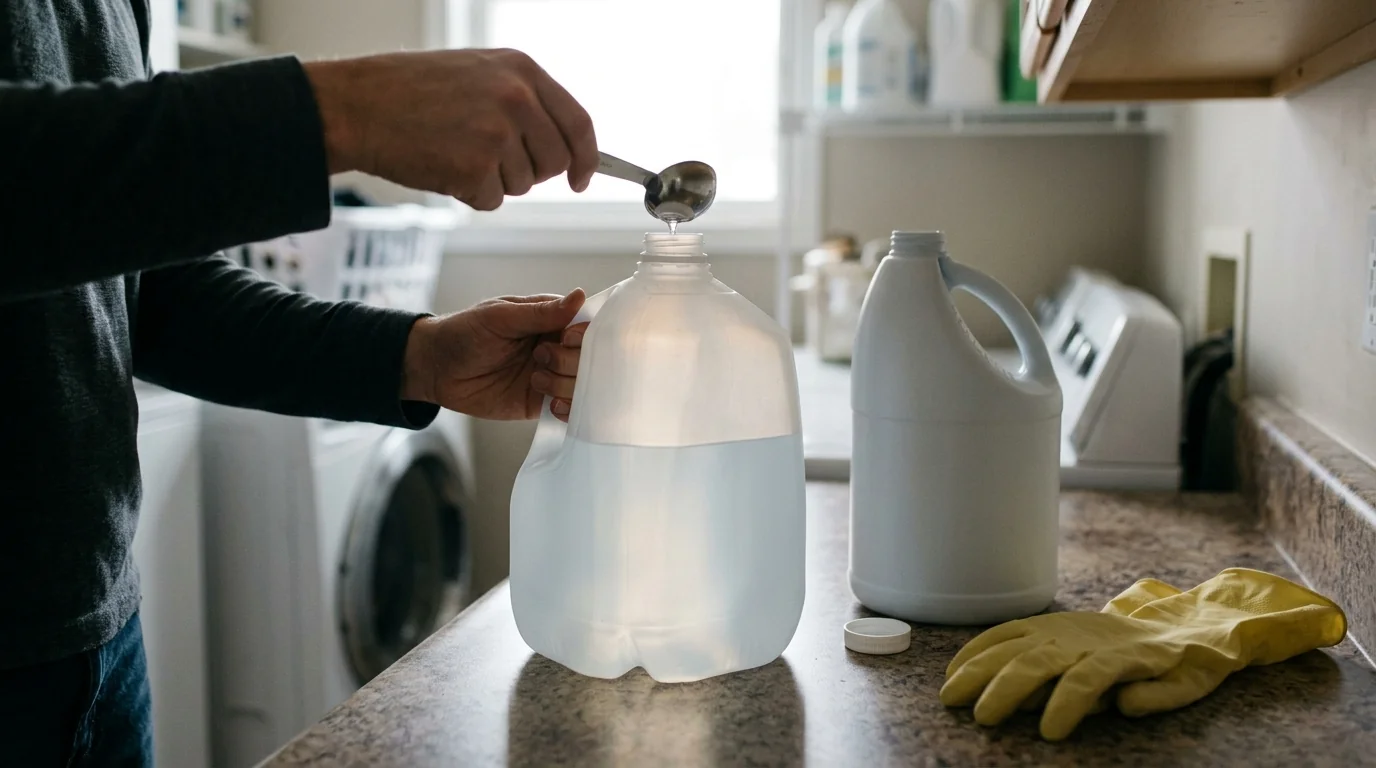
- Use bleach at 1,000 to 5,000 ppm, about 5 to 25 tablespoons of household bleach per gallon of water, or an EPA-registered norovirus product.
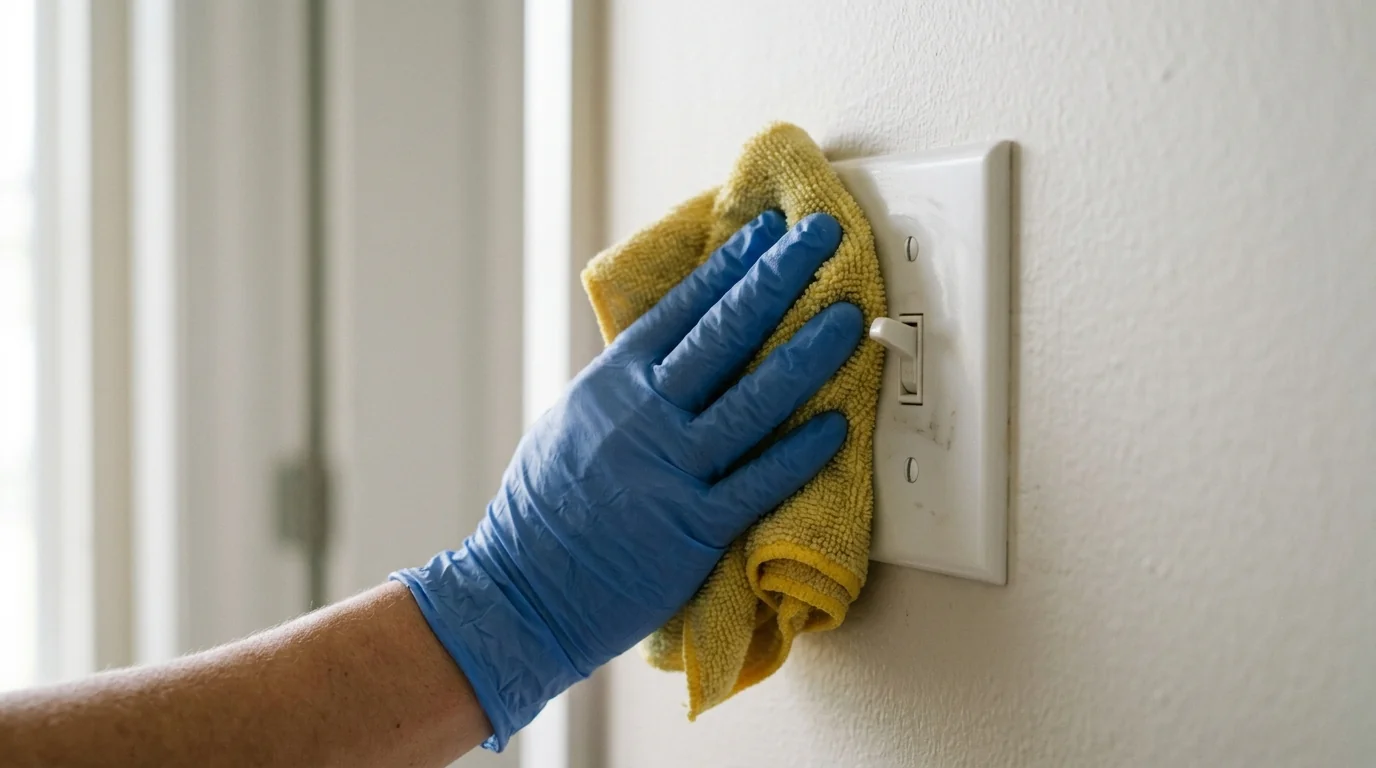
- Start with the accident and the bathroom, then work through door handles, faucets, remotes and anything else people touch.
- Wash soiled laundry in hot water with detergent and dry it on high heat, handling it as little as possible.
Why stomach bugs spread so fast at home
Most household stomach bugs are norovirus. A tiny amount of virus is enough to make someone sick, and it spreads through vomit, diarrhea, contaminated surfaces and shared food. Vomiting can spread droplets well beyond the spot where it landed, which is why a quick wipe of the obvious area rarely stops it going round the family.
Norovirus is also tougher than most cold and flu viruses. It survives on surfaces, and many common disinfectant sprays and wipes are not labeled to kill it. That is why CDC gives a specific bleach strength for cleaning up after vomiting or diarrhea instead of leaving it to whatever product is in the cupboard.
The first hour: cleaning up the accident
Work in this order, and do not rush the last steps:
- Put on disposable gloves, and a mask if you have one, and keep children and pets away from the area.
- Blot up the vomit or diarrhea with paper towels or disposable cloths and seal them in a plastic bag.
- Clean the area with soap or detergent and water to remove what is left.
- Apply the bleach solution or a norovirus-registered product and leave it wet for the contact time on the label.
- Rinse food-contact surfaces with water afterward and let the area dry.
- Take off the gloves, bag them, and wash your hands well with soap and running water.
Hand sanitizer is not a substitute for washing your hands after this cleanup. Soap and running water do a better job against norovirus.
Mixing the right bleach solution
CDC's guidance for norovirus is a chlorine bleach solution of 1,000 to 5,000 parts per million. With regular 5.25% household bleach, that works out to 5 to 25 tablespoons of bleach per gallon of water. Use the stronger end of that range on surfaces that were directly soiled, and mix a fresh batch each day, because diluted bleach loses strength as it sits.
Never mix bleach with ammonia, vinegar or other cleaners, and keep the area ventilated while you work. Bleach can discolor fabric and damage some surfaces, so for anything delicate, use a product registered by EPA against norovirus instead and follow its label.
What to clean after the first hour
Once the accident itself is handled, the virus is still on everything the sick person touched. Work through these, cleaning first and then disinfecting:
- The bathroom: toilet, seat and handle, sink, faucet, light switch and door handle.
- The sick person's room: bedside table, light switches, door handle, remote and phone.
- Kitchen surfaces anyone touched, plus refrigerator and cabinet handles.
- Stair rails, door handles and light switches along the way between rooms.
- Hard toys, tablets and game controllers, with a product suited to electronics.
- Floors where vomit or diarrhea landed, after the first cleanup.
Laundry, carpets and soft furniture
Handle soiled clothes, towels and bedding as little as possible, keep them away from your face, and wash them with detergent in hot water, then dry them on high heat. Carpets and upholstery cannot be soaked in bleach, so blot up what you can, clean with detergent, and follow up with hot water extraction or a product labeled for soft surfaces.
A mattress that was soiled should be cleaned and allowed to dry completely before anyone sleeps on it again. Keep cleaning the bathroom and the most-touched surfaces for a few days after the last person feels better, because people can still spread norovirus after their symptoms stop.
When a professional disinfection makes sense
Most single accidents can be handled at home with the steps above. It is worth calling us when the illness has gone through the whole household, when someone in the home is very young, elderly or has a weakened immune system, when a shared building like a two-family house is involved, or when you are simply too worn out to do it properly. We clean and disinfect every high-touch surface with norovirus-registered products or bleach at CDC strength, and leave them wet for the full contact time.
When to call us. After a stomach bug has gone through the house, we treat every room and touch point with products that work against norovirus, at the strength and contact time CDC and the label call for.
Sources
- CDC: Norovirus facts for food workers
- EPA: Selected EPA-registered disinfectants
- EPA: Six steps for safe and effective disinfectant use
- CDC environmental cleaning guidance, summarized by Washington State DOH
About the author. Viola Nash is the Cleaning and Disinfection Guides Editor at IMD Disinfecting Services. Every guide is checked against current CDC, EPA and Connecticut public health guidance and against the way our crews do the work, and updated when that guidance changes.