- Call 911 first. Police and the medical examiner's office decide what happens next.
- Leave the room as it is until the medical examiner authorizes it; do not try to clean.
- Connecticut's medical examiner does not charge the family for its services.
- Materials soaked with body fluids are biomedical waste and need a permitted transporter.
The first call: 911
If you find someone who has died at home and they were not under hospice care, call 911 even if it is clear that nothing can be done. Police and emergency responders come to the home, and a death that happens alone at home is usually reported to Connecticut's Office of the Chief Medical Examiner, which decides whether it needs to be investigated.
Step outside while you wait if you can, and keep other family members and pets out of the room. It is a natural instinct to cover, tidy or open windows, but the room should stay as it is for now. Write down anything you noticed when you arrived, such as which doors were locked, because responders may ask.
What not to touch before the medical examiner
Connecticut's medical examiner guidance for families says the scene of a reportable death should not be disturbed until the Chief Medical Examiner authorizes it. That covers the person, the bed or chair, medications, papers and anything else in the room.
The medical examiner's office also takes care of the person's belongings at the scene: personal property is inventoried and passed to the funeral director when the body is taken to the funeral home. If something important is missing later, the funeral home is the first place to ask.
- Do not move or cover the person.
- Do not clean, wipe or throw anything away in the room.
- Do not turn heat or air conditioning up or down without asking responders.
- Do keep children and pets out, and wait outside if you can.
How the medical examiner's process works
The Office of the Chief Medical Examiner certifies the cause and manner of death for deaths that the law requires it to review. Its staff transport the person, examine them and release them to the funeral home the family chooses; the office's own reports describe aiming to do that within 24 hours.
Families are not charged for the medical examiner's services. If you have not chosen a funeral home yet, take the time you need; once you do, the funeral home usually handles contact with the medical examiner's office from there. Death certificates come from the town where the death occurred.
Why the family should not clean the room
Once the home is released, the room still needs work. When someone has not been found for some time, body fluids can soak into a mattress, carpet and pad, subfloor and the furniture nearby, and the odor travels through the home. Cleaning that yourself means exposure to bloodborne germs and to a sight no relative should carry.
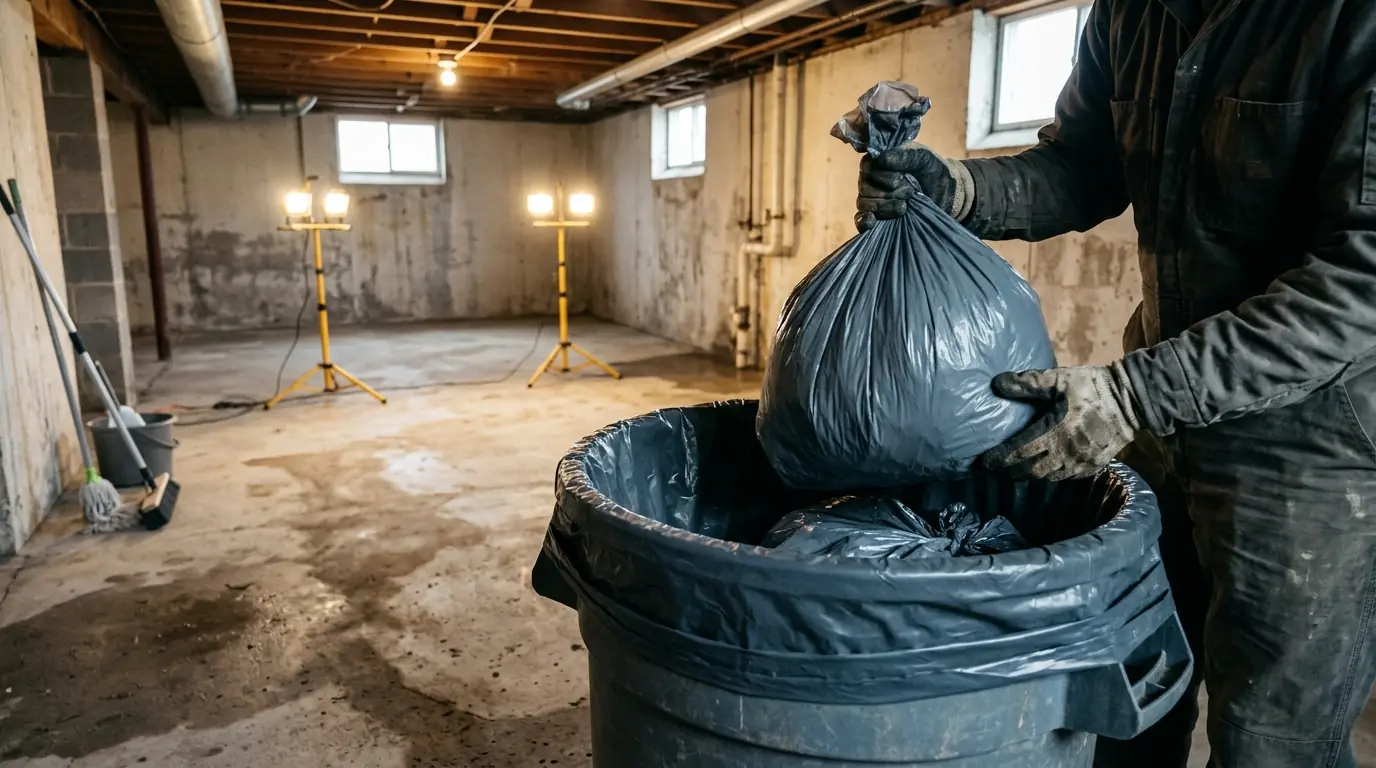
There is a legal side too. Connecticut's Department of Energy and Environmental Protection says that items saturated, dripping or caked with body fluids from a scene are biomedical waste, managed under state regulations and moved by a DEEP-permitted biomedical waste transporter. They do not go out with the household trash.
What a professional cleanup involves
- Confirm the home has been released by police and the medical examiner.
- Close off the room and protect the rest of the house from odor and tracking.
- Remove soaked materials such as the mattress, carpet and pad, and package them as biomedical waste.
- Clean and disinfect the subfloor, walls and every surface that was reached.
- Treat the odor at its source and check the room before it is handed back.
Many homeowners and landlord policies cover this cleanup, so photograph the room before work starts if you can, or ask the cleanup crew to do it, and call the insurer early. Keepsakes and papers found in the room can usually be cleaned and set aside for the family.
When to call us. Once the home has been released, call us at any hour. We clean and disinfect the room, remove what cannot be saved, treat the odor and give you photos and a scope for insurance, so nobody in the family has to do it.
Sources
- Connecticut Office of the Chief Medical Examiner: information for families
- Connecticut OCME annual digest report, 2022-2023
- Connecticut DEEP: Biomedical waste FAQs
About the author. Viola Nash is the Cleaning and Disinfection Guides Editor at IMD Disinfecting Services. Every guide is checked against current CDC, EPA and Connecticut public health guidance and against the way our crews do the work, and updated when that guidance changes.