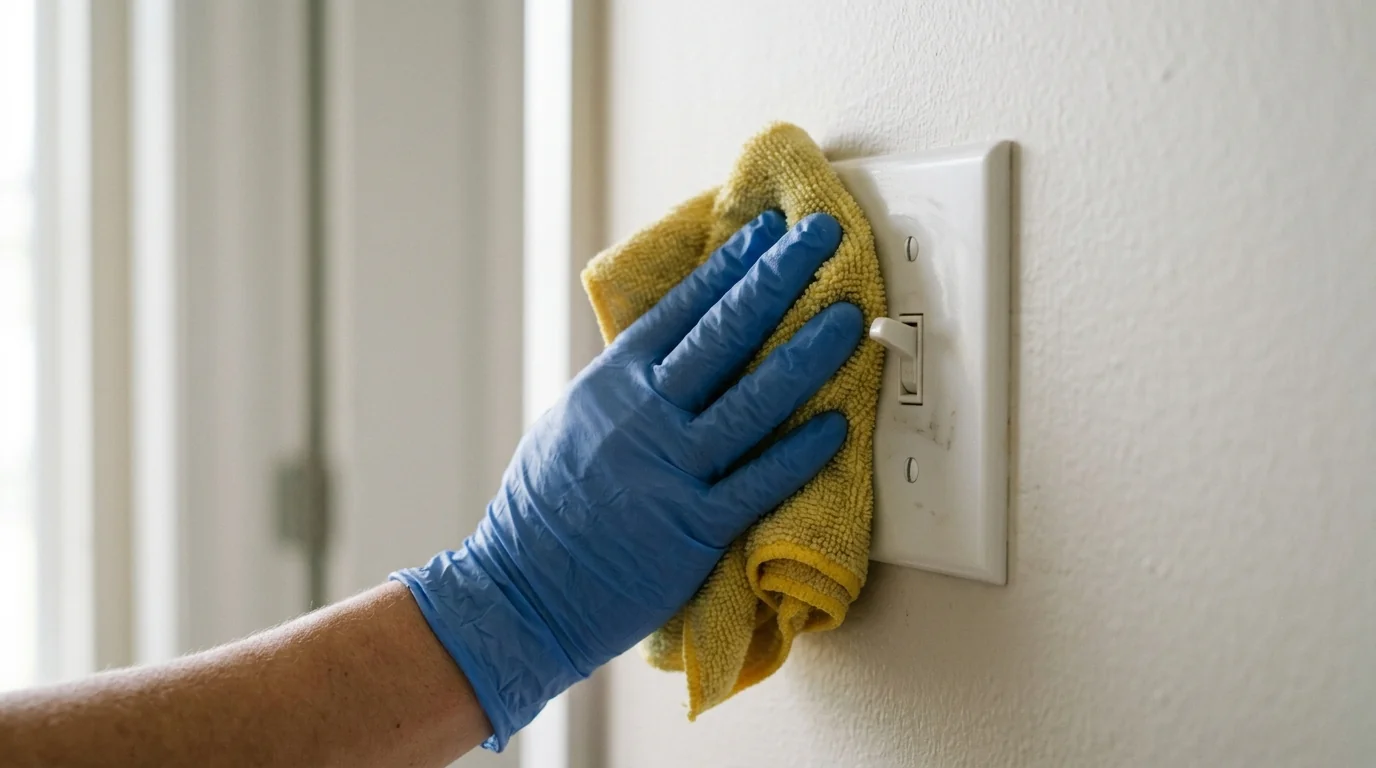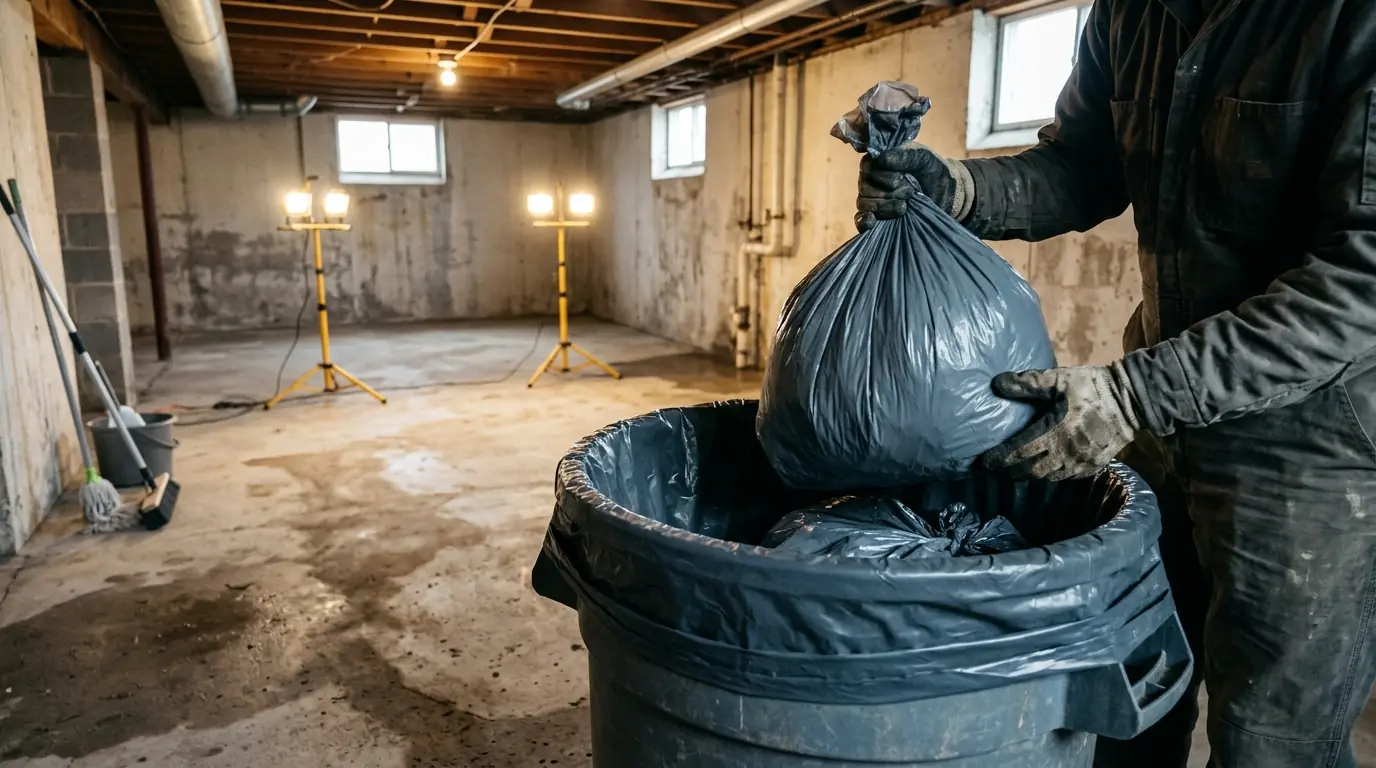
- Never sweep or vacuum droppings dry; that can put contaminated dust into the air you breathe.
- Air the space out for at least 30 minutes before you start cleaning.
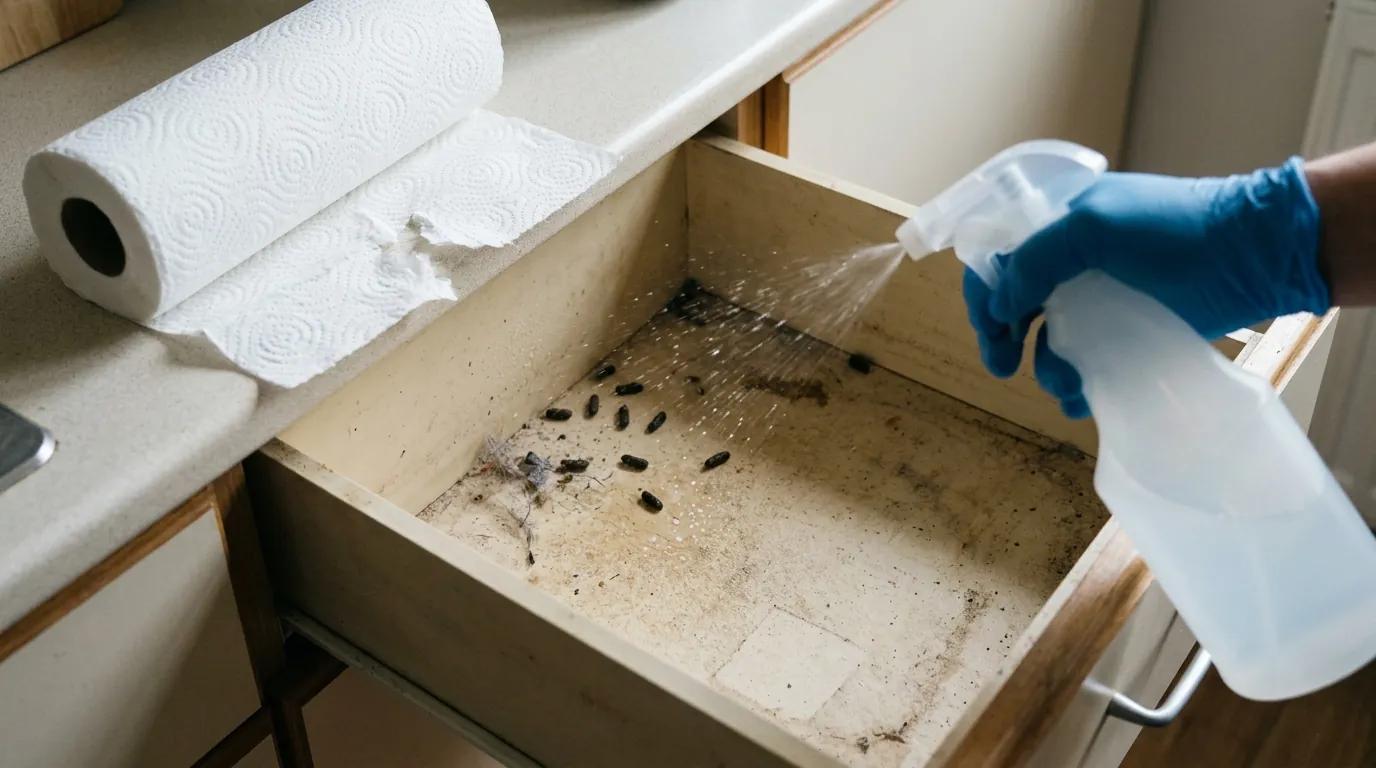
- Soak droppings and nesting material with a 1 to 10 bleach solution or a disinfectant for 5 minutes, then wipe up with paper towels.
- Bag everything, disinfect the area, disinfect your gloves, then wash your hands.
Why droppings are never swept
Mouse and rat droppings, urine and nesting material can carry viruses and bacteria, including hantavirus. The risk does not usually come from touching droppings with gloves on. It comes from breathing dust when dried droppings or nests are disturbed. Sweeping and vacuuming do exactly that, which is why CDC's rodent cleanup guidance rules them out.
The deer mouse is the most widely known carrier of hantavirus in North America, but house mice and rats carry other germs too, so the same careful method applies to droppings from any rodent.
Before you start
Get set up first, so you are not stirring things up while you look for supplies:
- Open doors and windows and let the space air out for at least 30 minutes.
- Put on rubber, latex or vinyl gloves.
- Mix a fresh bleach solution of 1 part bleach to 10 parts water, or use an EPA-registered disinfectant.
- Have paper towels, plastic bags and a spray bottle ready.
- Keep children and pets out of the area until you are finished.
The cleanup, step by step
- Spray the droppings, urine spots and any nesting material until they are thoroughly wet.
- Leave them to soak for 5 minutes.
- Wipe them up with paper towels and put the towels straight into a plastic bag.
- Spray the area again and clean the surface with the bleach solution or disinfectant.
- Seal the bag, place it inside a second bag, and put it in the outdoor trash.
- Disinfect your gloves before taking them off, then wash your hands with soap and warm water.
Nests, insulation and stored items
Nesting material is handled the same way: soak it, wait, then pick it up with paper towels and bag it. Cardboard boxes, insulation batts and fabric that mice nested in or urinated on usually cannot be cleaned safely and are better bagged and thrown away. Hard items like plastic bins, glass and metal can be cleaned and disinfected. Upholstered furniture and mattresses can be steam cleaned or shampooed once the droppings are removed, but heavily soiled pieces may need to go.
Attics and crawl spaces with heavy, long-term droppings are a bigger job. Blown-in insulation full of droppings usually needs to be vacuumed out with HEPA equipment and bagged, and anyone working in a confined space with that much contamination needs more protection than a pair of gloves.
Closed-up cabins, sheds and seasonal homes
CDC pays particular attention to buildings that have been closed for a while, like cabins, sheds and garages. Dried droppings collect over months, and the first person to open the door and start sweeping stirs up the most dust. Open the building and let it air out before going in to clean, and use the soak-and-wipe method instead of a broom.
Lake houses and campers that sat closed all winter are the most common example near us every spring. Our guide to opening a lake house covers the rest of that job.
When to call a professional
One drawer of droppings is a manageable job. Call when the droppings are widespread, when they are in an attic, crawl space or basement where you would be working in a confined space, when a house has been closed all winter, or when anyone in the home has breathing problems. We clean up following CDC rodent cleanup guidance and tell you plainly what has to be thrown away. Getting rid of the mice themselves is a job for pest control, and it should come first.
When to call us. For droppings in an attic, a basement, a closed-up house or anywhere you would rather not crawl, we soak, remove and disinfect following CDC guidance and list anything that has to be replaced.
Sources
- CDC: How to clean up after rodents
- CDC rodent cleanup reference sheet
- EPA: Selected EPA-registered disinfectants
About the author. Viola Nash is the Cleaning and Disinfection Guides Editor at IMD Disinfecting Services. Every guide is checked against current CDC, EPA and Connecticut public health guidance and against the way our crews do the work, and updated when that guidance changes.