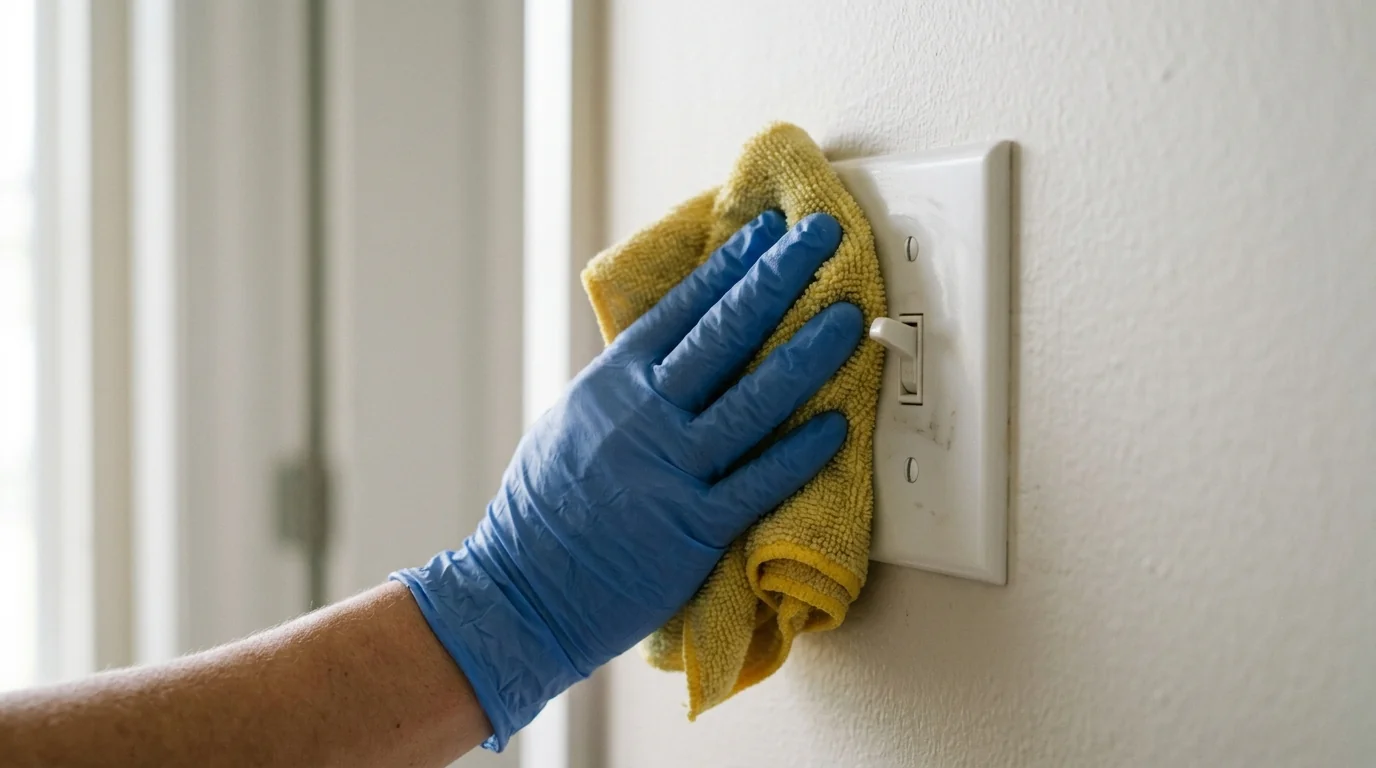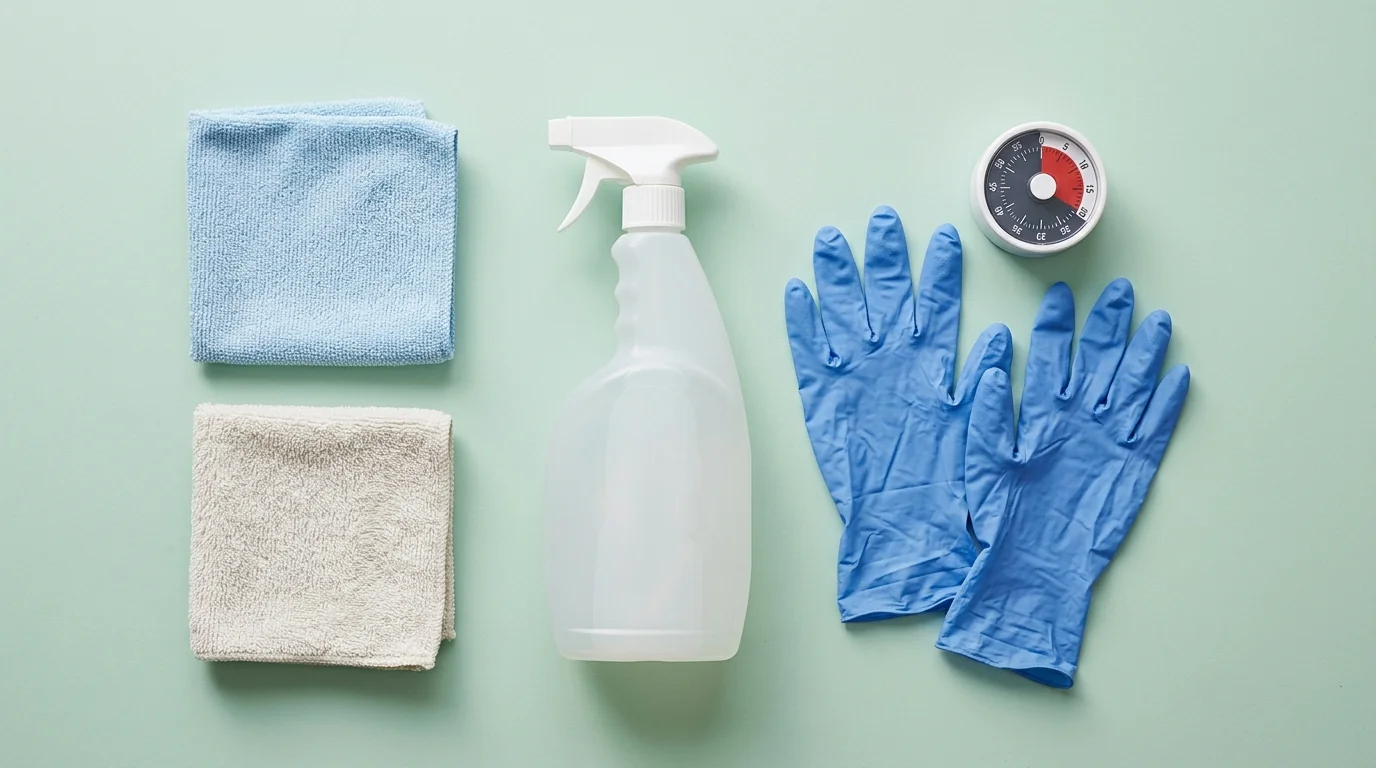
- Cleaning removes dirt and most germs with soap or detergent and water. It always comes first.
- Sanitizing lowers germs to a level considered safe, and belongs on food-contact surfaces.
- Disinfecting kills the germs named on an EPA-registered label, but only if the surface stays wet for the full contact time.
- After vomiting or diarrhea, ordinary sprays are not enough: CDC advises bleach at 1,000 to 5,000 ppm or a norovirus-registered product.
Three different jobs
CDC describes the three steps in order. Cleaning removes soil and organic material from a surface. Sanitizing reduces the germs that are left to a level considered safe by public health standards. Disinfecting kills the germs that remain on the surface. Each step builds on the one before it, and skipping the first one undermines the other two.
In everyday terms, cleaning is what most people do with a sponge and a spray cleaner: it makes a surface look clean and removes a large share of germs along with the dirt. Sanitizing is the standard for surfaces that touch food, where you want germ levels low without leaving strong chemicals behind. Disinfecting is for surfaces where an illness is already in the house, or where many hands touch the same spot all day.
| What it does | Typical places | What it needs | |
|---|---|---|---|
| Clean | Removes dirt, grease and most germs | Every surface, every visit | Detergent, water, a cloth |
| Sanitize | Lowers germs to a safe level | Cutting boards, prep counters, high chair trays | A sanitizer used as labeled |
| Disinfect | Kills the germs on the label | Bathrooms, handles, sickrooms, shared desks | A registered product and its full contact time |
Why cleaning always comes first
Dirt, grease and body fluids shield germs from a disinfectant and use up the active ingredient before it reaches them. That is why EPA lists pre-cleaning visibly dirty surfaces as a step of its own, before the disinfectant goes on. A disinfectant sprayed over a sticky counter is mostly wasted.
In practice that means two passes on any surface that needs disinfecting: wash it with detergent and water or a cleaner, then apply the disinfectant to the clean surface. Some products are labeled as one-step cleaner-disinfectants for lightly soiled surfaces, but anything visibly dirty still needs cleaning first.
Contact time: the part almost everyone skips
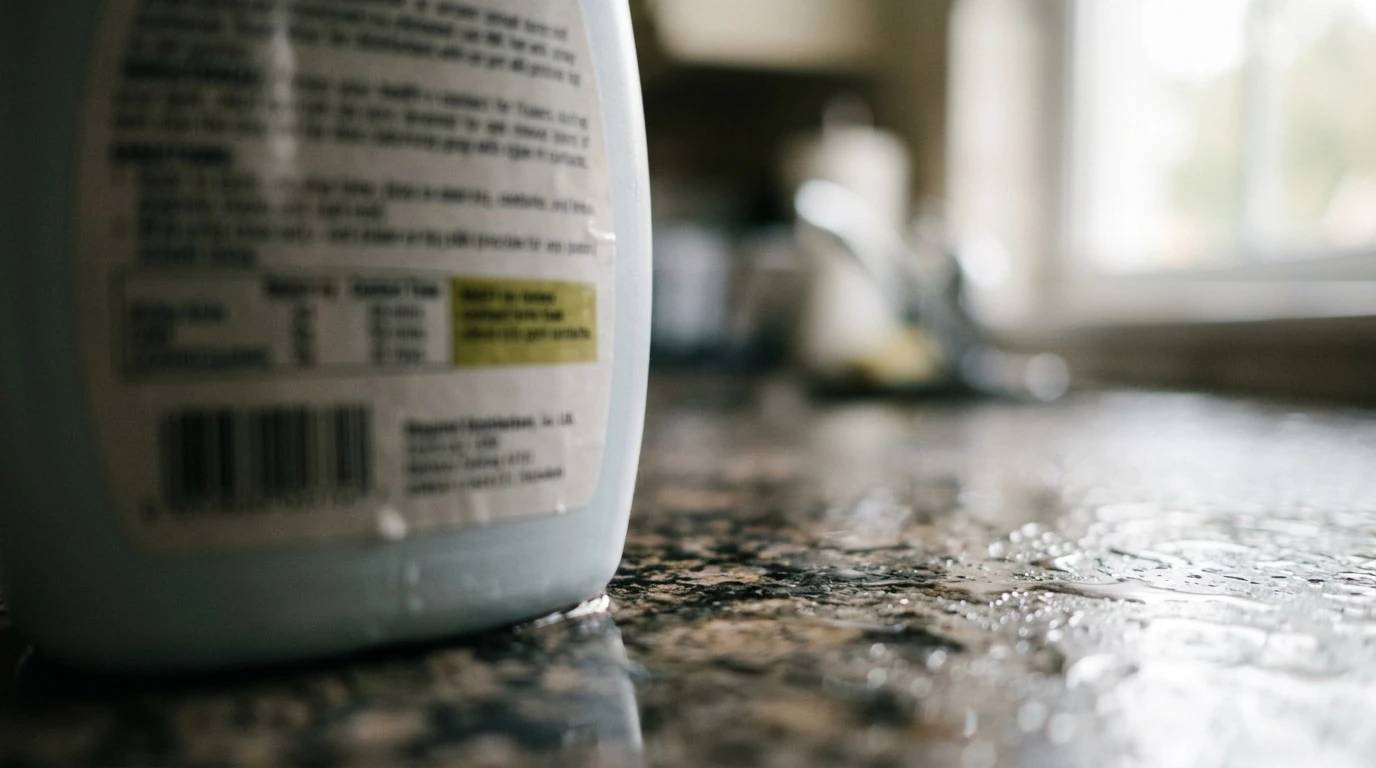
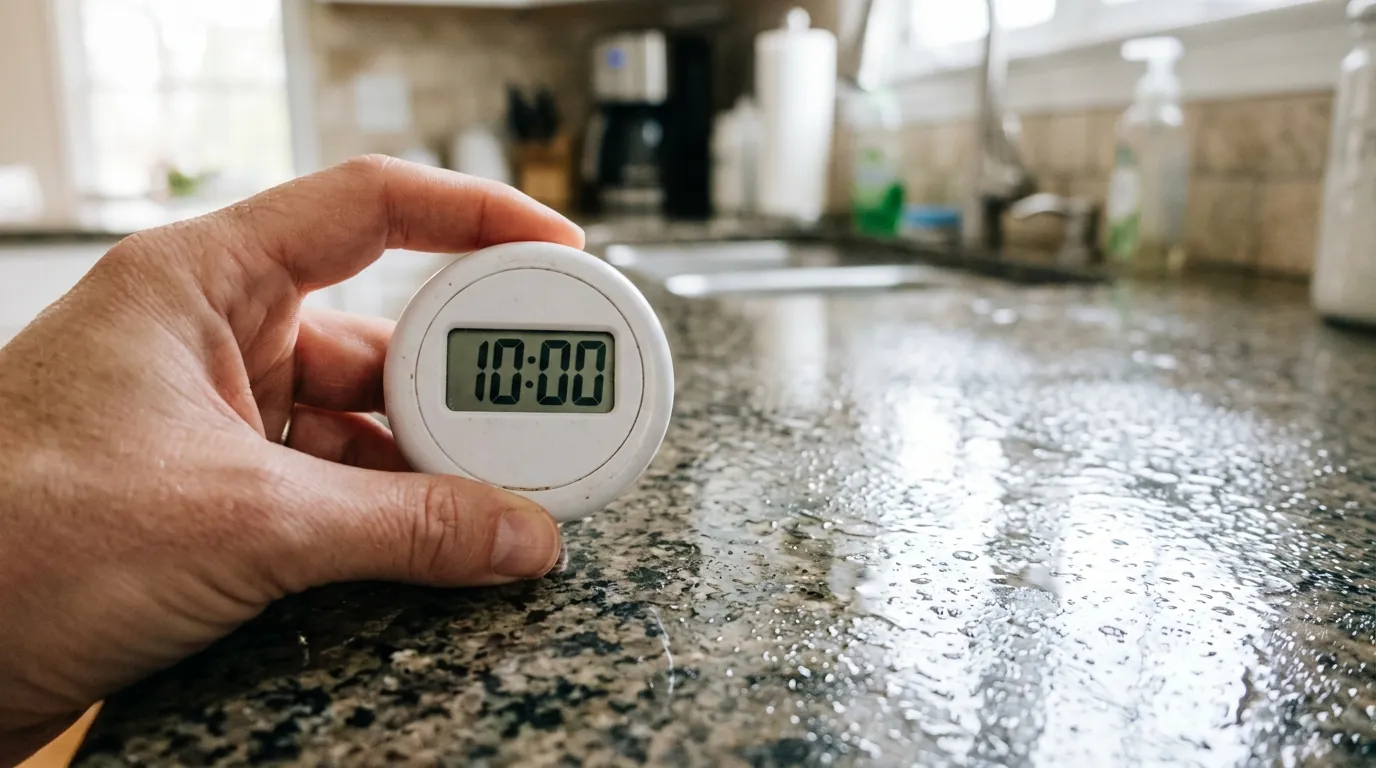
Every EPA-registered disinfectant has a contact time on its label: the number of minutes the surface has to stay visibly wet for the product to kill the germs it lists. It ranges from under a minute to ten minutes or more, depending on the product and the germ. EPA's own example is simple. If a product needs ten minutes and the surface dries in five, you apply more product.
Spray and wipe straight away and you have cleaned the surface, not disinfected it. This is the single most common reason disinfection done at home and disinfection done professionally give different results. When we disinfect, the product, the surface and the clock are all part of the job.
EPA's six steps for using a disinfectant
EPA sums up safe and effective disinfectant use in six steps:
- Check that the product is EPA-registered.
- Read the directions, including which germs it is labeled for.
- Pre-clean the surface if it is visibly dirty.
- Follow the contact time on the label.
- Wear gloves and wash your hands afterward.
- Store the product locked away, out of reach of children.
When ordinary disinfecting is not enough
Norovirus, the usual cause of stomach bugs, is harder to kill than flu or cold viruses, and many household disinfectants do not list it. After vomiting or diarrhea, CDC advises a chlorine bleach solution of 1,000 to 5,000 parts per million, which is 5 to 25 tablespoons of household bleach per gallon of water, or a product registered by EPA against norovirus. Bleach can damage some surfaces, so test first, and rinse food-contact surfaces afterward.
Rodent droppings are another special case. They are not sprayed and wiped like a counter; they are soaked first so dried material is not stirred into the air. Our guide to cleaning up mouse droppings walks through that method step by step.
Where each one belongs in a house or a workplace
- Kitchen counters and cutting boards: clean, then sanitize.
- Bathroom fixtures and toilet handles: clean, then disinfect, especially when someone is sick.
- Door handles, light switches and remotes: clean regularly, disinfect in flu season or after illness.
- Floors: clean; disinfect only after spills of vomit, blood or other body fluids.
- Children's toys: clean, then sanitize or disinfect with a product labeled for it, and rinse anything that goes in a mouth.
- Offices and classrooms: clean nightly, disinfect shared touch points through the respiratory virus season.
Connecticut's Department of Public Health treats October through May as the respiratory virus season, which is when schools, daycares and offices usually add disinfection of shared surfaces to their routine.
When to call us. If someone in the house is sick, or you want it treated before a newborn or a vulnerable relative arrives, our home disinfection service covers every high-touch surface with the right product and its full contact time.
Sources
- CDC environmental cleaning guidance, summarized by Washington State DOH
- EPA: Selected EPA-registered disinfectants
- EPA: Six steps for safe and effective disinfectant use
- CDC: Norovirus facts for food workers
- Connecticut DPH: Respiratory viral disease season memo
About the author. Viola Nash is the Cleaning and Disinfection Guides Editor at IMD Disinfecting Services. Every guide is checked against current CDC, EPA and Connecticut public health guidance and against the way our crews do the work, and updated when that guidance changes.