- Electrostatic sprayers give droplets an electric charge so they spread out and cling to surfaces, including the backs and sides of objects.
- EPA does not recommend electrostatic application unless the product's label includes directions for it.
- The surface still has to stay wet for the label's contact time; the mist does not change that.
- It is a disinfection step, not cleaning: visibly dirty surfaces still need washing first.
How an electrostatic sprayer works
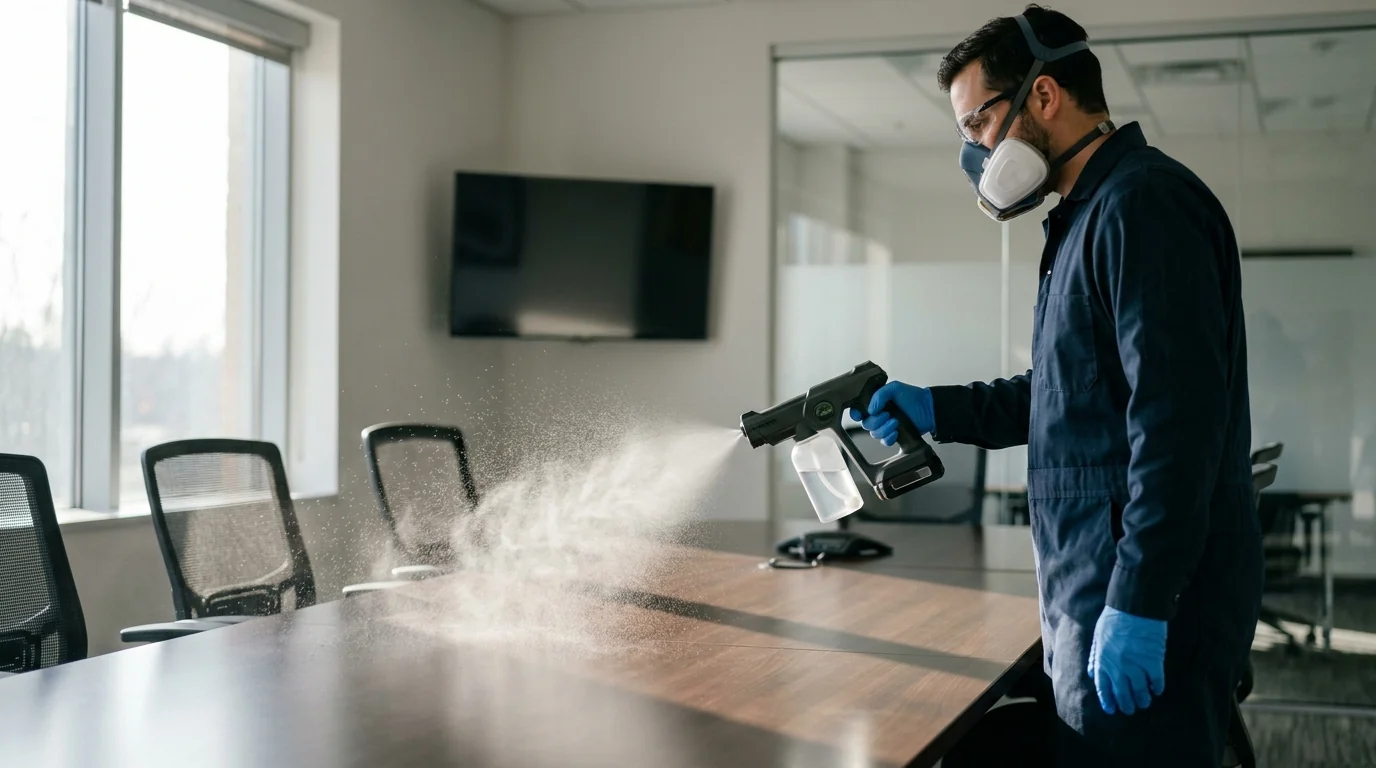
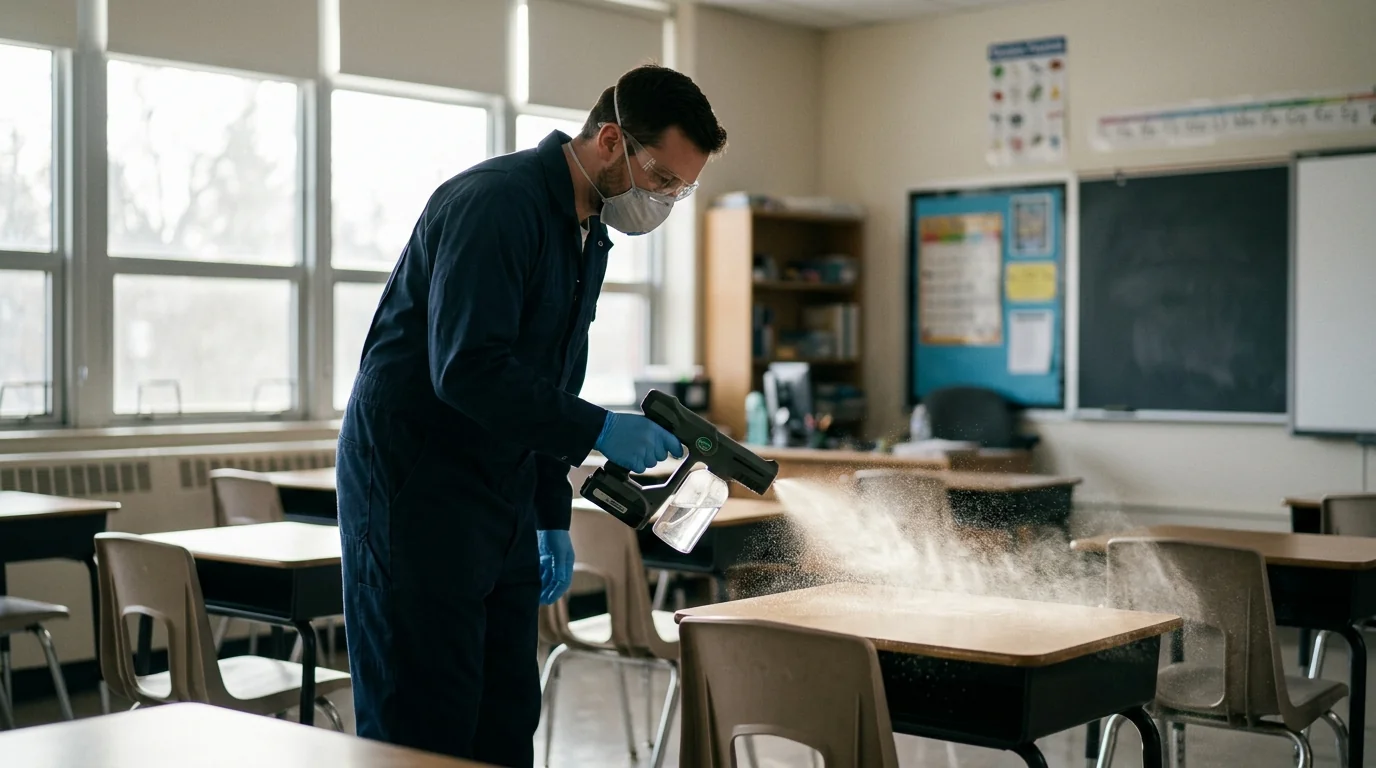
An electrostatic sprayer turns a liquid disinfectant into a fine mist and gives the droplets an electrical charge as they leave the nozzle. Charged droplets repel each other, so they spread out evenly instead of clumping, and they are drawn toward surfaces, which lets the mist wrap around curved and hidden parts of an object like the underside of a desk or the back of a chair.
That makes it fast at covering large areas full of awkward surfaces: classrooms full of desks and chairs, gyms full of equipment, buses, waiting rooms and offices. A technician can treat a room in a fraction of the time it would take to spray and wipe every surface by hand.
The product label still decides
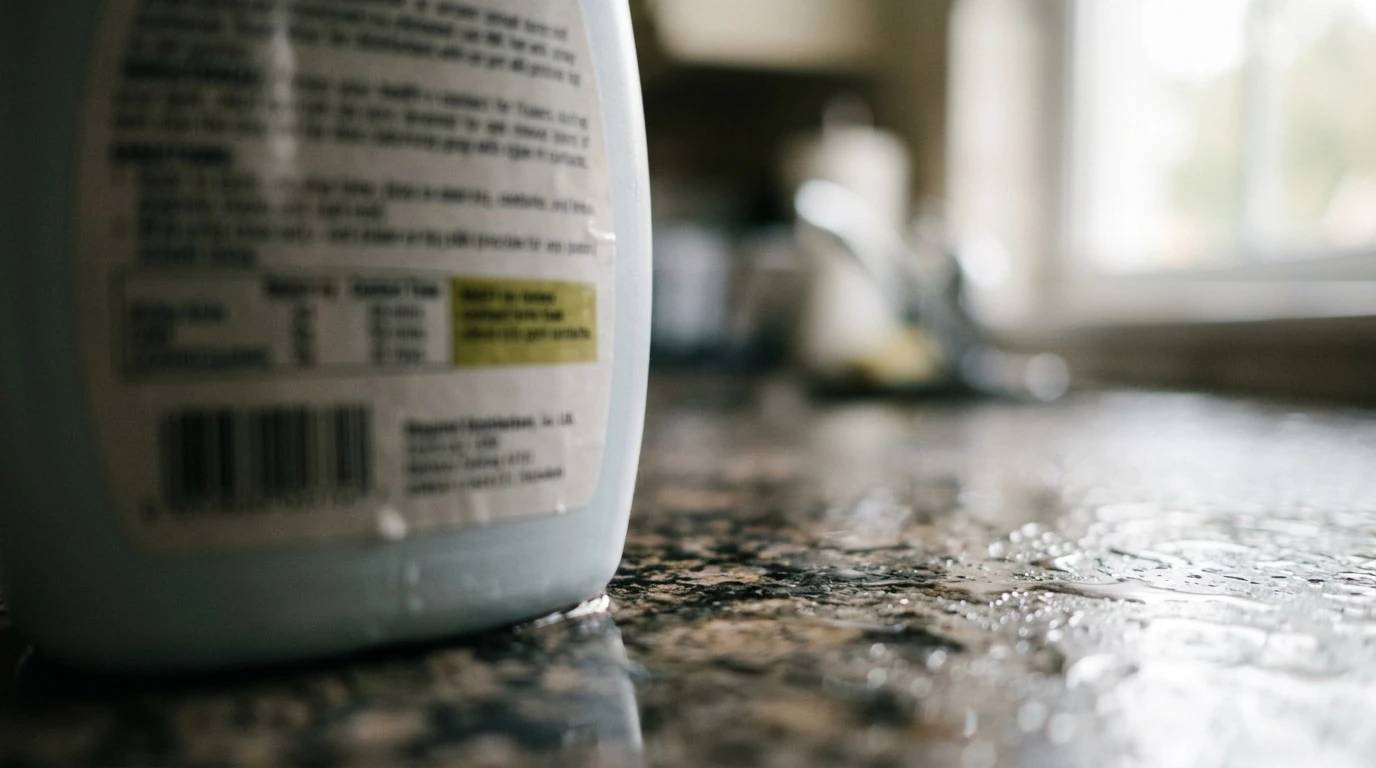
Not every disinfectant can be sprayed this way. EPA's position is that unless a product's label specifically includes directions for electrostatic spraying, fogging or wide-area application, it does not recommend using those methods, because it has not evaluated whether the product is safe and effective when applied that way. Its guidance to schools repeats the rule: only use products designed and labeled for the method.
So the first question for anyone offering electrostatic disinfection is which product goes in the sprayer, and whether its label includes electrostatic directions. If it does not, the treatment may look impressive and do much less than it promises.
Contact time does not go away
A charged mist still has to leave the surface visibly wet for the full contact time printed on the label. Some electrostatic-labeled products are made to stay wet long enough from a light, even coating; others need a heavier application. EPA's general rule applies here as everywhere: if the surface dries before the contact time is up, the product has not had the time it needs to work.
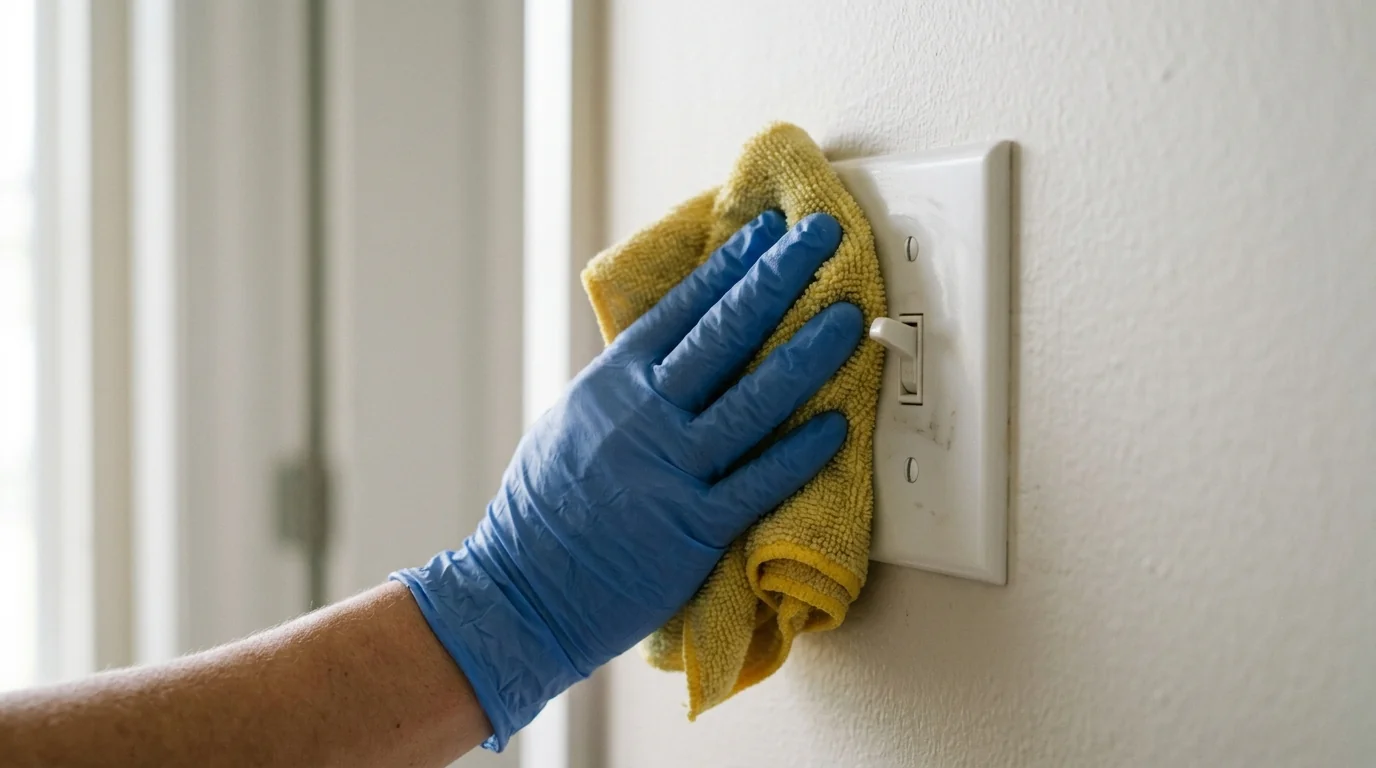
This is also why electrostatic disinfection does not replace cleaning. Soil, grease and sticky residue shield germs from the disinfectant. Visibly dirty desks, counters and handles still need wiping first, and the sprayer comes after.
Where electrostatic spraying helps most
- Classrooms and daycares, with many desks, chairs and toys to cover between days.
- Gyms and fitness studios, where equipment has awkward shapes.
- Vehicles and fleets, with seats, belts, rails and controls in a tight space.
- Offices and waiting rooms after an illness, when every chair and handle needs treating.
- Large rooms with many touch points, where hand-wiping every surface would take hours.
It helps less in a small, simple space like a single bathroom, where cleaning and disinfecting by hand is just as fast and easier to check.
Safety while spraying
Breathing in any aerosolized disinfectant can irritate the eyes, skin and airways. CDC guidance on electrostatic sprayers is that only the person applying the product, wearing the protective equipment the label calls for, should be in the room during spraying, and everyone else stays out until the label's re-entry time has passed. In childcare settings, federal early childhood guidance goes further and advises avoiding aerosols and foggers where possible, because fine particles can stay in the air.
That is why we schedule electrostatic work after hours or in empty rooms, move or cover food and food-contact items, and tell you exactly when the space can be used again.
What to ask before you pay for it
- Which product goes in the sprayer, and does its label include electrostatic directions?
- Which germs is that product registered against?
- What is the contact time, and how will surfaces stay wet for it?
- Will dirty surfaces be cleaned first?
- Who needs to stay out of the room, and for how long?
- Will I get a record of what was used and where?
When to call us. For classrooms, gyms, offices and vehicles, our electrostatic disinfection uses products labeled for electrostatic application, cleans dirty surfaces first and keeps everything wet for the full contact time.
Sources
- EPA: Can I use fogging, fumigation or electrostatic spraying?
- EPA: Guidance to schools on using registered disinfectants
- CDC (archived): Safety precautions for electrostatic sprayers and foggers
- Head Start ECLKC: Selecting and using cleaning, sanitizing or disinfecting products
- EPA: Selected EPA-registered disinfectants
About the author. Viola Nash is the Cleaning and Disinfection Guides Editor at IMD Disinfecting Services. Every guide is checked against current CDC, EPA and Connecticut public health guidance and against the way our crews do the work, and updated when that guidance changes.