- Connecticut DPH treats October 1 to May 31 as the respiratory virus season, and flu activity can run into late May.
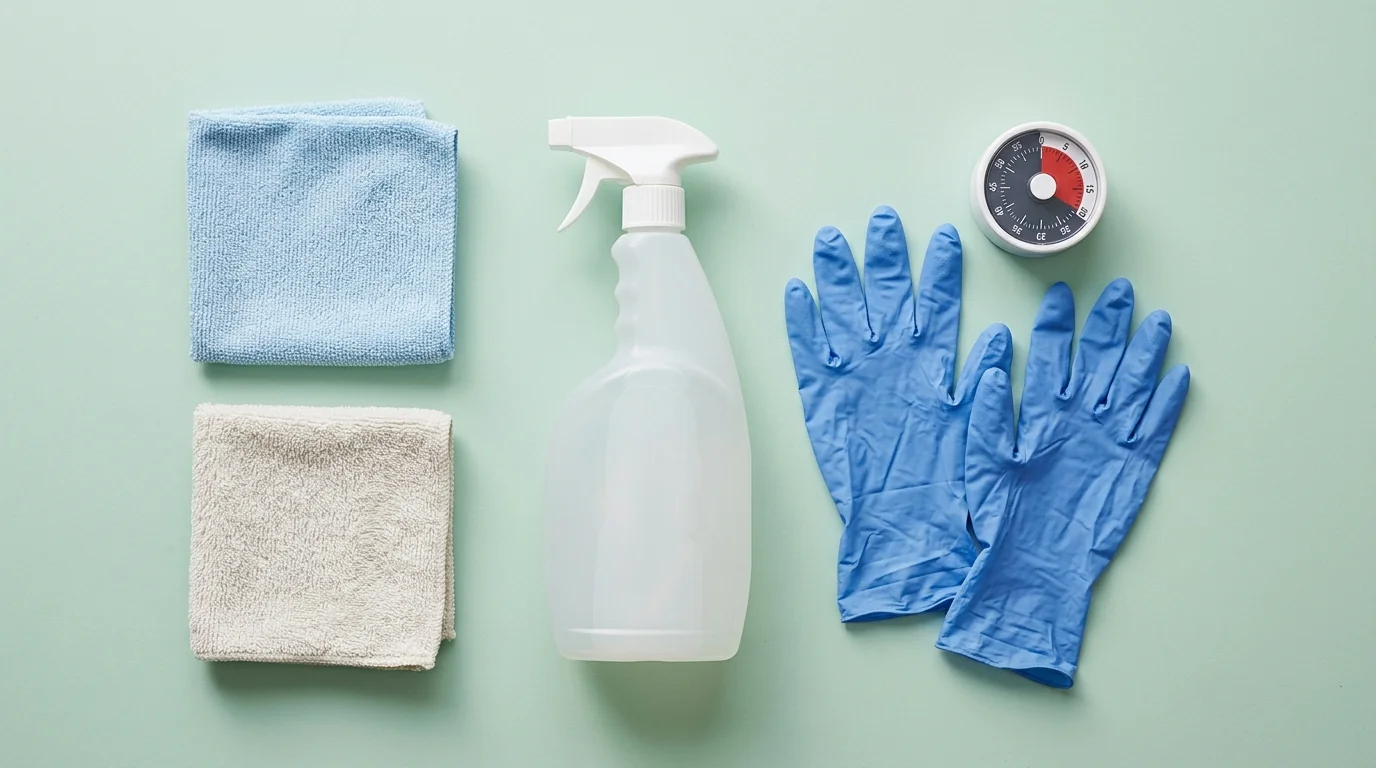
- Clean first, then disinfect high-touch surfaces daily during the season, keeping them wet for the label's contact time.
- In childcare, choose products suited to children's spaces, rinse anything that goes in a mouth, and avoid aerosols and foggers where possible.
- When a stomach bug appears, switch to bleach at CDC strength or a norovirus-registered product.
When the season runs
Connecticut's Department of Public Health treats October 1 through May 31 each year as the respiratory viral disease season, covering flu, COVID-19 and RSV, and notes that flu activity can begin in October or November and continue through late May. That is most of the school year, which is why a seasonal routine matters more than a one-time deep clean in late summer.
The plan below is a routine for that whole stretch, with an extra step for the weeks when illness is actually moving through a building.
Daily: clean, then disinfect the touch points
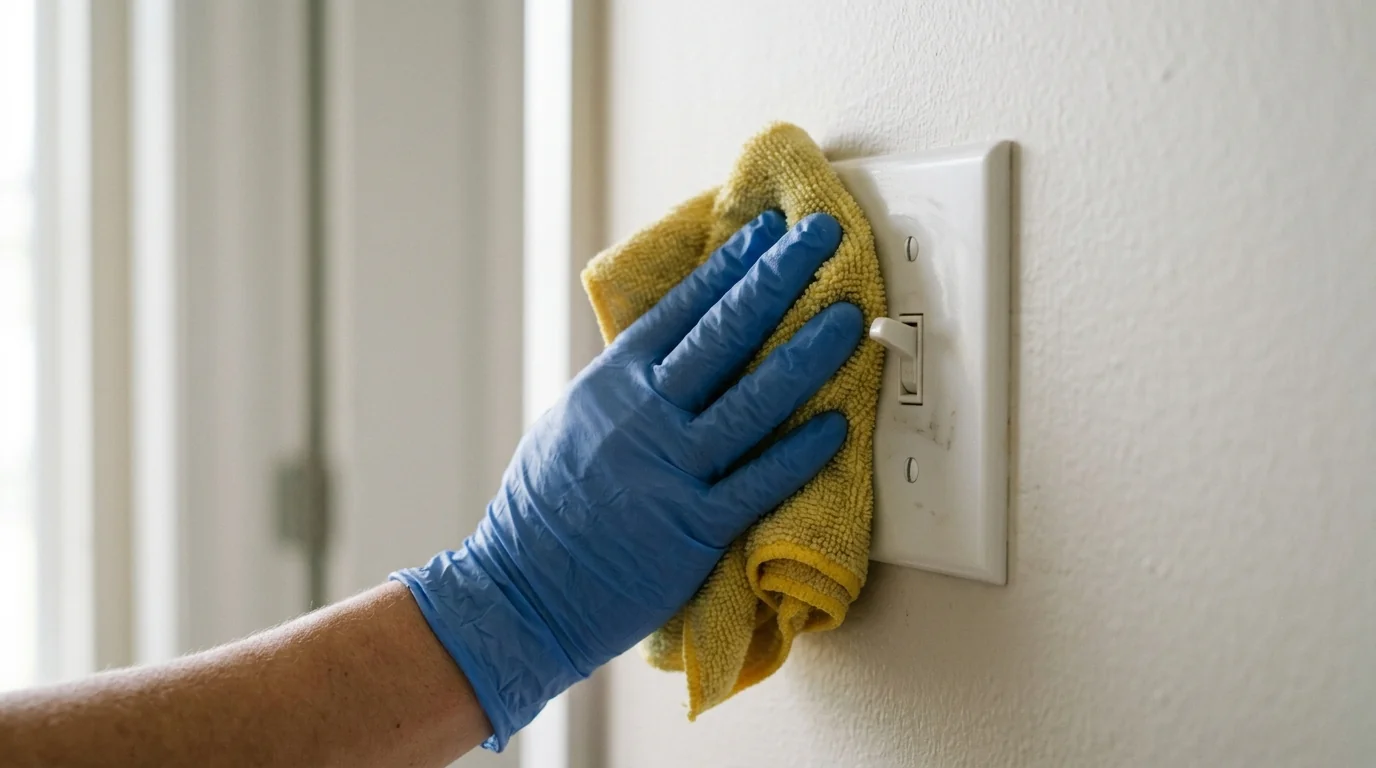
Every school day during the season, the surfaces that many hands touch should be cleaned and then disinfected after the children leave:
- Door handles, push plates and light switches.
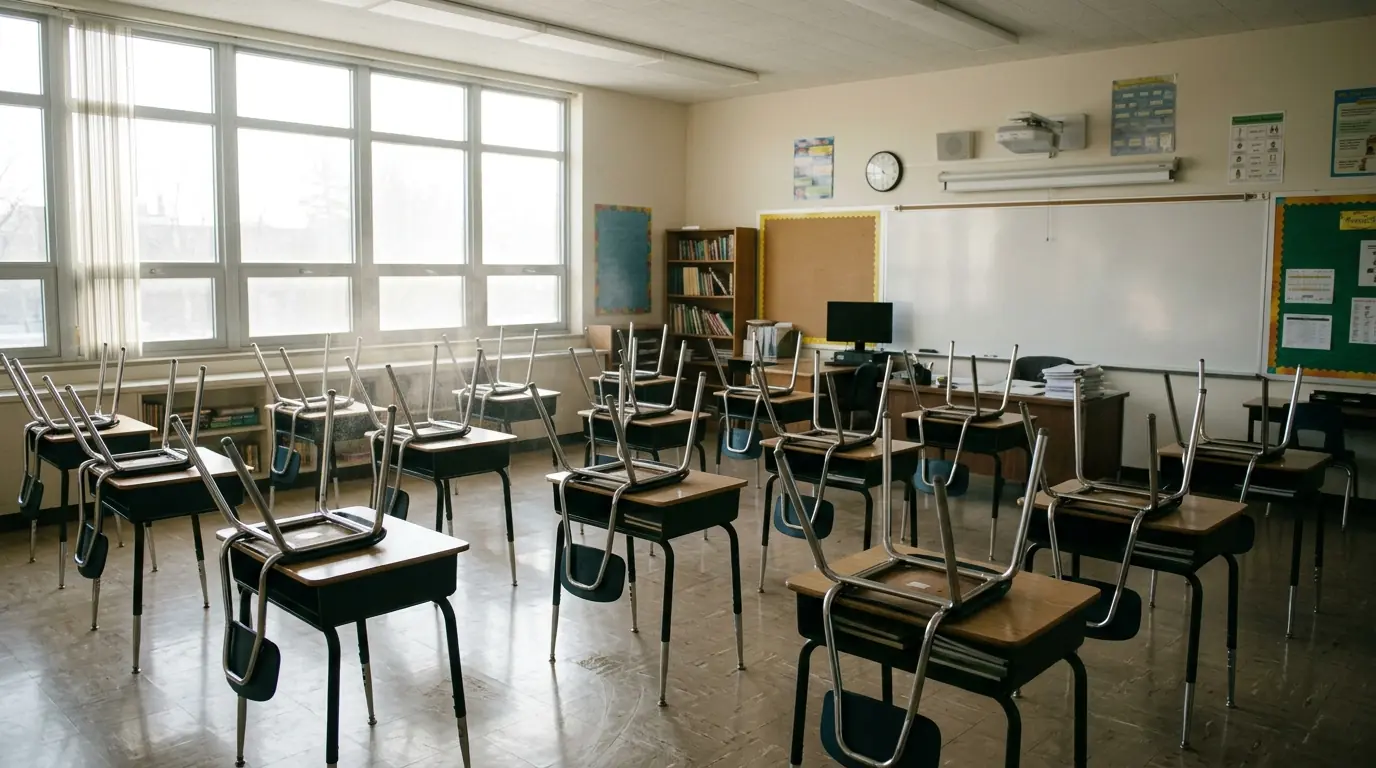
- Desks, tables and chair backs in classrooms and the cafeteria.
- Shared keyboards, tablets, headphones and pencil sharpeners.
- Sink handles, soap dispensers and water fountains.
- Stair rails and elevator buttons.
- Front office counters, sign-in pens and the visitor kiosk.
Use an EPA-registered disinfectant suited to the surfaces, and keep each surface visibly wet for the contact time on its label. A wipe that dries in seconds has cleaned the surface, not disinfected it.
Restrooms and cafeterias
Restrooms need cleaning and disinfection every day, with extra attention to faucet handles, flush handles, stall locks and door handles. Cafeteria tables are food-contact surfaces, so they are cleaned and then sanitized with a product labeled for food-contact use, rather than disinfected with a product that has to be rinsed off before the next meal.
Water fountains and bottle fillers, lunch line rails and trays round out the list. These are the places illness moves between classes, because every class uses them every day.
Toys and daycare rooms
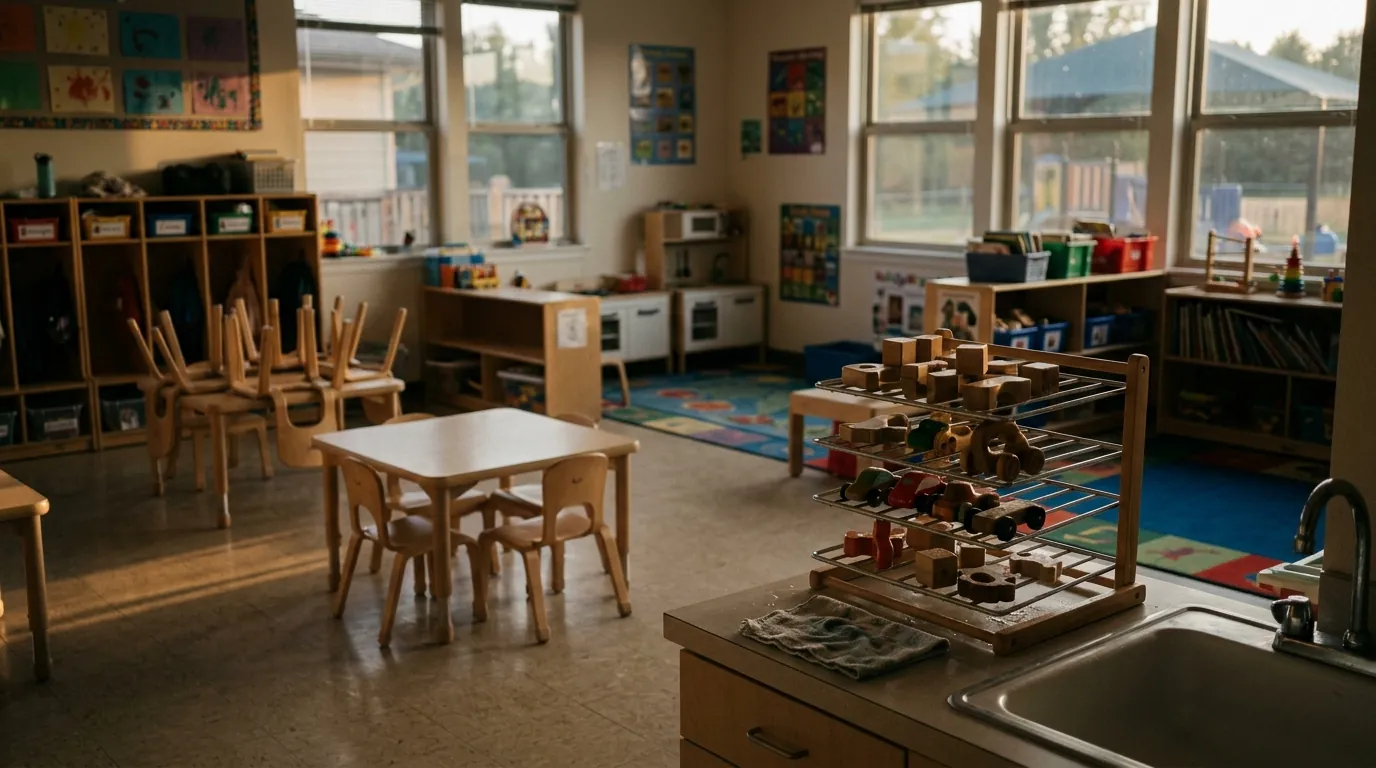
Daycares need a gentler version of the same plan. Toys that go in mouths are washed, then sanitized or disinfected with a product labeled for the purpose, and rinsed before children use them again. Toys that cannot be cleaned easily, like plush toys, are machine washed or set aside during an outbreak, and diaper changing areas are cleaned and disinfected after every use.
Federal early childhood guidance recommends choosing products suited to children's spaces, such as products carrying EPA's Design for the Environment logo, keeping disinfectants on surfaces for the label's contact time, and avoiding aerosols and foggers where possible, because fine particles can stay in the air.
When an illness starts going round
When several children or staff are out with the same illness, the routine steps up. Disinfect touch points more than once a day where staff can do it safely, add shared supplies and toys to the list, and give the rooms where sick children spent time a full treatment.
Stomach bugs need a different product. Norovirus is not killed by many general disinfectants, so after vomiting or diarrhea CDC advises chlorine bleach at 1,000 to 5,000 ppm, about 5 to 25 tablespoons of household bleach per gallon of water, or a product registered against norovirus. A professional disinfection over a weekend or a closure day lets every room be treated with full contact time and nobody in the building.
Putting it on one page
- Before the season: a deep clean, including floors, vents and high surfaces.
- October to May: clean and disinfect touch points every school day, restrooms daily, cafeteria tables sanitized after each meal.
- Weekly: toys, shared supplies and gym equipment.
- Monthly: check products, contact times and supplies with staff.
- During outbreaks: more frequent touch-point disinfection and a full treatment of affected rooms.
- Throughout: keep a log of what was cleaned, with which product and when.
When to call us. We clean and disinfect schools and daycares on the school calendar, with child-safe products, toy-level disinfection, a log of every visit, and full outbreak treatments over weekends or closure days.
Sources
- Connecticut DPH: Respiratory viral disease season memo
- Connecticut DPH: Influenza surveillance and statistics
- Head Start ECLKC: Selecting and using cleaning, sanitizing or disinfecting products
- CDC: Norovirus facts for food workers
- EPA: Selected EPA-registered disinfectants
About the author. Viola Nash is the Cleaning and Disinfection Guides Editor at IMD Disinfecting Services. Every guide is checked against current CDC, EPA and Connecticut public health guidance and against the way our crews do the work, and updated when that guidance changes.